
This page is also available in / Cette page est également disponible en:
 Français (French)
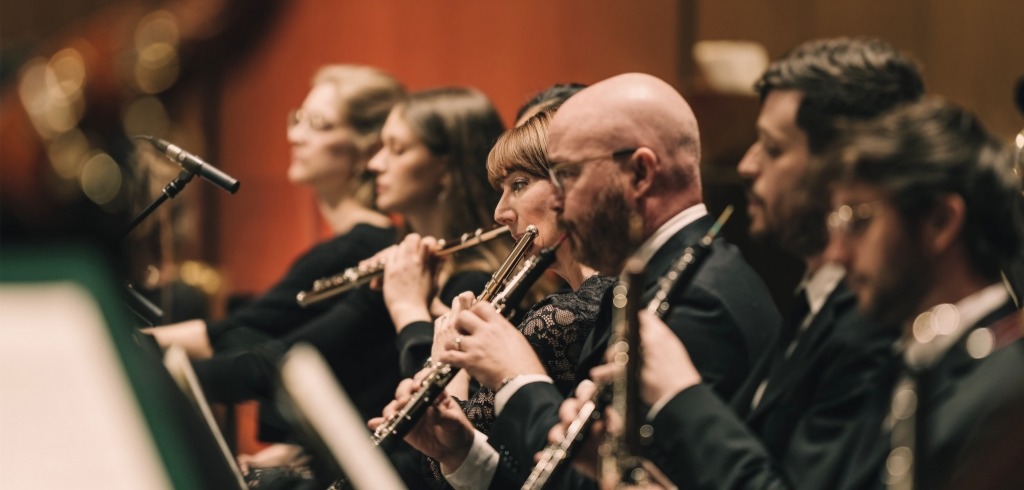
It must be recognized that composers love to showcase the flute, oboe, French horn, clarinet and bassoon front and centre in symphonic repertoire with solos, both long and short. These melodies stay with us long after the concert is over.
The following is a ranked list of the 10 most memorable woodwind solos, with a few forays into opera and concert music, excluding concertos written especially for this family of instruments, since these deserve their own ranking. So, a disclaimer: no Vivaldi nor Telemann in this list, but a brief note on Johann Sebastian Bach.
-
BEETHOVEN, SYMPHONY NO. 7
This is not the famous second movement which has inspired many movie scenes, it is the overture. The first instruments we hear are the oboe, clarinet and flute. They greatly influence what follows, with the orchestral ensemble seeming to react to what was first played by the woodwinds. The woodwinds also take precedence in Beethoven’s Violin Concerto, in this case in a pastoral ambience.
-
RAVEL, DAPHNIS AND CHLOÉ
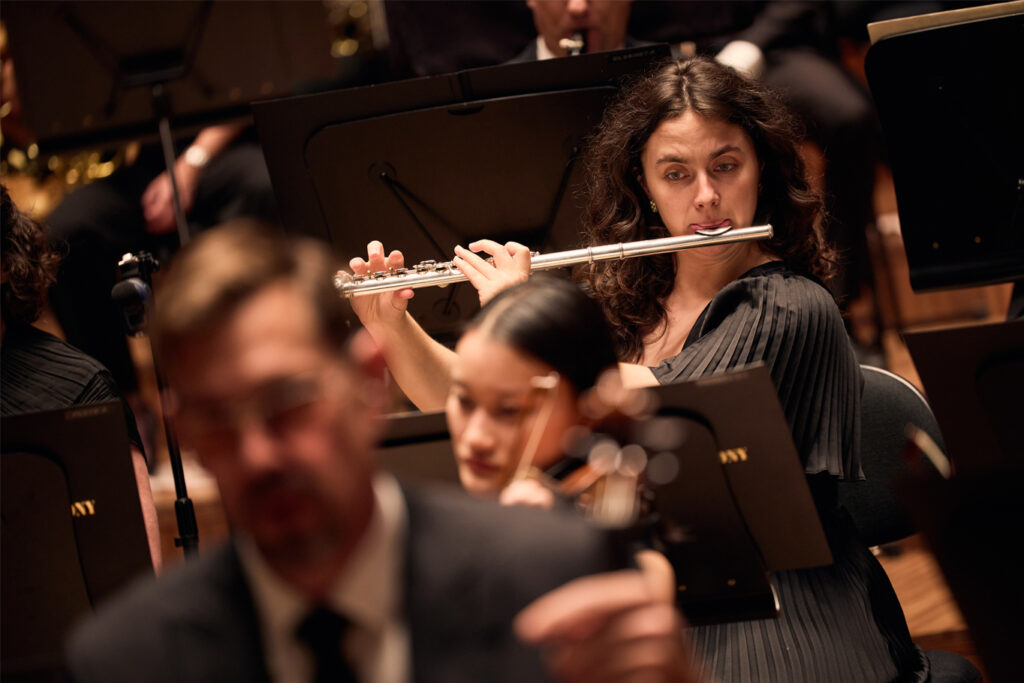
Originally composed as a ballet, Daphnis and Chloé features Greek mythological characters, including the god Pan whose key attribute is the flute. Ravel musically evokes the scene in which the nymph Syrinx, fleeing his advances, is transformed into a reed by her sisters in order to hide her. Pan, thinking she has disappeared, decides to pick a few reeds of different lengths with which to make a musical instrument in her memory. He then plays a melancholic tune which becomes a flute solo that inspires Chloé to dance. Its importance in this narrative cannot be understated.
-
MOZART, PIANO CONCERTO NO. 21
In the slow movement of this piano concerto, one of Mozart’s most famous, the woodwinds shine particularly in response to the soloist. First of all, they start the second theme, a few measures before the piano’s entrance. Then they offer a harmonic setting to the melody’s development, suffusing it with suffering. Later, the oboe delivers a harmonic march out of step with the piano, causing a satisfactory friction. The flute and the bassoon also contribute greatly to the thematic range of the andante. Despite its absence in the instrumentation, we know that the composer thought highly of the clarinet, to which his Concerto K.22 was dedicated. Mozart even attributed an esoteric aspect to it connected to Freemasonry, with several of his masonic compositions honouring this instrument.
-
RACHMANINOFF, PIANO CONCERTO NO. 2
Speaking of the clarinet and the slow movement, Piano Concerto No. 2 offers us another superb example of melodic meshing between the orchestra and the soloist’s instrument. Following a brief introduction by the flute, the main theme is taken up by the clarinet while the piano accompanies with a line of arpeggios. This theme, well-known via pop music, is taken up again by the piano and then it’s the flute’s turn to perform the accompaniment with a line of arpeggios.
-
MAHLER, SYMPHONY NO. 1
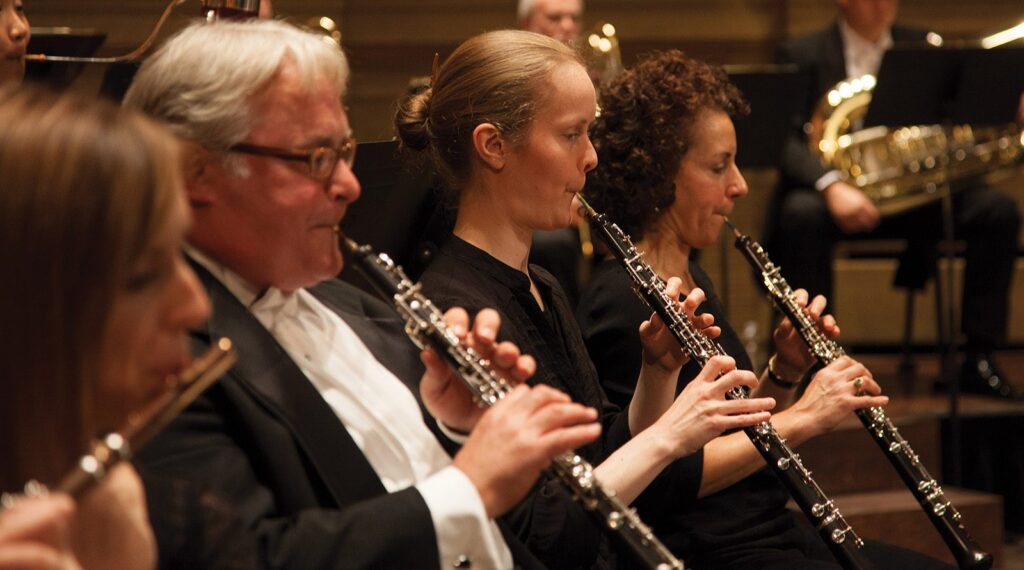
In the third movement, “solemn and measured,” of his first symphony, Mahler chooses to evoke a procession with the song Frère Jacques, transposed into a minor key and played in canon. The bassoon and the flutes take up, in order, the theme of the double basses while the oboe plays an energetic countersubject, presaging the movement’s wild character. The next theme, delivered by two oboes, is inspired by klezmer music, as a nod to the composer’s origins. It is followed soon after by clarinets, transforming the procession into a grotesque caricature. Needless to say, the entire woodwind section is ultimately mobilized.
-
DVOŘÁK, SYMPHONY NO. 9
We are now in the top five. The solos become more and more memorable, such as the English horn in the second movement of Dvořák’s New World Symphony. Its fame reaches well beyond the classical world and certainly constitutes the most emblematic use of American folk music in the symphonic repertoire. This solo is supported by rich music written for woodwinds. Indeed, the composer entrusts the exposition of the second theme, with its romantic character, to the flute and oboe.
-
DEBUSSY, PRELUDE TO THE AFTERNOON OF A FAUN
Prominent in this ranking is one of Debussy’s compositions, considered to be a pioneer in the development of the impressionist style to which the composer is everlastingly linked. The introductory motif, played by the flute, is composed of a chromatic descent and then an ascent, immediately evoking the sensuality of the nymphs who inhabit the wilderness. Apart from the harp and the French horns, other motifs are heard from the oboes and clarinet, complementing the flute, which transport us momentarily away from the aquatic world. The woodwinds seem to initiate most of the work’s movements.
-
STRAVINSKY, THE RITE OF SPRING AND THE FIREBIRD
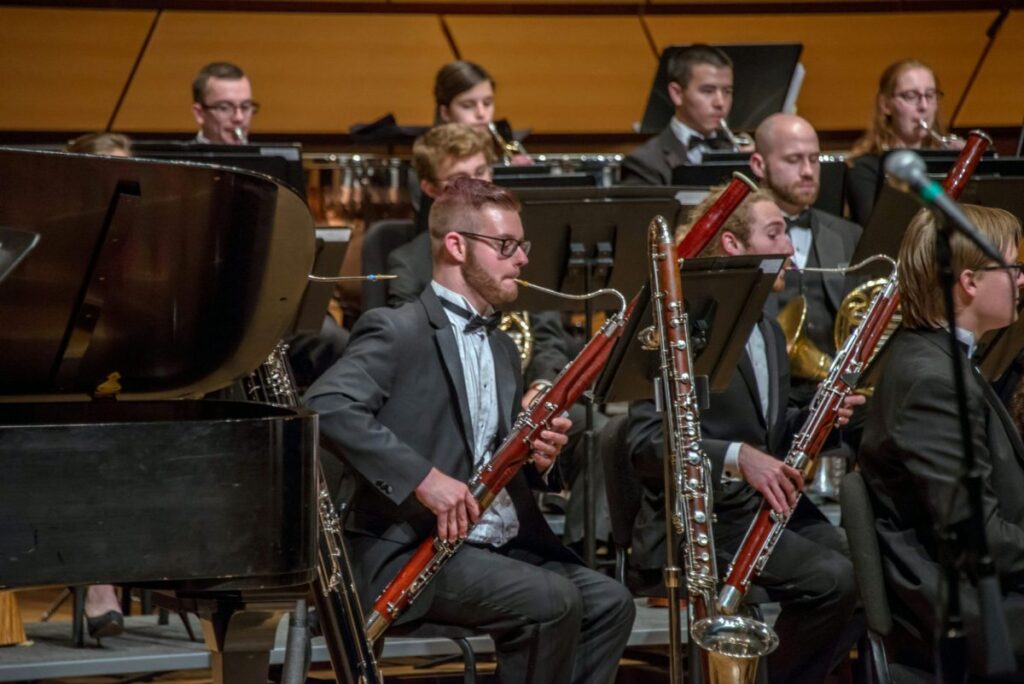
In the same way, the bassoon initiates the tone of Stravinsky’s The Rite of Spring, suggesting along with other instruments of that family (clarinets, English horn, oboe, etc.) a nature full of all sorts of bird songs. Among Stravinsky’s other stage works, The Firebird deserves mention. It is based on Russian folklore and tells the story of Prince Ivan who is assisted in his quest by a bird with magical powers. The flute and piccolo personify the incandescent creature, particularly for one of the work’s main themes subtitled Dance of the Bird. Its chromatic outline evokes Debussy’s Prelude.
-
WAGNER, TRISTAN UND ISOLDE
A brief visit to the lyrical repertoire with an opera by Wagner in which the orchestra takes on decidedly symphonic dimensions. The prelude to Tristan and Isolde’s Act III is marked by several long interventions by the solo English horn. The instrument sings a shepherd’s song; a lament which presages Tristan’s death, grievously wounded after a duel at the end of Act II.
Honourable Mentions
Before announcing the first-place composition, here is a brief overview of orchestral works which incorporate remarkable woodwind solos. When it comes to representing a pastoral scene or a mountainous landscape, like the Swiss Alps, the English horn is often used. Examples could be the elegy in R. Strauss’s An Alpine Symphony or even the herd of cows in the overture of Rossini’s William Tell. It is also said of Sibelius that he took advantage of the range of orchestral colours to conjure up the vast spaces of his native country, Finland. In any case, the composer was able to make good use of the woodwinds’ expressive palette, entrusting the solo clarinet with the opening notes of his Symphony No. 1. In addition, the oboe has been used in a variety of contexts to represent the Orient in music, similar to the instrument used by snake charmers. It is particularly true in the case of Tamara, a symphonic poem by Balakirev, which overflows with scales and bewitching motifs.
Although he wrote sinfonias, Bach rarely highlighted the woodwinds in an exclusively orchestral setting, favouring equilibrium between each instrumental family, and reserving their solos for concert works. However, the composer often had his songs accompanied by a solo line from the orchestra. To name a couple: Aus Liebe will mein Heiland sterben, in the Saint Matthew Passion, soprano and flute forming a suitable duo; the cantata Ich habe genug, BWV 82, also matching the soprano with the flute, or the bass with the oboe, depending on the register.
Still in the baroque repertoire, the flute solo in Dance of the Blessed Spirits, at the beginning of the second scene, Act II of Gluck’s Orpheus and Eurydice ranks as one of the most remarkable passages that is neither in a concerto, nor an accompaniment, but in an orchestral number.
-
PROKOFIEV, PETER AND THE WOLF
This is a symphonic tale which cradled our childhood and continues to reach all types of people. An indispensable element of initiation to classical music, Peter and the Wolf remains famous for its visual solos, capable of imitating the style and tone of voice of its characters. Woodwinds provide the bulk of the palette of sounds, each instrument having its own musical theme: a flute interprets the bird, the oboe the duck, the clarinet the cat, while the bassoon designates the grandfather.
Peter and the Wolf has gained a life of its own beyond symphonic orchestra programs, particularly due to its educational aspects. However, if most of its listeners can still identify specific woodwind instruments, it is in large part—consciously or not—thanks to this composition.
Translation: Karine Poznanski
This page is also available in / Cette page est également disponible en:
Français (French)