
This page is also available in / Cette page est également disponible en:
 Français (French)
The 16th edition of Festival Classica, taking place from May 22 to June 14, will continue to extend its repertoire beyond the limits of classical music under the artistic direction of Marc Boucher. La Scena Musicale spoke to some of the leading artists involved in this year’s festival, including composer and arranger Simon Leclerc, whose new adaptation of Luc Plamondon and Richard Cocciante’s 1998 musical, Notre-Dame de Paris, will be unveiled on June 12. It will be one of three productions offered by Nouvel Opéra Métropolitain in addition to Les Grands classiques de Michel Legrand (June 6) and the opera L’hiver attend beaucoup de moi (June 14).
Notre-Dame de Paris
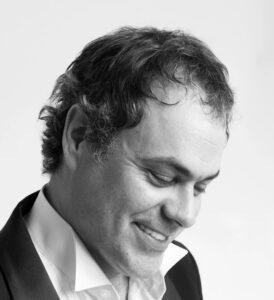
Fifteen years ago, Leclerc arranged for a selection of excerpts from Starmania and Notre-Dame de Paris for Orchestre symphonique de Montréal, performed by opera singers. “With this new version,” he says, “I want to give the characters their own texture, extend the register and provide contrast. When you apply lyrical [operatic]voices to this sort of work, you get an extra dimension. I’m not saying it’s better or less good, it’s just interesting to bring a more theatrical element to my adaptations.”
Leclerc will conduct an overture of his own invention in which he introduces four major themes of the piece, a technique Bizet used for the overture of Carmen. And in Rose Naggar-Tremblay, he’s found the ideal singer, able to rise to the vocal and orchestral demands of this version as required by a song such as “Vivre.”

As the Quebec mezzo-soprano who will play Esmeralda points out, “it’s no longer a question of soprano, alto, tenor and baritone. Simon said ‘I’m writing for Rose, for the qualities of her voice, so I’ll emphasize different elements.’ It’s a privilege to have a composer who’s taken the time to listen to our voices and understand how they resonate. This means we can make the best of our skills and offer the best of ourselves.”
The mezzo understudied Marie-Nicole Lemieux in the festival’s Carmen last year. She recalls, “Marc Boucher chose me to make a noise. He heard me in Carmen, who is obviously the spiritual sister of Esmeralda. So I have a part in this show because of what happened last year.”
Reflections of the artistic director
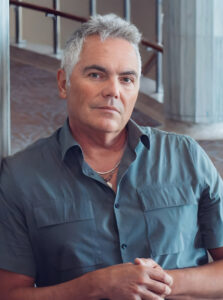
Boucher says: “I’ve followed Rose for several years and I think she’s one of our greatest voices. There wasn’t an audition, because it was clear at the time that I wanted to ask her to play Esmeralda, and right away she appeared in my mind as a gypsy, the characters [Esmerelda and Carmen] being cousins. Emmanuel Hasler, who sang Don José, will play Quasimodo. I didn’t want there to be just baritones in this musical, and I wanted Fleur-de-Lys, for example, to be a high soprano [Natacha Demers]. That’s how we provided contrast.”
Boucher, who is already working on the 2027 schedule as well as looking forward to 2028, repeats that he doesn’t wish to be linked to one era, style or particular musical training.
“We could work as well with a recital, a voice-with-piano, a symphony, baroque, classical, romantic, as with anything else. We premiered L’homme qui rit by Airat Ichmouratov, we commissioned Jaap Nico Hamburger to write an opera on the life of Sarah Bernhardt, and we’re doing a project soon with SMCQ. After 16 years, I believe the different approaches we’ve taken with the festival match the tastes of the vast majority of people, not just my own personal taste. I listen to everything—jazz piano, indie rock. I love Bon Iver [electric folk]. It doesn’t bother me to schedule Notre-Dame de Paris and Supertramp symphonique [June 11] because all these works have high-quality material to offer and connections to classical music.”
Boucher mentions other musical highlights including a recital of Schubert trios with violinist Chloé Kim, cellist Cameron Crozman and pianist Meagan Milatz (June 10), Bach’s Brandenburg Concertos with Ensemble Caprice (June 2), as well as Beethoven’s first three piano concertos played by Élisabeth Pion on an 1827 Broadwood piano with the Arion Baroque starting May 31.
Beethoven
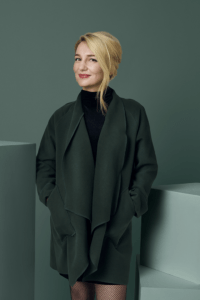
Photo: Jeremy Fokkens
A recent winner of the Honens International Piano Competition, Pion divides her time between North America and Europe. Between concerts she found time to visit Bonn, where Beethoven was born, to imbibe the spirit of the composer and his music.
“Beethoven demands very exact articulations, all the more so when one is playing a piano like this one, which I discovered during the recordings of Amadeus et l’Impératrice (2024) with Arion. When I went to the house where Beethoven was born I looked at his first editions and manuscripts, and was particularly interested in his pedal indications (soft and loud). The specialists can’t agree on the meaning of these indications. I’ve read many articles about this and am just experimenting now on open playing and free interpretation.”
Research is a strong part of Pion’s artistic vision. This year, she’ll be playing a lot of Mendelssohn and a visit to Leipzig might well be in the cards. Once, before a concert with Orchestre Métropolitain, she visited Latvia’s capital, Riga, to immerse herself in the world of the composer Lūcija Garūta. “It’s a way of understanding where they came from, discovering their background. I get an overall sense of the artist and that fires my imagination. To be able to devote myself to one composer and perform the entirety of certain genres, like playing all the Beethoven concertos, is quite simply wonderful.”
Speaking of the first three concertos (the rest will be played next year), Pion concludes, “I think that Beethoven knew he wasn’t entirely free of his models. Before the third concerto you hear Beethoven, but his style is still ‘infected.’ Well it’s a good virus, because he chose to copy those models, and then later decided how to demarcate himself from them, to prevent them becoming straitjackets. Some of the passages in the first two concertos reveal that tension, reflecting the tension between himself and his mentor Haydn.
As he advances, he masters the direction he wishes to take. In this regard, the third concerto is the expression of a composer truly a master of himself. Beethoven is a fascinating personality, sometimes difficult in his intensity, but he can also be very gentle. People often reduce his music to one thing, forgetting the tenderness. But to me, his legato is unrivalled. He’s a hugely complex man, and that’s what I find so touching.”
For the full schedule visit www.festivalclassica.com
Translation: Cecilia Grayson
This page is also available in / Cette page est également disponible en:
Français (French)