Browsing: La Scena Online

La Scena Online is the digital magazine of La Scene Musicale.Contents: News, Concert reviews, CD reviews, Interviews, Obituaries, etc; Editor: Wah Keung Chan; Assistant Editor: Andreanne Venne
ISSN: 1206-9973
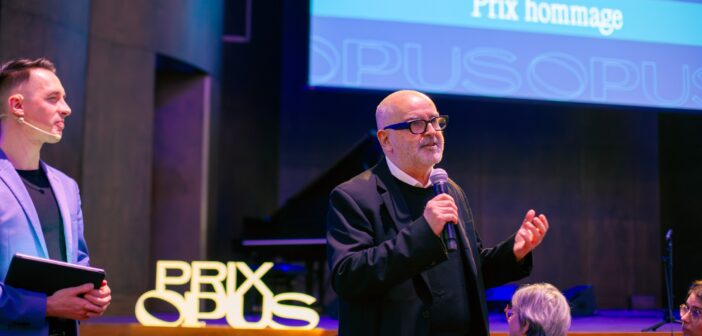
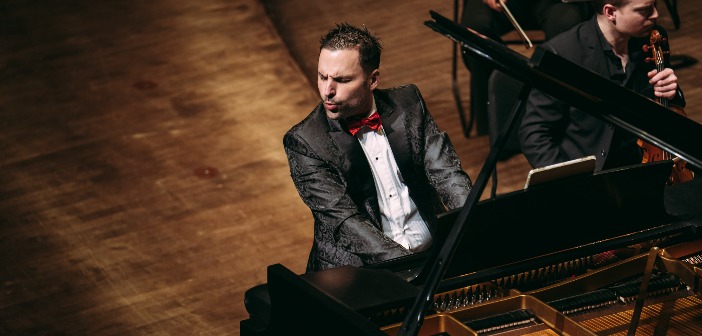
Thirty-three winners were presented the fruits of their labour one by one—collecting single or, in some cases, multiple awards—at the 29th edition of Prix Opus held at the Montreal Museum of Fine Arts Bourgie Hall on Feb. 8 Collective and individual accomplishments were celebrated, as respectively evidenced by the performer-of-the-year award going to Quatuor Quasar and Marie Nadeau-Tremblay for her album Obsession. Maxime Goulet won the coveted composer-of-the-year award and used his platform time to acknowledge performers and ensembles who commission works from composers and support their primary mission to create new music. Journalist and media outreach personality Alain Brunet…

Share:
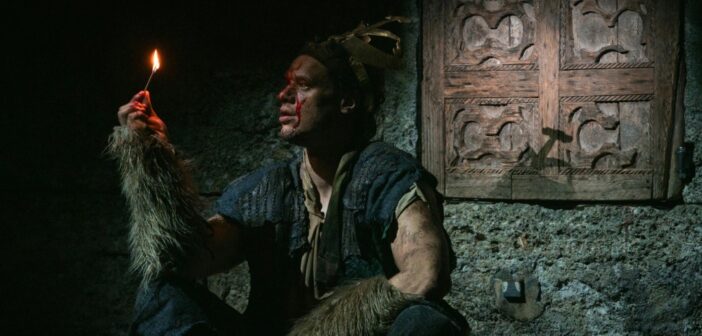
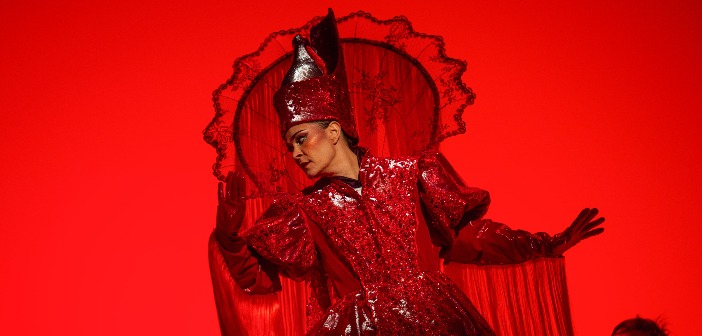
There are productions that succeed, productions that impress, and—very rarely—productions that bring the art form to a new level. The new Das Rheingold at the 2026 Salzburg Easter Festival belongs decisively to the last category. With the return of the Berliner Philharmoniker under Kirill Petrenko and a staging by Kirill Serebrennikov, this is not merely a strong new Rheingold—it is one of the most accomplished productions I’ve seen on any stage, in any repertoire, in recent years. What distinguishes it is not a single element, but the extraordinary precision with which all its components interlock: musical, visual, physical, and dramatic.…

Share:

“There are three things you have to do as a professional performer,” said kora-player and singer Seckou Keita during SUBA Trio’s concert at the Chan Centre (March 13). “One, make the audience smile. … Two, make the audience dance. … Three, make the audience cry. Tears of joy!” While I may not have cried, I couldn’t help smiling and dancing throughout this dynamic and cross-cultural event. SUBA Trio—Seckou Keita, Omar Sosa and Gustavo Ovalles—delivered a memorable night that left the audience buzzing and eager for more. As the lights dimmed, one’s eyes were drawn to the various instruments on stage:…

Share:

After more than a decade shaping the sound of the Ensemble Intercontemporain and several years working largely in New York, Matthias Pintscher returns to the Paris stage with his fourth opera, Nuit sans aube (seen March 11). Lasting just 90 minutes, this finely wrought work confirms the composer’s distinctive sonic imagination. The score unfolds in luminous orchestral colours and reveals a striking sensitivity to the expressive possibilities of the human voice. At moments one hears distant echoes of Pelléas et Mélisande, premiered on this very stage in 1902, and even something of the darker psychological atmosphere of Debussy’s unfinished opera…

Share:

On an unassuming night in the seclusion of Montreal’s Salle Pierre-Mercure, Orchestre Classique de Montréal (OCM) welcomed three unique soloists to perform a stylistically diverse program, unified under a theme of Polish music.  Under the direction of OCM’s music director Andrei Feher, soprano Karoline Podolak, clarinettist Kornel Wolak (both Polish), and local pianist Jean-Philippe Sylvestre presented pieces by Frédéric Chopin (to no one’s surprise given the theme), Stanisław Moniuszko and Mieczysław Weinberg, as well as more contemporary pieces including works by Wojciech Kilar. The OCM, this time, was just a small group of string-only players.  Sylvestre and Wolak kicked off…

Share:

Name an Italian symphonist. Go on, quickly, just one. There were plenty in Mozart’s time, nothing much since. The market shifted to opera and those who wrote abstract music were left to embrace obscurity. My attention was arrested this week by a German orchestra performing a pair of Italians who persisted with non-vocal music against all commercial algorithms. Ottorino Respighi (1879-1936) achieved tourist-class renown with symphonic poems on Roman landmarks and an ode to the brutish Mussolini. Respighi is represented here by a meditation on three Boticelli paintings, one more exquisite than the next. If you hear a Christmas carol…

Share:

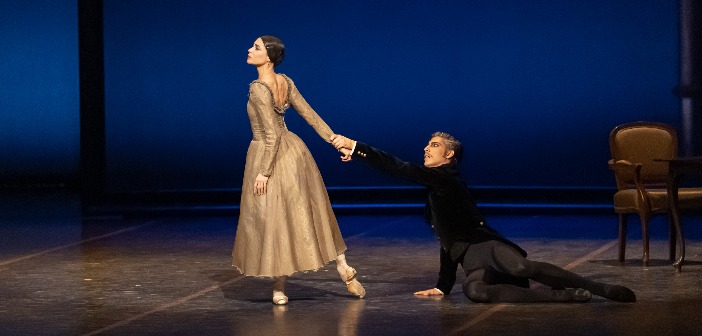
John Cranko’s Onegin has played an important role in the recent history of the Hungarian State Ballet. Its current artistic director, Tamás Solymosi, danced the title role in the ballet’s 2002 company premiere. He has been key to keeping the work in its repertoire, including overseeing a new 2012 production by Thomas Mika. On March 3, Cranko’s masterpiece pulled all of its emotional punches in an extremely well-cast revival.  While on the surface Cranko’s choreography draws almost entirely on traditional ballet vocabulary, its modernism stems from the manner in which each step and gesture are intrinsically married to character and…

Share:

Over every mountain-top Lies peace, In every tree-top You scarcely feel A breath of wind; The little birds are hushed in the wood. Wait, soon you too Will be at peace. Johann Wolfgang von Goethe, The Book of Lieder, trans. Richard Stokes (London: Faber, 2005). The great German polymath, Johann Wolfgang von Goethe wrote these lines, The Wanderer’s Nightsong in 1776. One of his most famous poems, it masterfully delivers a feeling of all-enveloping serenity, not even broken by birdsong. Over 50 years later, in 1828 Franz Schubert (1797–1828) wrote his last sonata (Bb major, D. 960) months before his…

Share:

Hungarian State Opera’s revival of their 2016 production of Donizetti’s Lucia di Lammermoor by Máté Szabó gives us a new Lucia ascendant who succeeds within a dramatic vacuum. Up until now, soprano Zita Szemere has mostly been known for lyric roles such as Ilia, Norina, and Blonde. Here, she cranks things up a notch on her own vocal terms. She offers a beautifully sung, and convincingly dramatic Lucia, the tragic heroine abused by the men in her life, who only gains agency once she has been driven mad. Would that the production around her could offer a better showcase for…

Share:

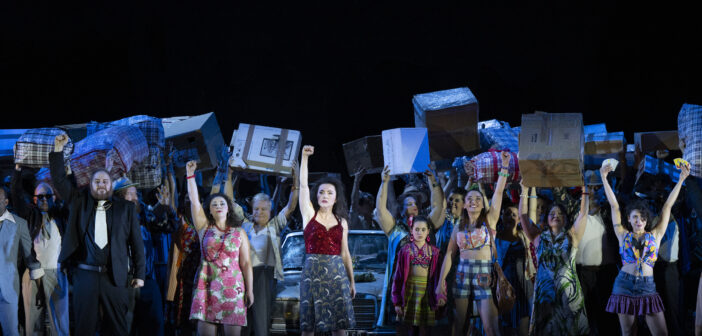
Calixto Bieito’s Carmen at the Opéra Bastille—a production created in 1999 at the Festival de Peralada (Spain) and revived in Paris since 2017—arrives with the reputation of a once-scandalous staging. Yet what unfolds on stage today feels less provocative than crude. The production (seen Feb. 22) is built on a succession of aggressively literal gestures—sexual exhibitionism, staged violence, crudely stylized mob behavior—presented with little variation or psychological progression. Rather than revealing new facets of the characters, these devices reduce them to caricature: Carmen becomes a bundle of mannerisms, Don José a schematic figure of brutality, Escamillo a hollow emblem of…

Share:
1 2 3 170