This page is also available in / Cette page est également disponible en:
 Français (French)
This month, La Scena Musicale is launching a new feature devoted to music and film. This column will cover a variety of subjects: in-depth articles on the relationship between sound and image, film music, as well as masterpieces of cinema, recent and upcoming releases and television shows with musical themes.
“Without music, life would be a mistake,” said Nietzsche. The action of a film, too, would be unthinkable without the soundtrack. Music gives the images meaning: it sets the tone and lends rhythm to the scenes. The absence of music is felt in the cruel void it leaves on screen where it should raise an alarm for the emotion about to burst forth. Since cinema’s primary purpose is to create an immersive sensory experience for the viewer, music is its greatest and most precious ally.
Ennio Morricone, John Williams, Howard Shore, Hans Zimmer: All these well-known composers are associated with cult soundtracks that have drawn inspiration from forerunners like Prokofiev, Holst and Korngold to lend an epic feel to the images. And what better to give renewed life to larger-than-life films than a symphony orchestra? The London Symphony Orchestra, for example, worked with John Williams for his Star Wars, Indiana Jones and, more recently, Harry Potter film scores.
Film concerts
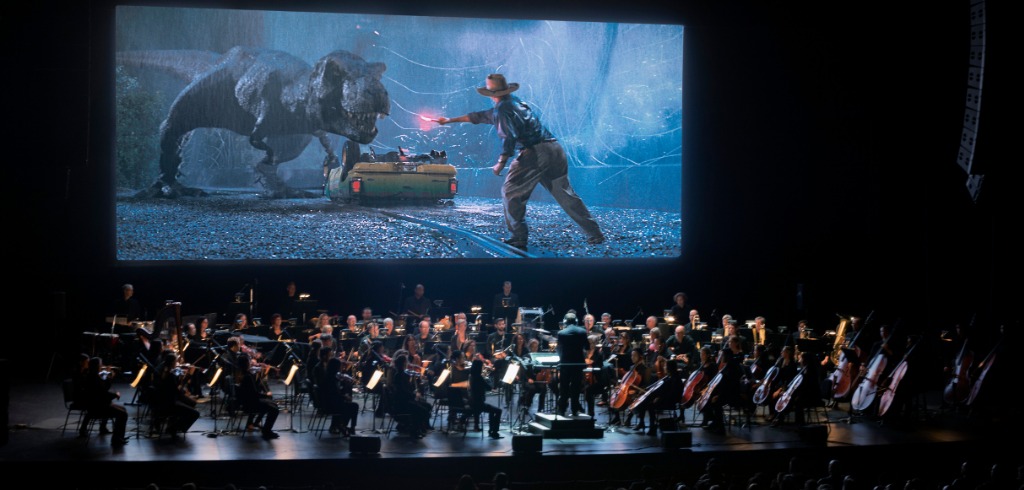
Across Canada and all over the world, more and more organizations are opening up to this repertoire long considered ‘popular’ (that is, less ‘respectable’ than classical music). Attila Glatz Concert Productions even specializes in it, screening famous films and replacing the recorded music with a score played by a live orchestra in sync with the film. It’s not so different from 1920s silent films where the audience watched while a flesh-and-blood pianist played in time with the action. This is a topic that itself deserves its own column!
Today, the lone pianist has become an orchestra playing in a vast auditorium. The events are called film concerts, and have met with great success. This season, Attila Glatz has planned a Canada-wide series, from Toronto to Calgary and from Montreal to Edmonton via Kitchener. Given the list of film titles is dominated by Disney movies and animation (Hocus Pocus, The Muppet Christmas Carol, How to Train Your Dragon), it’s clear that the producers are appealing to families and young audiences.
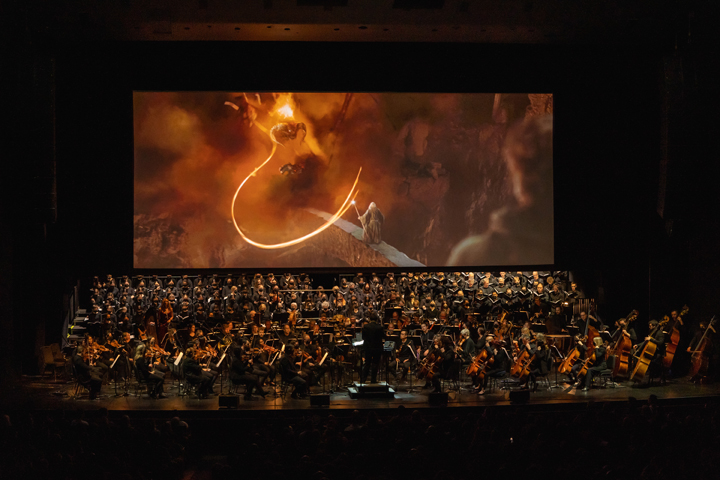
Meanwhile in Montreal, Orchestre FILMharmonique, conducted by Francis Choinière, is fulfilling its mission of bringing great film scores to its audiences. Four film concerts will take place at Salle Wilfrid-Pelletier, including Les choristes (Dec. 6 & 7), the second part of The Lord of the Rings (Jan. 9, 10 & 11) and the first instalment of the original Star Wars trilogy (April 10 & 11).
Orchestre symphonique de Montréal will present a series of film concerts as part of its usual season. Its next event, on Nov. 19, will be Stanley Kubrick’s 2001: A Space Odyssey, a pioneering film that draws its music from the existing repertoire, both classical and contemporary. Presented in association with Warner Bros. Discovery, London’s Southbank Centre and the British Film Institute, this concert clearly illustrates OSM’s aim to not just focus American megaproductions, but on films and music with an intrinsic quality. Another example is OSM’s presentation last season of François Girard’s The Red Violin with music by John Corigliano.
By comparison, the Toronto Symphony Orchestra is focusing on entertainment, preferring to attract families. On the program are E.T. by Steven Spielberg (Nov. 7 & 8), Merry Murdock Mysteries (Dec. 2), Home Alone (Dec. 4 & 7) and The Princess Bride (Feb. 13 & 14). The TSO’s approach matches that of the Glatz concerts, which have been such a success. Of the two Canadian orchestras, it is the OSM that has been bold enough to screen films that are as memorable as the music associated with them.
Composers as on-screen characters
While film directors favour the sound of an orchestra, especially for epic and science fiction films, they also find inspiration in classical composers. Alain Corneau revived a taste for French baroque composers Marin Marais and Sainte-Colombe with his Tous les matins du monde. But when it comes to cinema and classical music, it’s probably Milos Forman’s Amadeus, with its copious Mozart extracts, that springs to the film-lover’s mind. This 1984 movie written by Peter Shaffer is still in the current zeitgeist. Indeed, Sky in Britain has announced a new television series beginning in December, based on Mozart’s life and his supposed rivalry with Antonio Salieri. And remember that Beethoven earned his own British series in 2005, which was nominated for a BAFTA award. Something to explore in a future column.
Translation : Cecilia Grayson
This page is also available in / Cette page est également disponible en:
Français (French)