Every once in a while, I’ll attend a performance that hits all the right spots and leaves me buzzing for more. Jazz evokes a sense of longing for an era I wasn’t even alive for. I’ve never been the best at differentiating between all the different jazz subgenres, but I am a sucker for orchestral jazz. Charlie Parker’s 1955 orchestral-bebop fusion album Charlie Parker with Strings gets the nostalgic orchestral jazz right just the way I like it.
Superlative concerts can be the most difficult to write about. I hate to say “you just had to be there,” but some performances can hardly be done justice in writing—they just make you feel. I find it difficult to verbalize why exactly “Everything Happens to Me” reminds me of Disney Snow White’s “Someday My Prince Will Come.” Or why hearing any rendition of “Summertime,” particularly Ella Fitzgerald’s, fills me with a sense of haunted fascination. I can only try my best.
Charlie Parker (aka “Bird”) lived a complicated and short life (1920-1955) but left an enormous mark through both his playing and composing. He’s known as perhaps the greatest alto saxophonist of all time. Though he popularized the bebop style in the 1940s, he also loved classical and orchestral forms of music. He was a great fan of Stravinsky and Bartók. With Billie Holiday and these composers as inspiration, Charlie Parker recorded this album—one he considered some of his best work, and it’s not hard to see why.
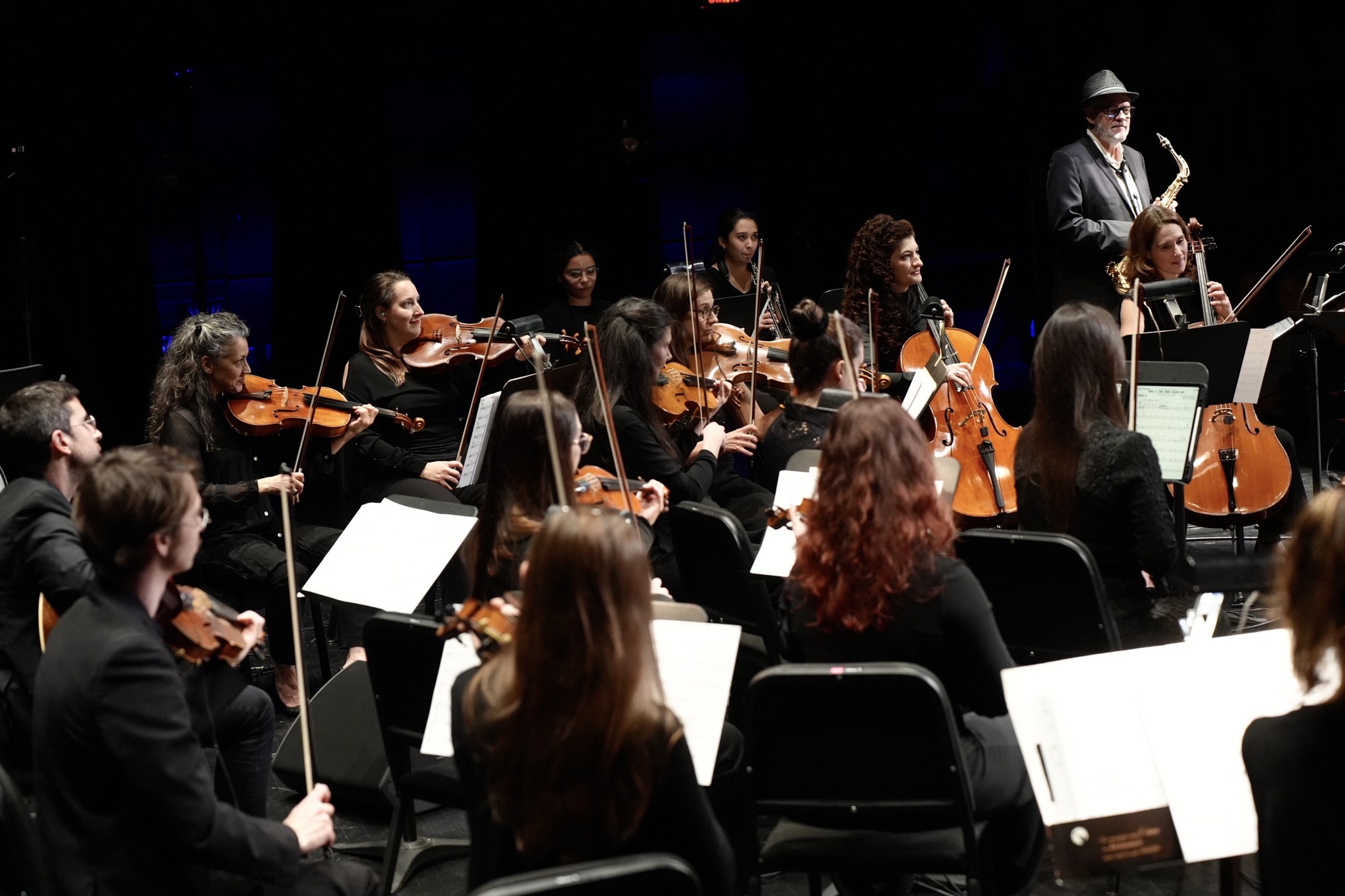
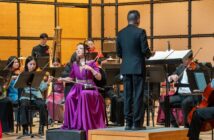
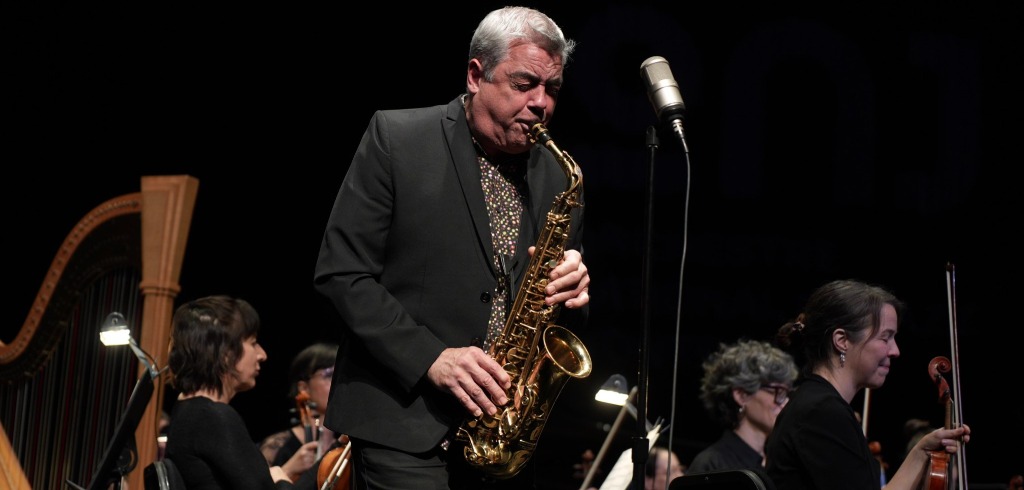
Under the baton of Samuel Blais on Nov. 27, Orchestre national de jazz de Montréal (ONJ) revisited a dozen songs from Charlie Parker with Strings, featuring saxophone soloists Jean-Pierre Zanella, Rémi Bolduc, André Leroux, and Alexandre Côté. In contrast to the last ONJ performance I attended, where the orchestra was composed of all men, women musicians filled the strings and wind sections. Along with the four talented soloists, I really have to applaud Léanne Teran-Paul, the incredible guest oboist who also played the English horn throughout.
Zanella played with some aggression but was utterly focused, his improvisations embodying the frenetic energy of bebop. He played “East of the Sun (West of the Moon),” “Everything Happens to Me,” and the ever-famous “Just Friends,” which Blais rightly guessed would be every saxophonist’s top pick in this repertoire.
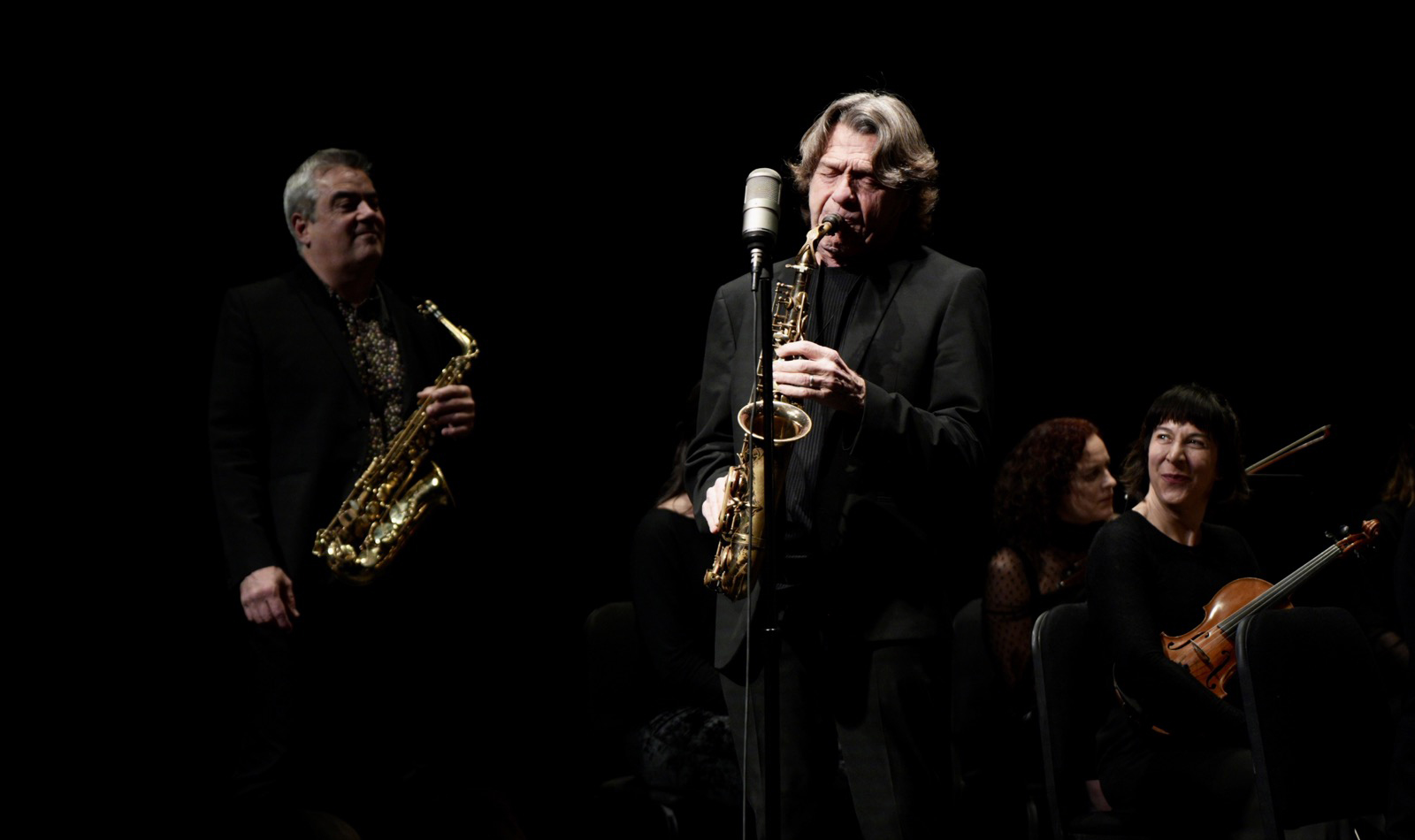
Bolduc, a seasoned Charlie Parker veteran looking suave in his fedora, played “They Didn’t Believe Me” and “They Can’t Take That Away From Me,” both of which highlighted his skill in the lower range of the sax. A very bouncy “What is this Thing Called Love” ended with a sudden two-note flourish, ending his turn on stage.
Leroux, in my opinion, got the best series of songs to perform: “I’m in the Mood for Love” (though I’m partial to the Julie London version), the flowing “Easy to Love,” and my favourite: “Summertime.” Blais set the unhurried pacing I prefer for the latter song. Leroux’s playing kept these romantic pieces sensual and classic, having a wonderful propensity for phrasing that ebbed and flowed.
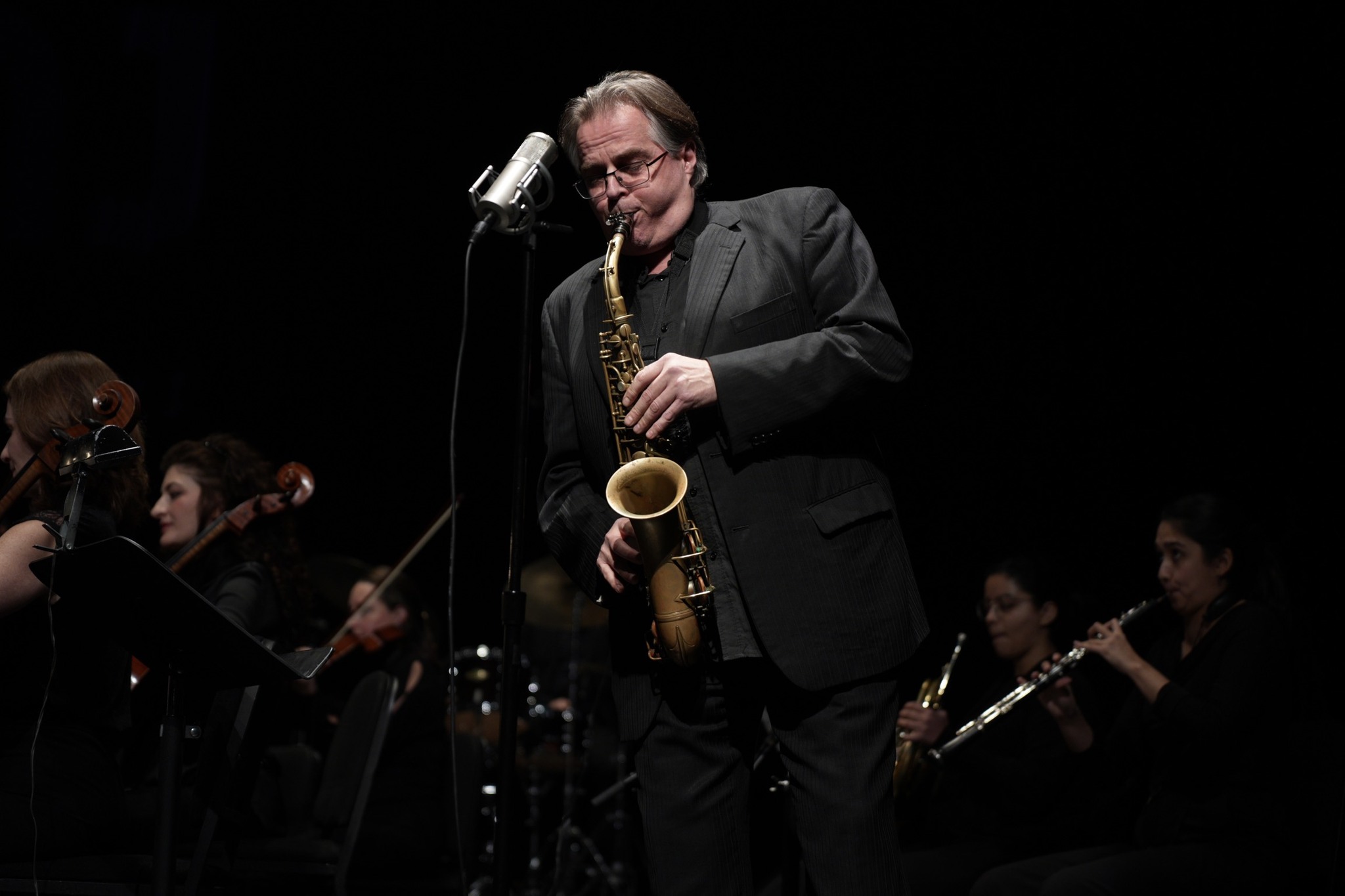
Côté bumped the tempo back up with “Repetition,” with rapid runs, virtuosic improvisation, and impeccable harmonization with the orchestra. He ended the solos with “Laura,” David Raskin’s 1945 heartbreak song. The initial oboe’s wail of longing and distress was vivid, the French horn later echoing in melancholy. His fellow three soloists joined him onstage to perform a prolonged encore of “Rocker,” a solid representation of bebop, with Côté taking the lead. Jazz saxophonists can’t help but be dramatic in their playing, the four seemingly showing off in a friendly competition of solo improv.
Now, enough of the chronological retelling of the concert. I’ve listened to Charlie Parker with Strings before, and though I can’t claim any of the soloists tonight could outshine Charlie Parker himself, there were a few key points I enjoyed more in this concert. ONJ has quite a few more musicians than recorded in the original album, which offered a greater opportunity for more complex orchestration and richer, enveloping sound. The live stage allowed counter-melodies buried in the remixed and rebalanced online versions to shine, such as certain harp trills or some viola passages.
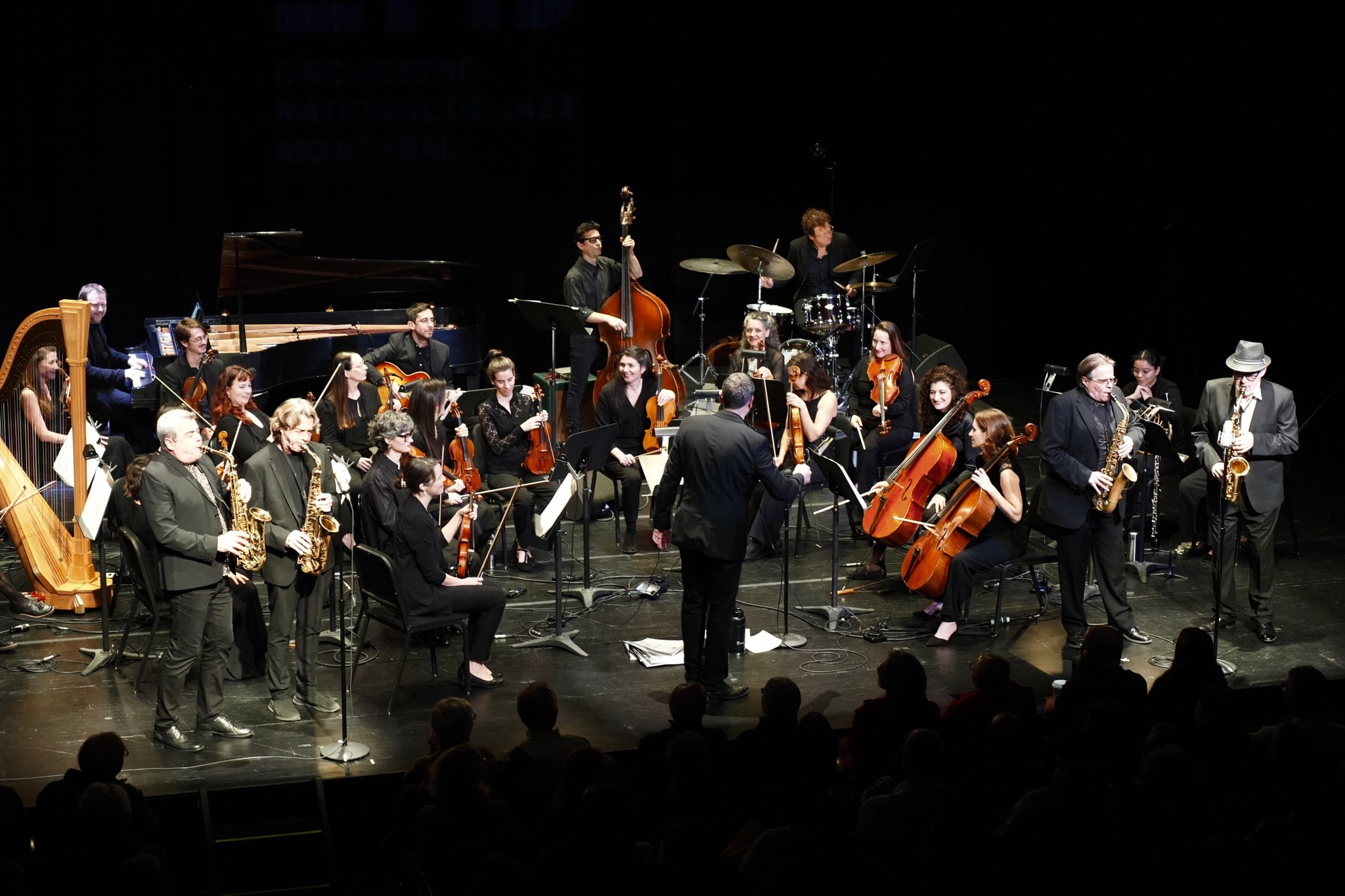
Another strong criterion for a good jazz performance lies in the ambience—not necessarily the setting, but the mood, the audience, the vibes. Place des Arts’ dark and modest Cinquième Salle offered a special intimacy and atmosphere reminiscent of a jazz bar that you can’t get in a large hall. Yet for this Charlie Parker concert, I attribute the largest amount of its success to Samuel Blais, not just as a conductor, but as a storyteller. An audience filled with true Charlie Parker—or just jazz—fans roared at Blais’ jokes and shared their knowledge of jazz history.
Blais was charming and conversational, engagingly describing each song’s origin while sharing glowing reviews and personal anecdotes of each soloist. There was a clear, mutual appreciation and respect shown between artists on stage, from the amiable string section to the thoroughly engrossed pianist Paul Shrofel to the last-minute, yet incredible, replacement bassist.
Now whether or not you want to call it ‘third stream’ jazz, string jazz, or orchestral jazz, or whatever the blurred genre lines may be, there is no doubt as to how Charlie Parker with Strings influenced the jazz scene, prompting future jazz musicians to record with string ensembles. It’s timeless, and it’s classic.
For more on Orchestre national jazz de Montréal’s season visit www.onjm.ca