With the new year comes a host of celebrations, and the Li Delun Music Foundation’s East-Meets-West New Year’s Concert is no exception. An impressive and relatively ad hoc Toronto Festival Orchestra gathered to play a program of—you guessed it—both Eastern (primarily Chinese) and Western music to ring in the new year.
Named for Li Delun (1917-2001), the pioneering Chinese conductor, the foundation carries forward his lifelong mission to make classical music universally accessible, without age or socioeconomic discrimination. Throughout the latter half of the 20th century, Li helped bridge Eastern and Western classical traditions—a legacy the foundation honours through its annual New Year’s concert. Fittingly, the evening featured Li’s own grandchildren: magician and host Kemin Zhang and cellist Rosalind Zhang, both executive directors of the Li Delun Music Foundation
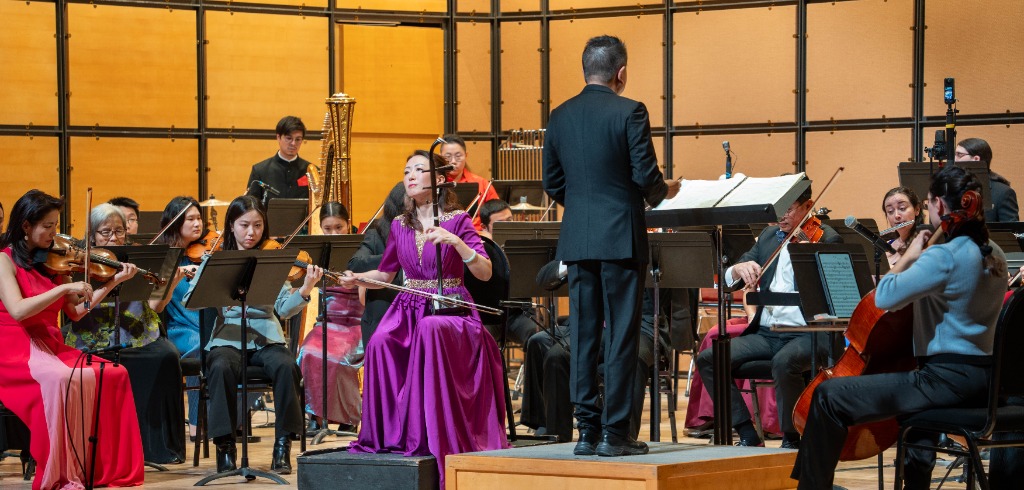
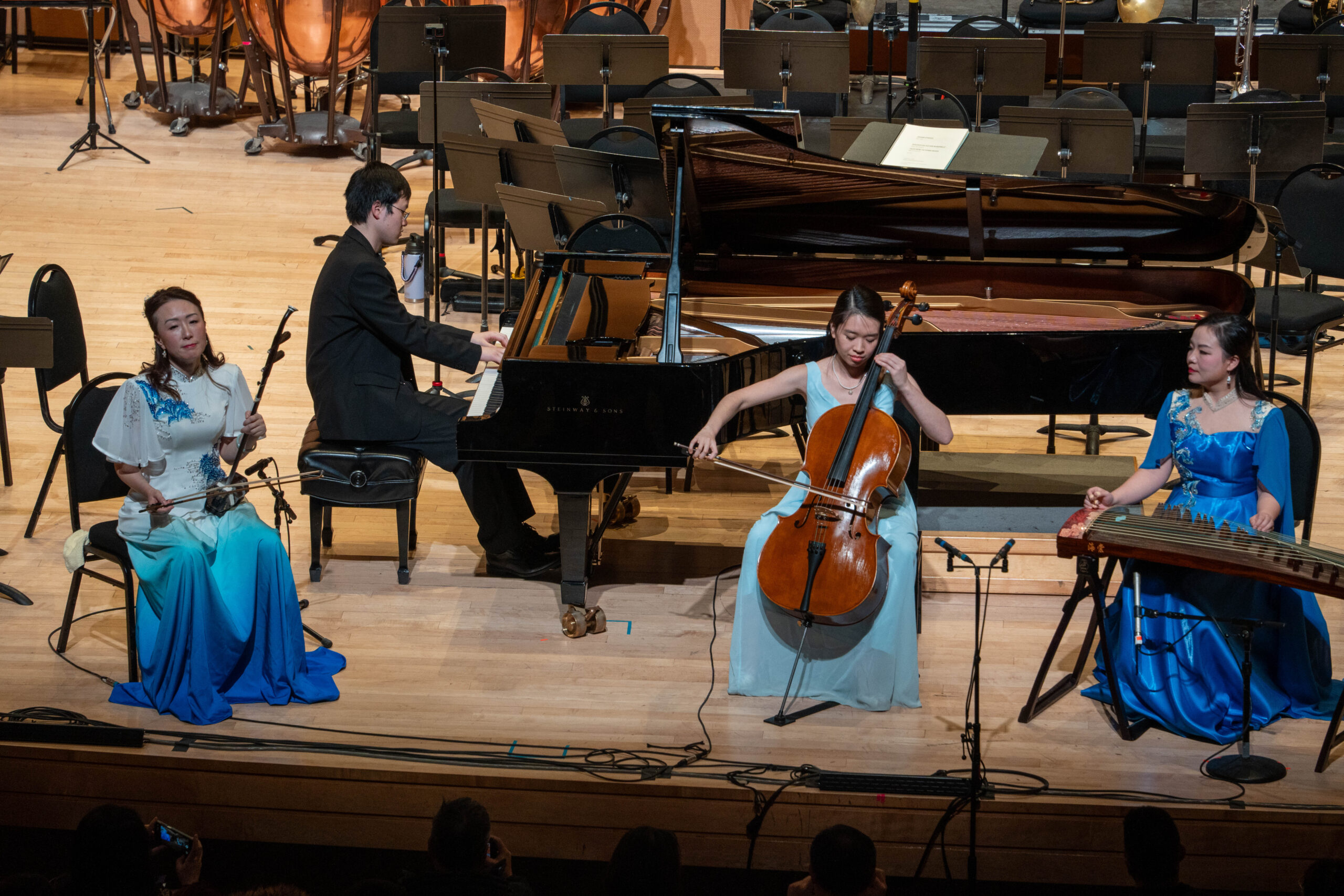
The Jan. 4 concert, held at Toronto’s George Weston Recital Hall, featured a plethora of talent. Maestro Yong-yan Hu opened with “Saibei Dance” (An-Lun Huang), with its drastic dynamic changes and lively spirit. Despite being at least a month away from the Lunar New Year of the horse, the program featured heavy horse references and traditional Chinese instruments. Snow Bai played the imaginative and clopping “Horse Racing” (Huang Haihuai) on the erhu, a two-stringed bow instrument played like a cello. Jiayu Qiu played the turbulent concerto “King Chu Doffs his Armour” (Zhou Long) on the pipa, a four-stringed instrument meant to be plucked and strummed.
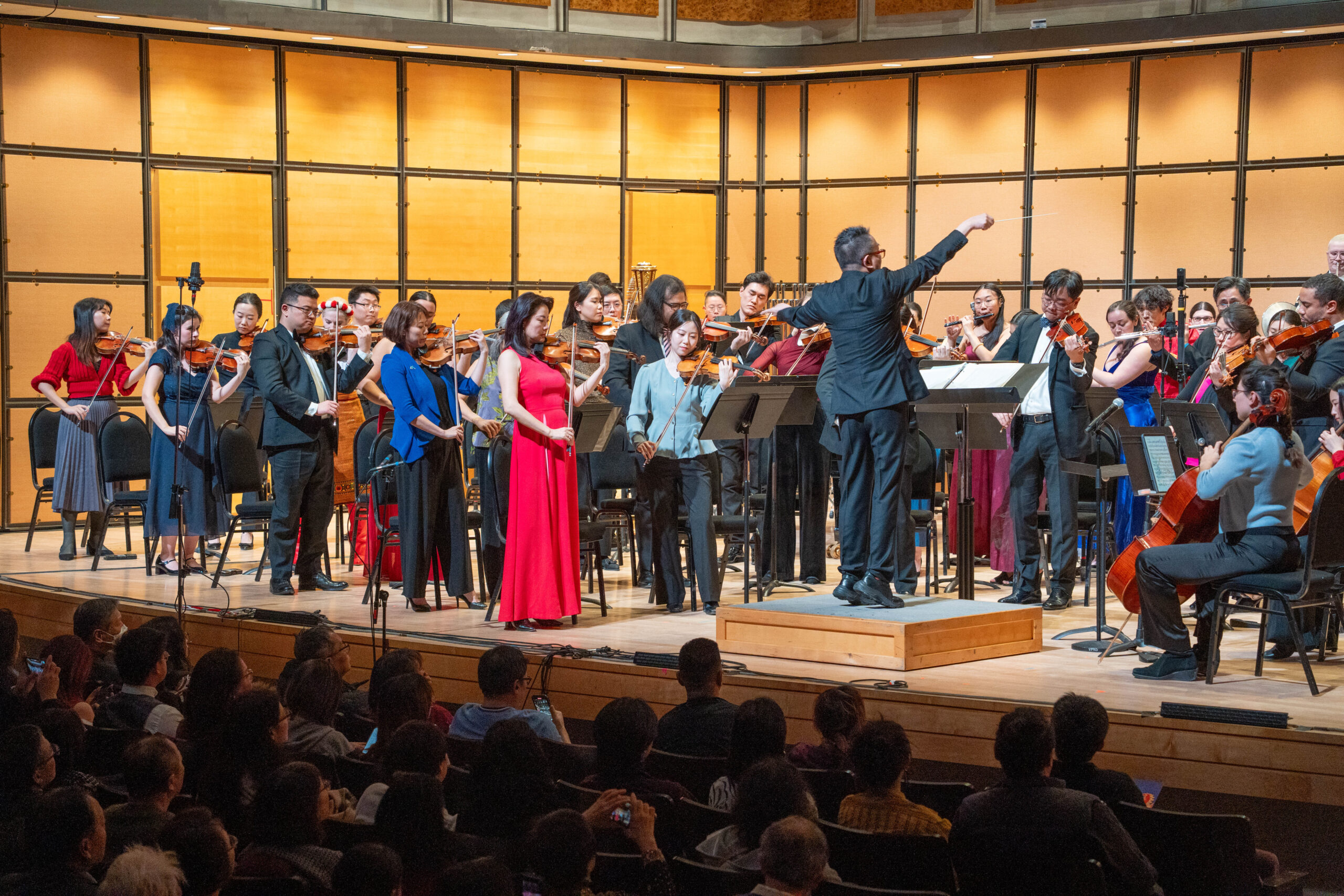
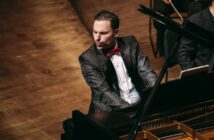
The concert’s most powerful tribute came with the fourth movement of the Yellow River Piano Concerto, “Defend the Yellow River.” Representative of revolution and national determination, this piece composed by Yin Chengzong and Chu Wanghua drew heavy inspiration from folk traditions and the Yellow River Cantata by Xian Xinghai. Local pianist Eric Guo delivered a dramatic and commanding performance, while the “galloping horses,” “raging waves,” and “armies on the march” were echoed visually in special paintings by Toronto artist Zhang Ange, hung on display in the venue.
Armenian composer Aram Khachaturian’s “Sabre Dance” and the fourth movement of Dmitri Shostakovich’s Symphony No. 7 “Leningrad” continued the theme of patriotism and nationalism, also borrowing from respective cultural folk themes. “Leningrad” unfolded with a gradually intensifying sound, ending in a poignant finale with all musicians—cellists excluded—rising to their feet. Politically charged and openly anti-fascist, the symphony echoed the spirit of the Yellow River Piano Concerto in particular, an equally political and anti-fascist piece of music. The Shostakovich did for the Russians during wartime what the original Yellow River Cantata once did for the Chinese.
In addition to this powerful piece, a key highlight for me was Jay Chou’s “Chrysanthemum Terrace” featuring the new ovverseas spring ensemble composed of Snow Bai, Jiayu Qiu, Rosalind Zhang, Eric Guo, and Lina Cao (on guzheng, a flat and horizontal stringed instrument). Guo arranged the flowy and soft piece himself, with melodies passed from musician to musician, each building on its embellishments.
Baritone Feng Zhang sang “Largo al factotum” from The Barber of Seville as well as the second movement of the aforementioned Cantata (“Ode to the Yellow River”). He showed strong expressions and showmanship in his performance, his voice smooth with emotional sensitivity. Unfortunately, the orchestra frequently overwhelmed his sound, at times making it seem as though he were mouthing the words. I’m eager to see more of his performances under more balanced audio conditions, as I loved his stage presence. Despite the orchestra’s overpowering volume, the actual music of the second movement itself was quite beautiful.
For a concert designed to bridge the East and the West, there was certainly a variety of music tied to some very loose and broad themes of New Year, to horses, to Chinese instruments, to Chinese nationalism, to Russian and Armenian nationalism. There were times I felt the themes were a bit of a stretch (eg. Johann Strauss II’s “Tales from the Vienna Woods” as a nod to the traditional Viennese New Year’s concerts? An inexplicable connection I can’t make out for the Rossini aria?), but I was impressed with the program notes explaining the compositions and some historical context, some even expertly written by children ages 12-15!
I especially appreciated the concert’s range of music and instrumentation. This was not an evening defined by the most pristine orchestral (nor scheduling) polish, but by community. It felt almost everything was interconnected somehow—musicians related to the foundation’s namesake, painters related to poets of cantatas, Chinese music written in Western forms, and Canadian performers with Chinese roots. Together, these threads formed a lovely reminder of Li Delun’s lifelong message: that music unites us all, no matter where we’re from.
For more on the Li Delun Music Foundation, visit www.lidelun.com