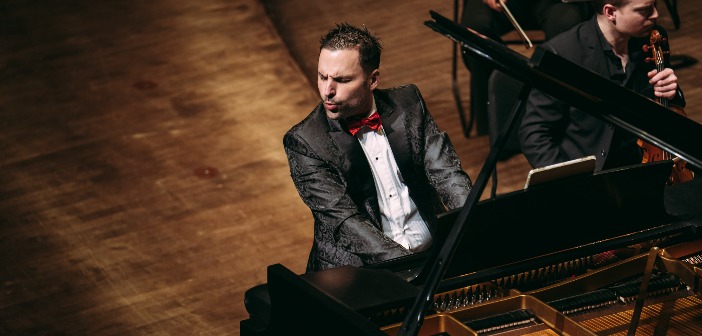
On an unassuming night in the seclusion of Montreal’s Salle Pierre-Mercure, Orchestre Classique de Montréal (OCM) welcomed three unique soloists to perform a stylistically diverse program, unified under a theme of Polish music.
Under the direction of OCM’s music director Andrei Feher, soprano Karoline Podolak, clarinettist Kornel Wolak (both Polish), and local pianist Jean-Philippe Sylvestre presented pieces by Frédéric Chopin (to no one’s surprise given the theme), Stanisław Moniuszko and Mieczysław Weinberg, as well as more contemporary pieces including works by Wojciech Kilar. The OCM, this time, was just a small group of string-only players.
Sylvestre and Wolak kicked off with a brief wordless bumping-into-each-other skit before diving into a duet of Chopin’s dreamy and melancholic Nocturne in C-sharp minor, followed by a skippy and trippy orchestral arrangement of Chopin’s Mazurka in A-sharp major, op. 7 no. 1. I thought Wolak really shone in the former piece, his gentle phrasing and tenderly sustained high notes contrasting with the piano.
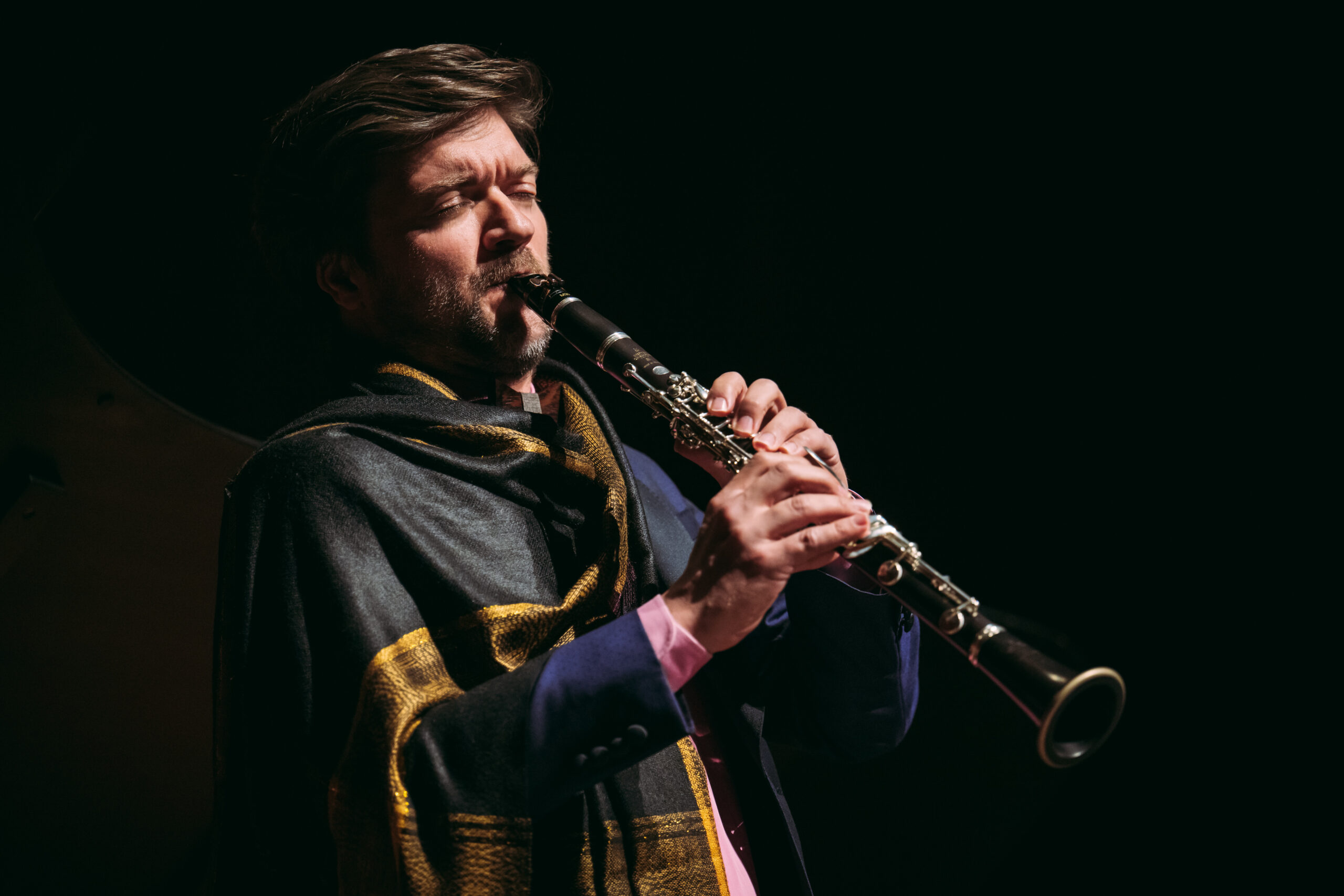
Photo: Tam Photography
Wolak’s evident wit and humour only improved his reception as he performed (musically and physically) the memorable Fishing Story by local avant-garde composer Maxime Goulet, who was at the performance himself. I seldom have the chance to hear clarinet soloists, but even I know that this wasn’t your average recital: donning a casual red flannel and a floppy fishing hat, Wolak—an author and researcher in his own right—shook the water off his “boots” before stepping into the mock boat on stage.
Quite literally a story of fishing, this silly and sonic treat was framed by vivid evocations of wind and bird calls, yet not overly experimental as to lose the melody. Wolak himself “paddled” with his clarinet while playing it, in large sweeping circular motions that mimicked the rise and fall of the music. Wolak and the strings played and acted out the wriggly and evasive fish tugging on his line. At last, the fish was caught, and Wolak could lower his hat over his eyes to enjoy a peaceful nap in his boat as the strings faded to a close.
Sylvestre was able to show off his technical prowess in Chopin’s Piano Concerto No. 2. The two outer movements were dynamic with varying tempos, while the middle Larghetto felt more harmonized. Never one to shy away from drama and showmanship, Sylvestre’s frequent signature smoulders and sharp breaths proved a bit distracting, though his playing was more controlled and his technique impeccably refined. With a much smaller and string-only orchestra, some of Sylvestre’s well-timed crescendos weren’t met with as vibrant a climax as hoped, but the Feher and the OCM made up for it in their teamwork.
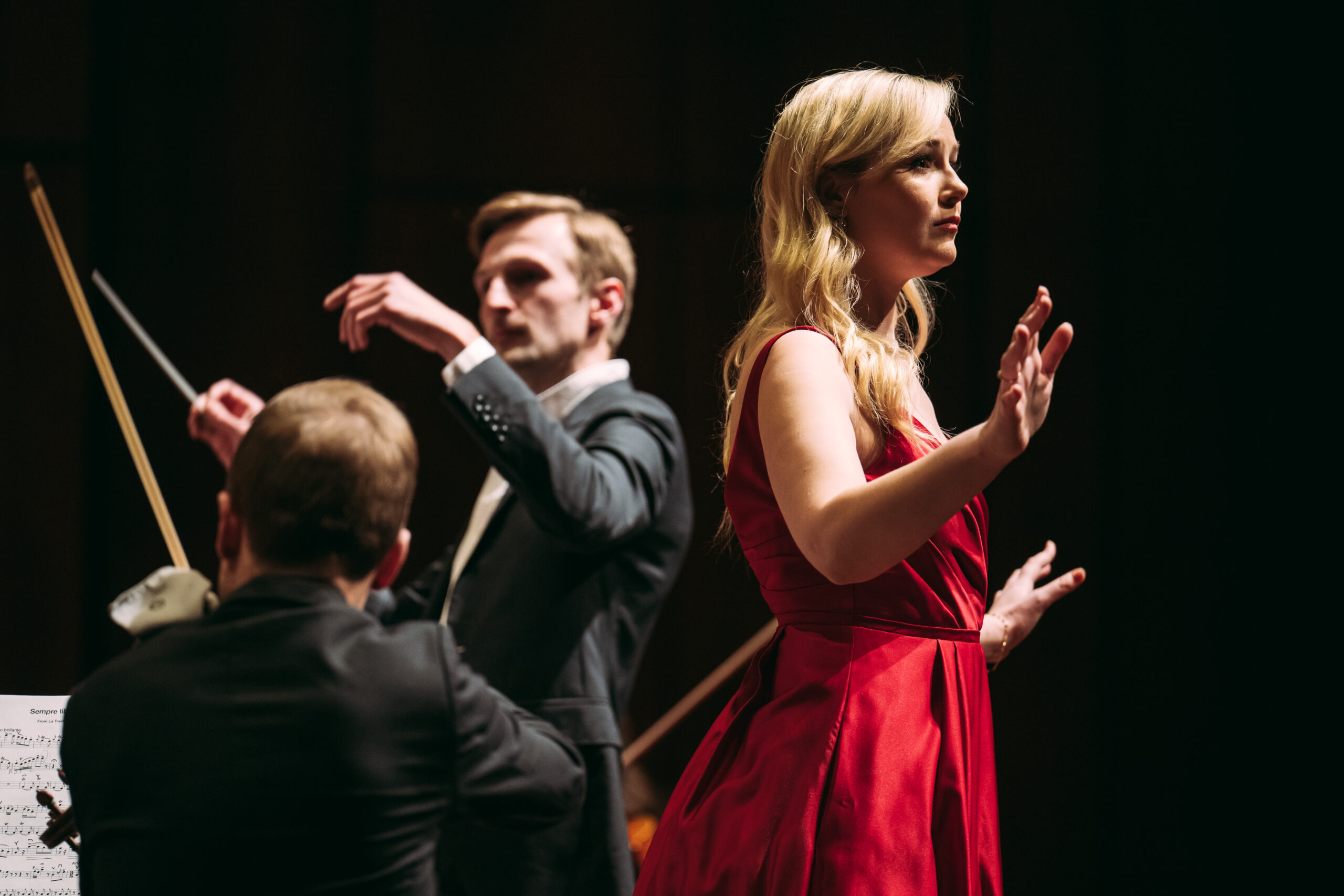
Photo: Tam Photography
My favourite discovery of the evening was Podolak, with her soaring and exceptionally crystalline voice. Her “Dumka Zuzi” (Stanisław Moniuszko) from Verbum Nobile was smooth and colourful, her wordless “Vocalise” (Wojciech Kilar) from the 1999 film The Ninth Gate, haunting and moving.
The pièce de résistance was her performance of Verdi’s “Sempre libera” from Giuseppe Verdi’s La traviata, again with perfect enunciation. Wolak’s clarinet replaced Alfredo’s offstage voice calling out to Violetta as the growing power in her voice pushed against his confessions and drew the question of her independence into play. Podolak jumped and climbed octaves with gorgeous tone and ease, and received her well-deserved standing ovations as a result.
Following a decent but comparatively less memorable Chamber Symphony No. 1 by Mieczysław Weinberg, the three soloists rebanded onstage with the OCM to perform an encore of Chopin’s Etude No. 3 “Tristesse” (“Sadness”). I’d never heard a vocal-clarinet-piano arrangement of it before and it was a delight to hear such a familiar piece performed by this trio of artists.
Orchestre Classique de Montréal’s next concert entitled Viva Vivaldi takes place at Maison symphonique on May 30.