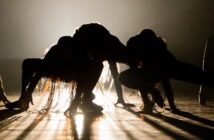
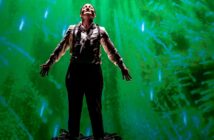
Paradisum is an unusual theatrical experience—a dark and brooding new circus show grounded in contemporary dance, with enough high-flying acts of derring-do to arouse the audience to frequent applause. That at least was the case in Vancouver when Hungary’s Recirquel premiered Bence Vági’s Paradisum in North America as part of the DanceHouse season, presented in partnership with the Cultch.
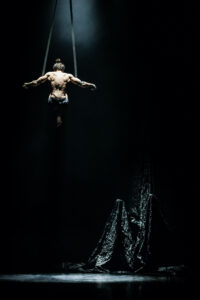
Photo: Balint Hirling
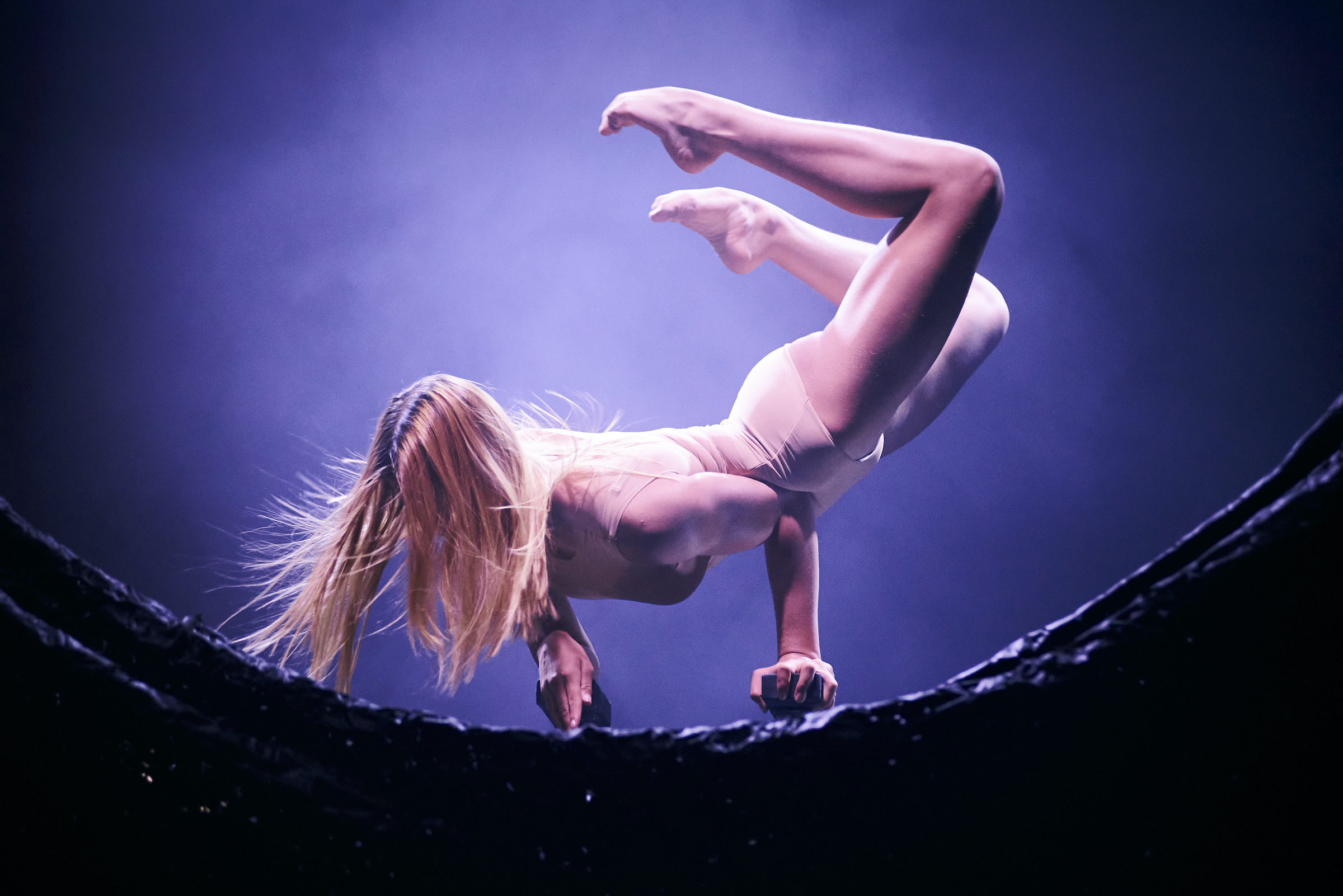
Key to this brooding and also beautiful work is the mysteriously threatening setting—mountains and towers rise imposingly, then collapse and reform, or melt into thin air and reappear in new configurations. Once I became aware of the simplicity of the stagecraft, the magic was only intensified: the richly textured set (by Vági and Emese Kasza) is created by fabric and light, sometimes animated by an unseen body, when it takes on a fantastical, almost living presence.
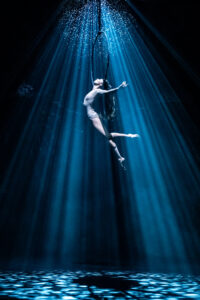
In this somber, unsettled environment, the hour-long Paradisum, according to notes on the company website, “explores the myth of rebirth following the silence of a destroyed world.” The title—Latin for “paradise”—points the way, especially in the aerial work, where the performers transcend everyday physicality and become superhuman beings.
Those beings—Demissie Efraim, Ádám Fehér, Yevhen Havrylenko, Ivett Ignácz, Kateryna Larina and Andrii Maslov—have a variety of training in circus and, for some, in dance. Vági, Recirquel’s founding artistic director, calls his aesthetic “cirque danse,” and the company’s educational wing integrates dance and acrobatics.
At a young age, Vági was influenced by Endre Jeszenszky, a leader in jazz ballet in Hungary; later, in 2003, he graduated from the dance program at Liverpool Institute for Performing Arts. The numerous dance sequences in Paradisum, primarily choreographed by Vági, feature a jazzy oomph, but with a solid muscularity and focus on the floor that places them stylistically in more contemporary and acrobatic modes. While these sections of the work are the least exciting, there is strength and grace in the ensemble’s full-hearted performance.
Paradisum’s composer, Edina Szirtes, is a Hungarian vocalist and violinist who has collaborated with Vági several times. Her mournful score for violin, electronica and percussion is layered with sound effects that add a vaguely menacing note. The atmospheric soundscape and set, and the spare presentation of the circus work in a series of somewhat lonely solos, make for a meditative experience.
In a solo on hand-balancing canes, Larina oozes into each split-leg pose and back-bending contortion as if her body is made of thick golden honey. Ignácz’s energetic flow during a hoop solo is punctuated by full stops that leave her eerily suspended from just the backs of her heels or neck. Maslov’s deft balancing on a freestanding ladder while juggling balls added welcome playfulness in an evening that, for the most part, struck a pensive note: think of it as poetry, allowing plenty of time to ponder.
Paradisum tours to Quebec City January 29-31, Montreal February 5-8 and Toronto February 13-14.