This page is also available in / Cette page est également disponible en:
 Français (French)
Following the post-pandemic trend, the renewal of leadership at Canada’s cultural institutions continues apace. Here, we meet the newest of these leaders to get their take on the current state of the classical music industry.
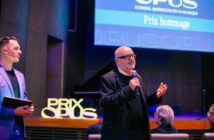
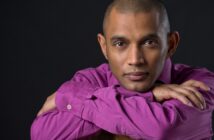
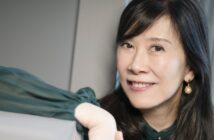
Daphné Bisson was named general director of Orchestre symphonique de Laval in May 2025, succeeding Simon Ouellette who had held the position since December 2022. Her previous roles include stage manager at Pollack Hall, coordinator of young audience concerts at Jeunesses Musicales Canada, CEO of Orchestre de la francophonie, coordinator of the Fédération des harmonies et des orchestres symphoniques du Québec and, most recently, business intelligence manager for Orchestre symphonique de Montréal. A lifelong musician, she has played violin, piano, saxophone, oboe, percussion and studied clarinet until finishing her bachelor’s degree. She has played with the community ensemble Harmonie Laval for more than 20 years.
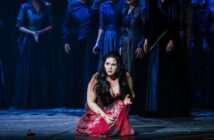
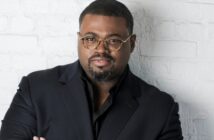
Steeve Michaud was named CEO/general director of Orchestre symphonique de Gatineau (OSG) in January 2025, succeeding co-founder Yves Marchand. Michaud brings more than 25 years experience as a classically trained pianist and singer to the role, with a career that began at Opéra de Montréal’s Atelier lyrique leading to engagements in Paris, New York, Vienna, Italy, China, as well as across Canada and the U.S. Previous positions include producer for Agence Colla+Voce and regional director of the Quebec Cancer Foundation in the Outaouais region.
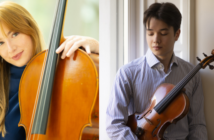
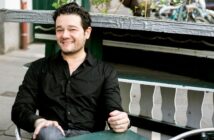
Cate Proctor was named executive director of Ottawa Chamberfest in May 2025, taking over from Mhiran Faraday who had held the role since June 2021. Proctor’s arts resumé includes roles at the City of Charlottetown and CBC Charlottetown, operations manager for the East Coast Music Association and author of Leverage the Arts Ecosystem to Influence Local Prosperity. A lifelong music-lover, she enjoys playing a variety of instruments including bohdran, bagpipes, clarinet, guitar, tin whistle, tenor saxophone.
THE LSM QUESTIONNAIRE
LSM: What led to your professional interest in arts management/business and music?
DB: Even as a teenager, I knew that music would be part of my professional life, but that it would be a combination of roles. During my music studies, I had the opportunity to discover what goes on behind the scenes, not just on stage, but also in terms of organization. I quickly discovered the world of governance and what it meant to run a non-profit organization, but also my ability to bring colleagues together on joint projects. Through these various experiences, I realized that I had a passion for management.
SM: I have always evolved at the crossroads of the artistic and strategic management worlds. My career has led me to work in market development, the promotion of cultural products, and the production of multidisciplinary events—particularly in the performing arts—while continuing to pursue my vocation as a lyric artist. An entrepreneurial spirit, a taste for collaborative leadership, and a genuine affinity for philanthropy have naturally inspired me to serve the arts sector from a broader perspective, contributing to its vitality and long-term sustainability.
CP: At the beginning (about 15 years into my career), I recognized my well-honed senior administrative skills but wanted to apply these outside the business world. I have always had a natural musical ability but did not fully develop this in my youth. My first real job in the arts was as executive director of a three-storey, multidisciplinary arts hub; the organization was close to bankruptcy. But through grit, determination, creative programming, relationship-building, and working with key board members, we saved the organization which had only been operating for less than two years when I started. I’m proud to say it still operates today. This role gave me the bug for arts administration as I saw the impact of my work.
LSM: As someone relatively new to your organization, what do you perceive as its biggest challenges?
DB: The main challenges are undoubtedly to build trust with the various stakeholders (funders, suppliers, partners and the team, including the musicians) and reassure them about the organization’s future.
SM: For me, the key challenges are threefold. First, audience renewal: engaging new audiences by striking the right balance between artistry, education, and accessibility—while maintaining sound financial stewardship. Second, cultural recognition: the orchestra is not only a leading artistic force, but also a significant economic player, reinvesting thousands of dollars into the creative and event ecosystem. Finally, funding: making the case for supporting symphonic music in a world where health, education, and infrastructure dominate the agenda is a challenge.
CP: One of many challenges in the sector is the changing demographic of audiences in chamber music, and determining practical, cost-effective, and inclusionary ways for how to maintain and increase audiences across multiple dimensions. The broader revenue model that has been established is not working well these days, due to a host of reasons—one big reason is reduced public funding to support established operations … leaving arts organizations little room to be creative in their programming and following ‘safe’ paths.
LSM: What do you feel are your organization’s greatest strengths?
DB: The orchestra’s strong roots in the community are undoubtedly one of its greatest strengths. Laval’s artistic and community circles trust the orchestra to be an important player in the ecosystem. The musicians’ commitment to the orchestra’s mission is also a tangible strength. We are fortunate to still have founding members and musicians with us, which is a real asset.
SM: OSG stands out for the passion, commitment, and human quality of its artists and leaders—visionaries who dream big while remaining grounded in a strong strategic framework and guided by an engaged board of directors. This vision fuels a continuous pursuit of excellence, positioning the orchestra as a versatile platform, primarily capable of bringing to life a broad stylistic palette, open to all genres, deeply connected to its community, and guided by a clear sense of purpose.
CP: Two things: It’s people and our programming, both being optimistic in our approach and roles! Firstly, the people most closely associated with daily operations—staff and contractors, with board members and our volunteers in a closely concentric circle. Secondly, our artistic director, Carissa Klopoushak, is curious and creative in her programming vision—aware of the challenges noted above while bravely taking calculated risks on change, which is imperative for all arts organizations right now.
LSM: What, if any, are the most significant changes you have already made?
DB: Optimization of human resources and restructuring of financial management.
SM: Among the most significant changes I have brought to the organization are the renewal of its brand identity and communication tools, as well as the enhancement of the audience experience—making each concert more vibrant, engaging, and accessible. On the philanthropic and financial fronts, I launched a philanthropic gala and helped drive meaningful budgetary growth, strengthening both the orchestra’s impact and its long-term sustainability.
CP: We reduced our summer festival in 2025 to 10 days as opposed to 14 days in 2024; however, the number of concert experiences was (almost) the same. This shift provided the same value to our patrons, a reduced budget cost to operations, and less overall stress on staff. I came on board in my new role 2½ months prior to the first day of the festival! I had little time to get fully up-to-speed on the organization I was running before being fully engulfed in the festival. Now that we are outside of that intensive period, I am able to focus on internal operations and dig into opportunities and challenges that support increased efficiencies.
LSM: So much has changed in the classical music world in the past few years. What are you hoping to see happen at your organization over the next five years? What do you hope will change? Stay the same?
DB: With the arrival of a new artistic director, there are many possibilities! Over the next five years, we will be able to develop new projects, welcome new permanent musicians, continue our ties with our communities, and grow new partnerships.
SM: Beyond concrete actions, my goal is to foster a true shift in mindset—within our organization, our community, and among our partners—strengthening a shared vision built on boldness, collaboration, and creative spirit. Transforming a community requires immense patience and dedication.
CP: Come back and ask me this in a few months. It is hard for me to say at this juncture, without the benefit of having in-depth discussions with my colleagues and the board. Overall, we will need to ensure the value of what we do is recognized, celebrated and embraced as a critical pillar of a healthy society.
LSM: Maintaining and building a loyal audience is challenging. What is your philosophy with regard to audience growth in the current climate?
DB: We are fortunate in Laval to have loyal and passionate subscribers. I hope that, as a team, we can learn from them to better communicate with those who do not yet know us. Forty years ago, the community created our orchestra to offer this service to their fellow citizens. Even today, I believe that our regional mission is still relevant. It is up to us to listen to today’s audiences in order to highlight what appeals to them in what we have to offer.
SM: My philosophy for audience growth is rooted in finesse, team cohesion, and the creation of a genuine space for connection and emotion. In today’s social landscape, I believe that when audiences feel truly invited to take part in the experience, they can fully discover the profound sense of well-being that the musical world offers.
CP: My overall philosophy is that knowledge is power, in all things! Regarding audiences, do your research. … Are they open to and curious for new listening experiences, like contemporary pieces or new combinations of musical instruments? Identify the barriers to entry and reduce or eliminate these, based on your research. Outside of this, be aware of socio-economic and political factors, especially with present-day happenings.
LSM: What are you most looking forward to this season at your organization?
DB: This season will be a festive one! It’s hard to choose, but I’m really looking forward to seeing the emerging artists perform with our musicians.
SM: Above all, I aim to reach the human being in every person open to discovery, offering musical experiences that inspire, unite, and nurture our community.
CP: I look forward to expanding my listening experiences of live chamber music. Through this quasi-research phase of my onboarding into the organization, I will be best able to develop plans that align data and set targeted objectives for staff and operations, generally. What I most look forward to is seeing our results at the end of the fiscal year.
Responses have been edited and condensed for clarity and conciseness.
This page is also available in / Cette page est également disponible en:
Français (French)