
This page is also available in / Cette page est également disponible en:
 Français (French)
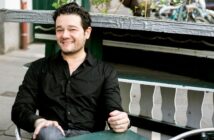
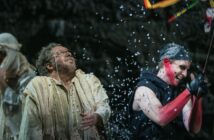
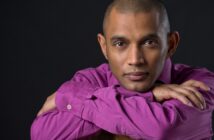
Francisco Araiza, Ramón Vargas, Rolando Villazón, Javier Camarena. For decades Mexico has produced an extraordinary lineage of lyric tenors who have conquered the world’s opera stages.
And now, Arturo Chacón-Cruz. He has sung leading roles in more than 30 countries, appearing at major opera houses including the Metropolitan Opera, Teatro alla Scala and Vienna State Opera. Lately, he has been expanding into more dramatic repertoire with upcoming role debuts in Manon Lescaut and La fanciulla del West, two pinnacles of the verismo repertoire.
His path to the international opera stage did not begin in a conservatory. It started with mariachi. He became fascinated with singing at the age of six, inspired by his uncle Salvador Cruz, an actor and singer who occasionally performed with mariachi groups. After his uncle died in a car accident, the CDs he left behind remained in the family home, and Chacón-Cruz listened to them endlessly.
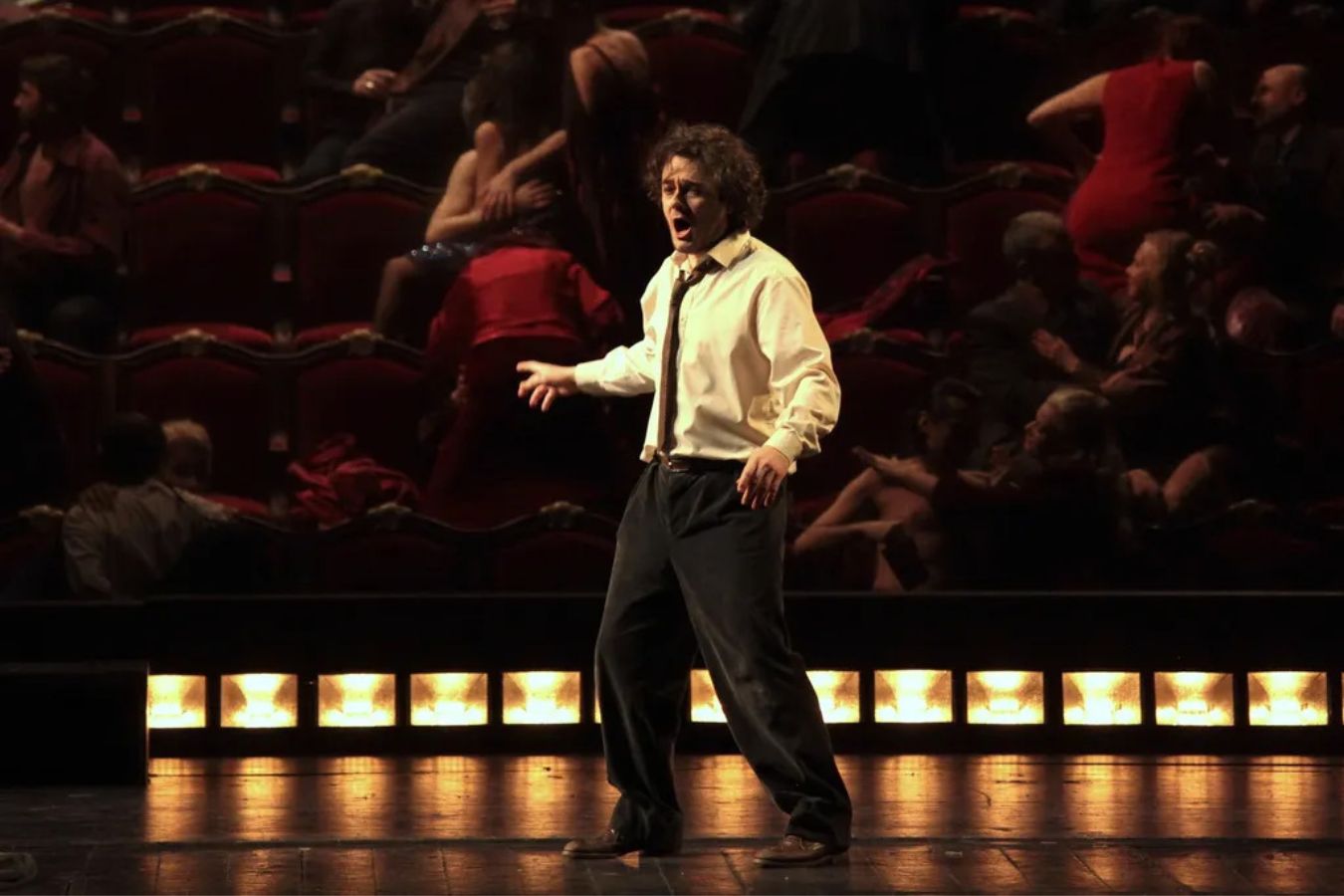
Photo: Teatro alla Scala/Brescia & Amisano
“In Mexico, everyone sings,” he explains. “At parties someone always starts a song and everyone joins in. There is rarely the idea of being embarrassed to sing.”
Yet, when the time came to choosing a career, music did not seem like a realistic path. Instead, he enrolled in engineering at the Instituto Tecnológico de Monterrey. “You gotta have a real job,” he remembers thinking.
Photo: Robert Millard
The turning point came via a gesture made by his mother, who paid for a few voice lessons with Cuban tenor Jesús Li. At first, Chacón-Cruz was not particularly interested, held back by the stereotype that opera was for older people, but soon he became fascinated with the mechanics and power of the human voice.
For the tenor, it felt as though a path was opening organically. At the University of Sonora, a degree program in vocal performance had been newly established, with his teacher as head of the program. On an impulse and supported by his family, Chacón-Cruz decided to give it a try. The idea was simple: “If it doesn’t work, you go back to engineering.” He was accepted with the highest score, but continued both paths in parallel. By the middle of the semester, however, the decision was clear: he would devote himself entirely to singing.
At the time, Chacón-Cruz was still singing as a baritone. He even appeared at Mexico City’s Palacio de Bellas Artes, performing the Marchese d’Obigny in La traviata, a baritone role.
In 2000, Plácido Domingo, who spent much of his youth in Mexico, travelled to the Palacio de Bellas Artes for a concert. Because Chacón-Cruz had already worked with the company, he was given the opportunity to open the evening. He sang the baritone mainstay, Valentin’s “Avant de quitter ces lieux,” from Gounod’s Faust.
After the aria, Domingo asked him to come backstage. The tone, Chacón-Cruz recalls, was serious, almost like a doctor delivering a diagnosis.
“Sit down, please. What is your name?”
“Arturo.”
“Arturo! That was my grandfather’s name.”
A brief pause.
“I believe you are not a baritone. I believe you are a tenor.”
Then came the advice that would shape Chacón-Cruz’s career.
“Look, make the switch to tenor. And when you do, come sing for me. Your voice reminds me very much of my own when I was your age, because I also began as a baritone.”
The choice was obvious, but it would require some work. Chacón-Cruz could occasionally hit some high notes, but not with optimal consistency. Determined to explore his potential as a tenor, he transferred his studies to Boston on scholarship. Much of the process, he admits, he had to navigate alone.
Photo: Karen Almond
His first test as a tenor came in a 2002 production of The Magic Flute as Tamino, the main tenor role. While the part does not include any particularly high notes, it is still demanding due to its sustained, high tessitura and the precision and elegance required in Mozart’s vocal writing. The former baritone passed the test successfully. Around the same time, he also began refining his newly discovered voice with the renowned Mexican tenor Ramón Vargas.
“He helped me understand how to narrow the sound in the passaggio and then expand it for the high notes,” Chacón-Cruz says. He recalls listening back after some lessons and wondering whether it was Vargas or himself singing. He also describes working on exercises that Vargas had learned from the teacher Rodolfo Celletti, a well-respected musicologist and tenor in the 1950s. Much of the work consisted of singing simple major or minor phrases on different words, each time aiming to express a specific emotion. The focus, he insisted, is on shaping the sound through emotion rather than approaching it mechanically.
“Many singers are on the brink of becoming true professionals,” he says. “The technique is there, but they have not yet taken the step of singing with emotion. Some think it will come later, in performance. In my opinion, you have to practise with emotion, always searching for expression.” He imagines the voice almost as a graph, with low and high frequencies on one axis and the expressiveness on the horizontal, each combination yielding a different colour.
It was this union of technique and expression that shaped his development as a tenor. In the summer of 2005 in Madrid, his progress was validated on one of opera’s most visible stages: Operalia, the prestigious competition founded by Plácido Domingo where he won many prizes. “Since winning at Operalia, I haven’t had to do a single audition, and my schedule has been quite full,” he says. “Since then, Plácido has also become an artistic father and a great friend.”
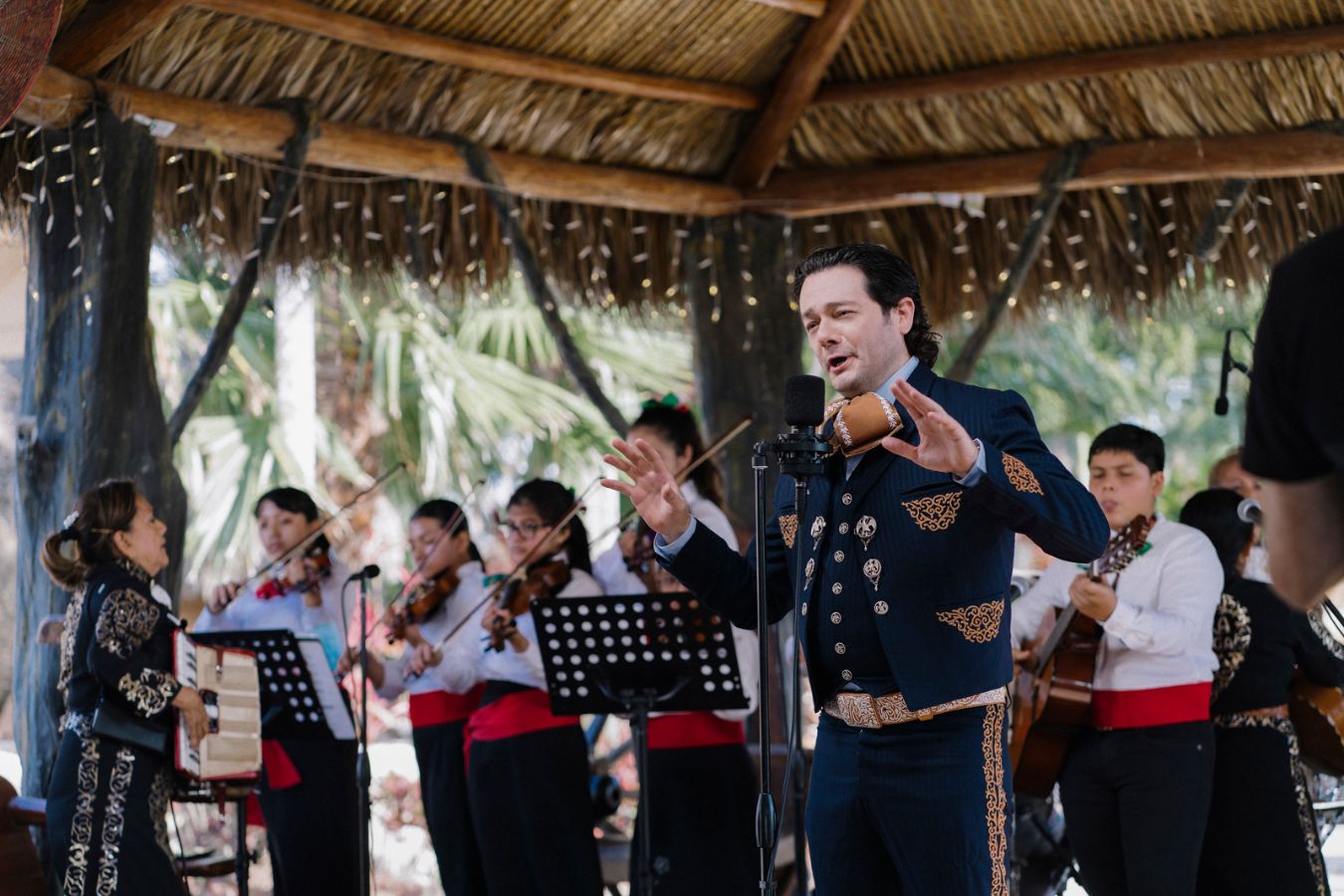
Mariachi vs Opera
“A singer who can sing mariachi well can sing an operatic middle-voice role. Actually, most mariachi songs lie in a baritone tessitura,” says Chacón-Cruz. “That was part of the problem at the beginning of my career. I was trying to sing opera as if it were mariachi, and that works for a baritone, because the top notes [for this voice type]are F sharp or G.” He explained that to become a tenor he had to master what is known as girare la voce, allowing the voice to turn and access higher notes with ease.
At the same time, he points to strong parallels between the two traditions. Both demand emotional directness and the ability to carry the voice without amplification. In a typical mariachi ensemble, the singer must project over guitars, guitarrón and trumpets, often in open spaces. Listening to some of his favourite mariachi singers—Javier Solís, Jorge Negrete and Vicente Fernández—one often hears a vocal placement similar to that used in opera. This focused resonance, often concentrated between 2,000 and 4,000 hertz, is known as the singer’s formant, or squillo, in Italian. It allows the voice to project over an ensemble without amplification.
“Both styles have their rules. In opera, we cannot exaggerate as much as in mariachi. In mariachi, on the other hand, we cannot refine the sound to the same degree as in opera. But there is also a middle ground. For example, the mezza di voce—the swelling from piano to forte—is used often in mariachi as well.”
Through experimenting with both styles, he has come to understand that the vocal placement can be very similar. “In a mariachi concert I did at Bellas Artes a month ago, I had the option of singing a note in a more belted, open way. But I kept adjusting it in rehearsals and finally chose a more covered, classical approach. Honestly, I do not think the audience noticed. They seemed to enjoy it just as much, and my throat was certainly grateful.”
He also enjoys using mariachi phrasing to inject new colours into his operatic singing. “Right now, while singing Alfredo at the Metropolitan Opera, when I begin the aria ‘Deh, miei bollenti spiriti,’ I think of the mariachi phrase ‘Amigo, ¿qué te pasa? Estás llorando.’” He demonstrates it in a gentle mezza di voce before returning to the Verdi. The result feels strikingly natural, perfectly suited to the character’s youthful ardour.
This way of thinking shapes how he approaches singing more broadly. Every sound, he insists, must be informed by emotion, allowing elements such as placement, appoggio and breath to respond organically rather than mechanically.
The Montreal Connection
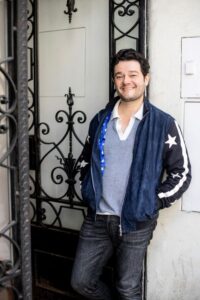
Chacón-Cruz has strong bonds to Montreal. During his studies in Boston, he met Venetia María Stelliou, a soprano from Brossard also pursuing a singing career. They married in Canada before settling in the United States and have now been together for more than 20 years.
Although he is only about to sing his first full role with Opéra de Montréal, he appeared in the city early in his career, shortly before his breakthrough at Operalia. In December 2005, he performed at the company’s annual gala concert, which also marked the induction of Quebec coloratura soprano Pierrette Alarie into the now defunct Panthéon canadien de l’art lyrique. The lineup brought together emerging artists from the company’s Atelier lyrique with established performers, including Nicole Cabell, Sarah Coburn, Étienne Dupuis and Marc Hervieux.
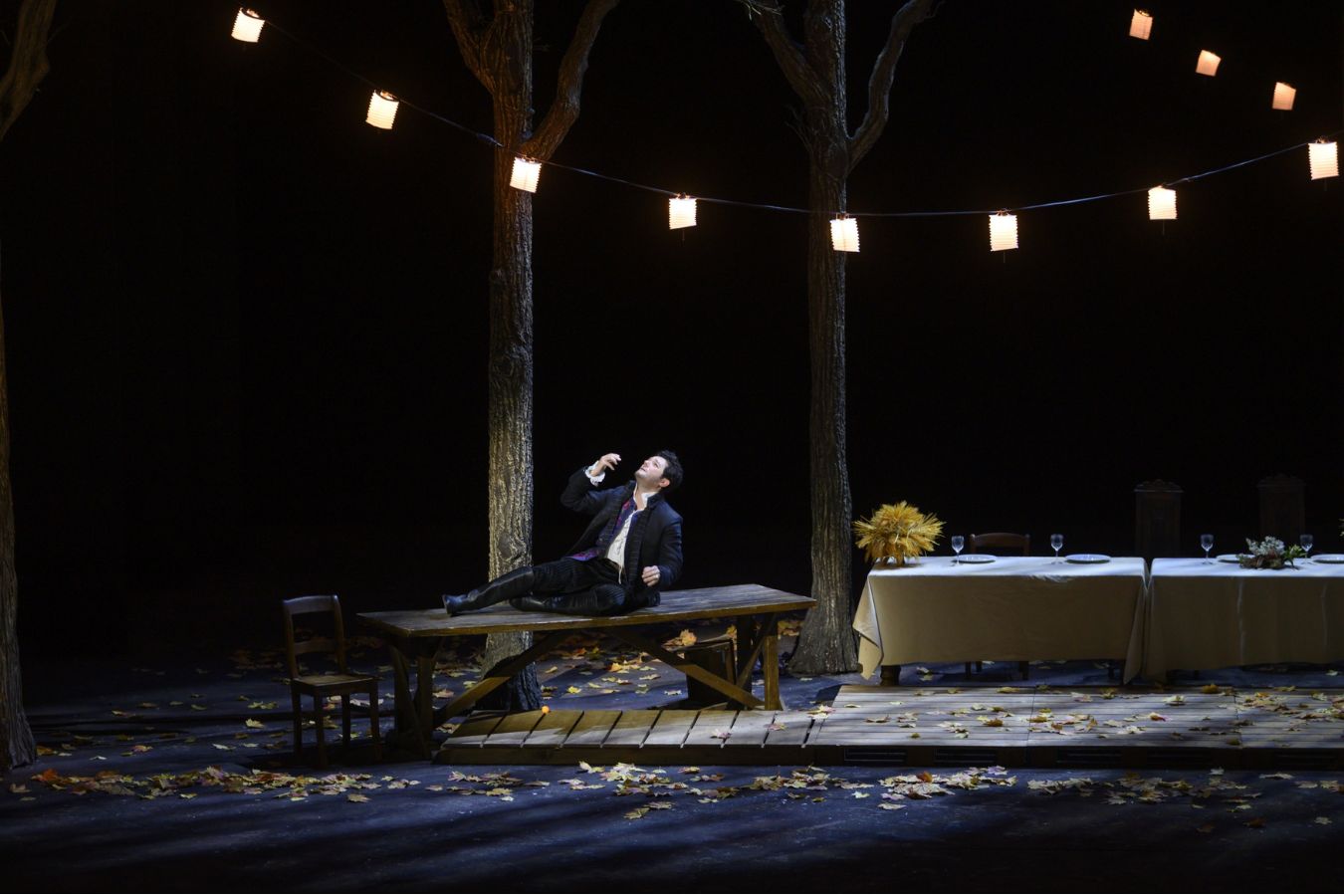
Two decades later, ongoing conversations with Artistic Director Michel Beaulac have come to fruition with his company debut as Don José in Bizet’s Carmen. He’ll appear opposite Montreal mezzo-soprano Rihab Chaieb in the title role, with baritone Ethan Vincent as Escamillo. The production is staged by Anna Theodosakis and conducted by Jean-Marie Zeitouni, leading Orchestre Métropolitain and the Opéra de Montréal Chorus.
Chacón-Cruz describes Don José as a highly volatile character, reflecting a stereotype often associated with the Basque temperament: quiet one moment, then suddenly prone to outbursts of anger.
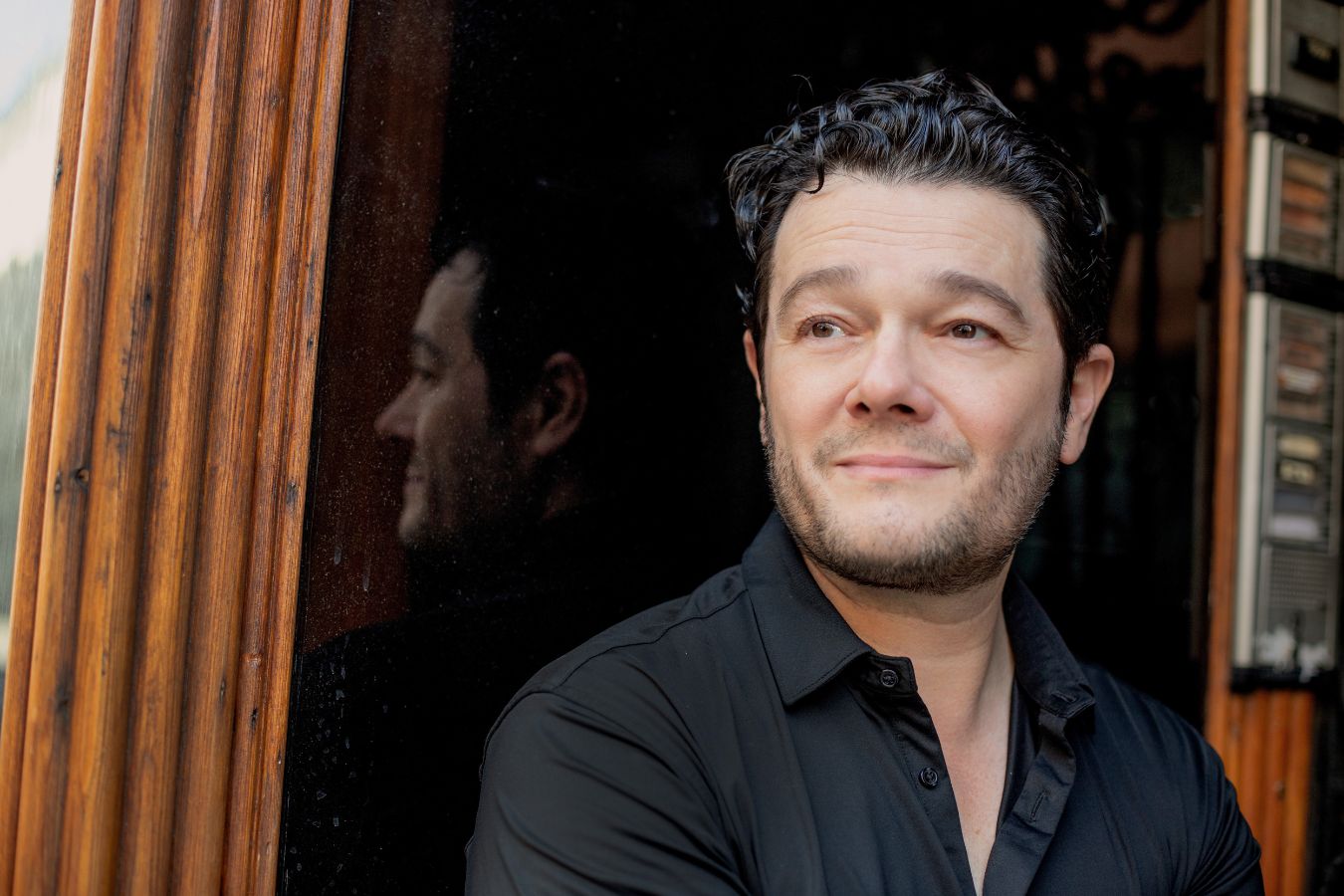
At first glance, this seems far from Chacón-Cruz’s nature. In person he appears gentle, even something of an “all you need is love” personality. He recalls that his first production of Carmen was staged in a violent way, an experience that left a lasting impression. Over time, however, he learned to approach the role differently, adding more compassion into the character. For him, Don José has become a cautionary tale about toxic masculinity and emotional repression.
“Men don’t cry,” he says, referring to the kind of upbringing that can lead to tragedy. “Not talking, always shelving emotions inside, that’s what creates murderers.” Vocally, the challenges of the role are somewhat ironic. Rather than the dramatic outbursts, Chacón-Cruz finds the more delicate lyrical passages the most demanding. The duet with Micaëla, for instance, requires a technically-challenging, head-voice-dominant vocal emission.
Looking ahead, he hints at taking on even more demanding roles, including Andrea Chénier and Otello. At the same time, he speaks of longevity with characteristic simplicity: he intends to keep singing, like his mentor Domingo, for as long as the voice allows him—even if, one day, it means returning to where everything began.
Opéra de Montréal’s Carmen runs May 2–12 at Place des Arts.
www.operademontreal.com
www.arturochaconcruz.com
This page is also available in / Cette page est également disponible en:
Français (French)