The excitement around this sold-out Eugene Onegin at the Palais Garnier (seen Feb. 1) begins with a name: Ralph Fiennes. One senses his presence before a note is played. This is not a production that announces a concept; it unfolds as an act of direction in the cinematic sense. Fiennes shapes time, stillness, and gesture with the instincts of an actor and film-maker. The theatre itself—Garnier’s red velvet, gold leaf, painted ceilings—lingers in the peripheral vision like a living extension of the staging. Built in the same decade as Tchaikovsky’s opera, it feels less like a venue than like part of the world being evoked on stage.
From the outset, Fiennes trusts what opera often fears: silence, immobility, the expressive weight of a body at rest. Emotions are allowed to form rather than be demonstrated. This approach reaches its apex in Tatiana’s letter scene. Armenian soprano Ruzan Mantashyan appears less to sing an aria than to think aloud. The desk, the nocturnal light, the enclosure of the room create a psychological chamber. Mantashyan’s long-breathed phrasing and fragile pianissimi seem guided by Fiennes’ invisible hand. One has the impression she has been coached as a film actor might be—every pause, every stillness carrying meaning. The scene unfolds like a mind in motion.
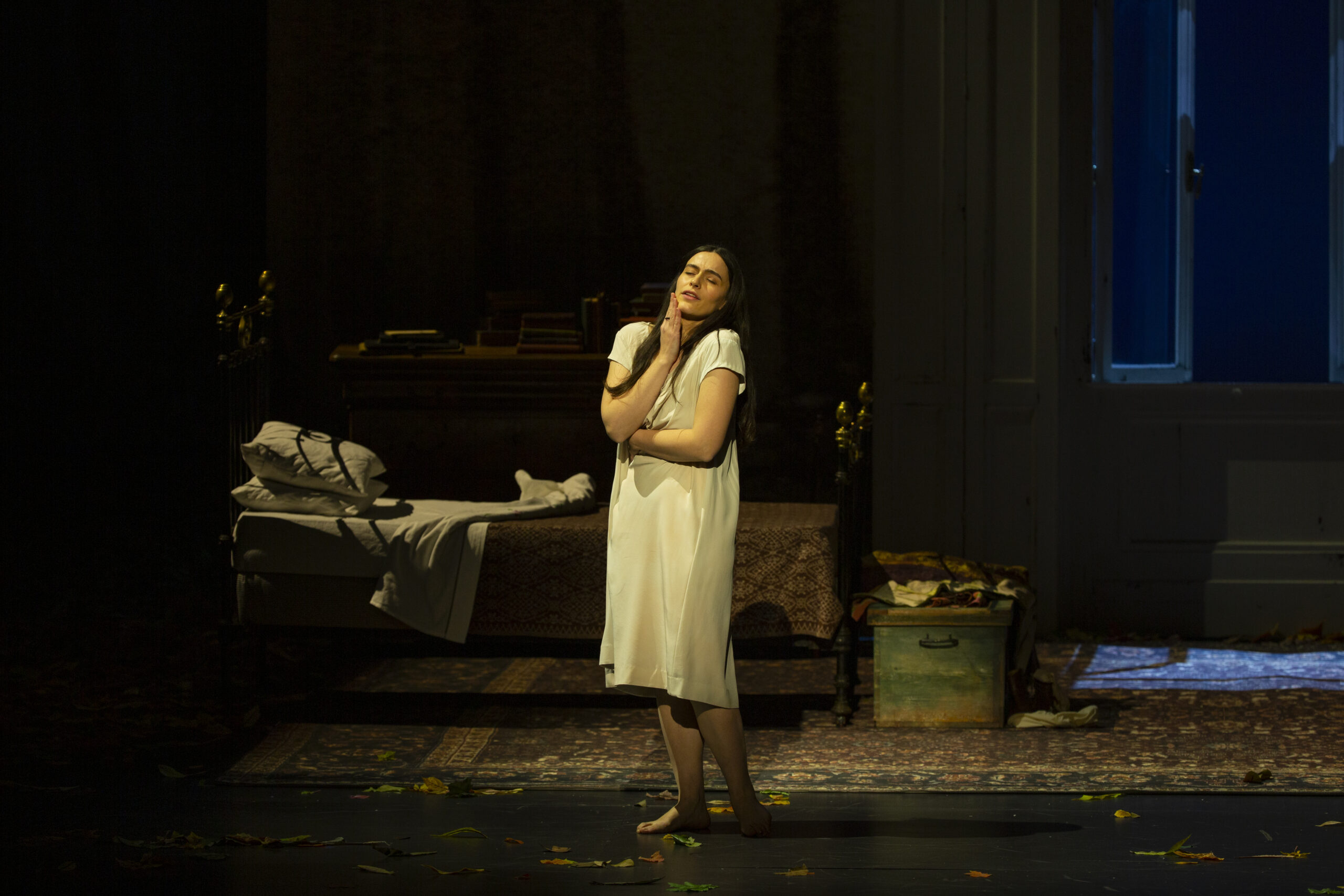
Photo: Guergana Damianova
In this sense, the production feels strikingly modern. Though drawn from Alexander Pushkin’s verse novel, the mise en scène feels closer to Anton Chekhov than to Pushkin. The drama lies in hesitation, in what is not said, in the quiet passing of time between people who cannot articulate their feelings. It is a Chekhovian stillness that reveals the opera’s psychological core with unexpected clarity.
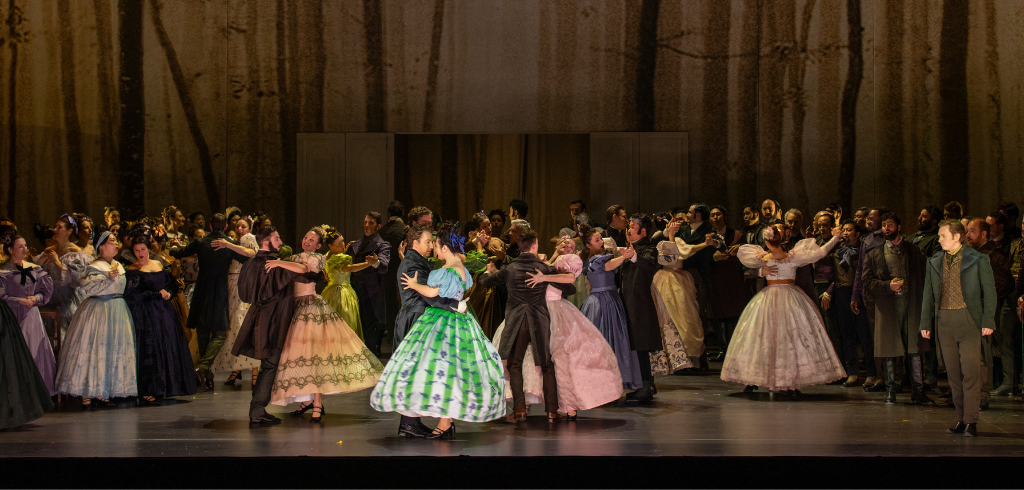
The visual restraint of Canadian designer Michael Levine allows this intimacy to breathe. Painted perspectives and warm interiors do not compete with Garnier’s opulence; they quietly extend it. With two intervals during the evening, the audience re-enters the auditorium twice, each time stepping back into the same 19th-century atmosphere, as though the world of the opera and the world of the theatre were continuous.
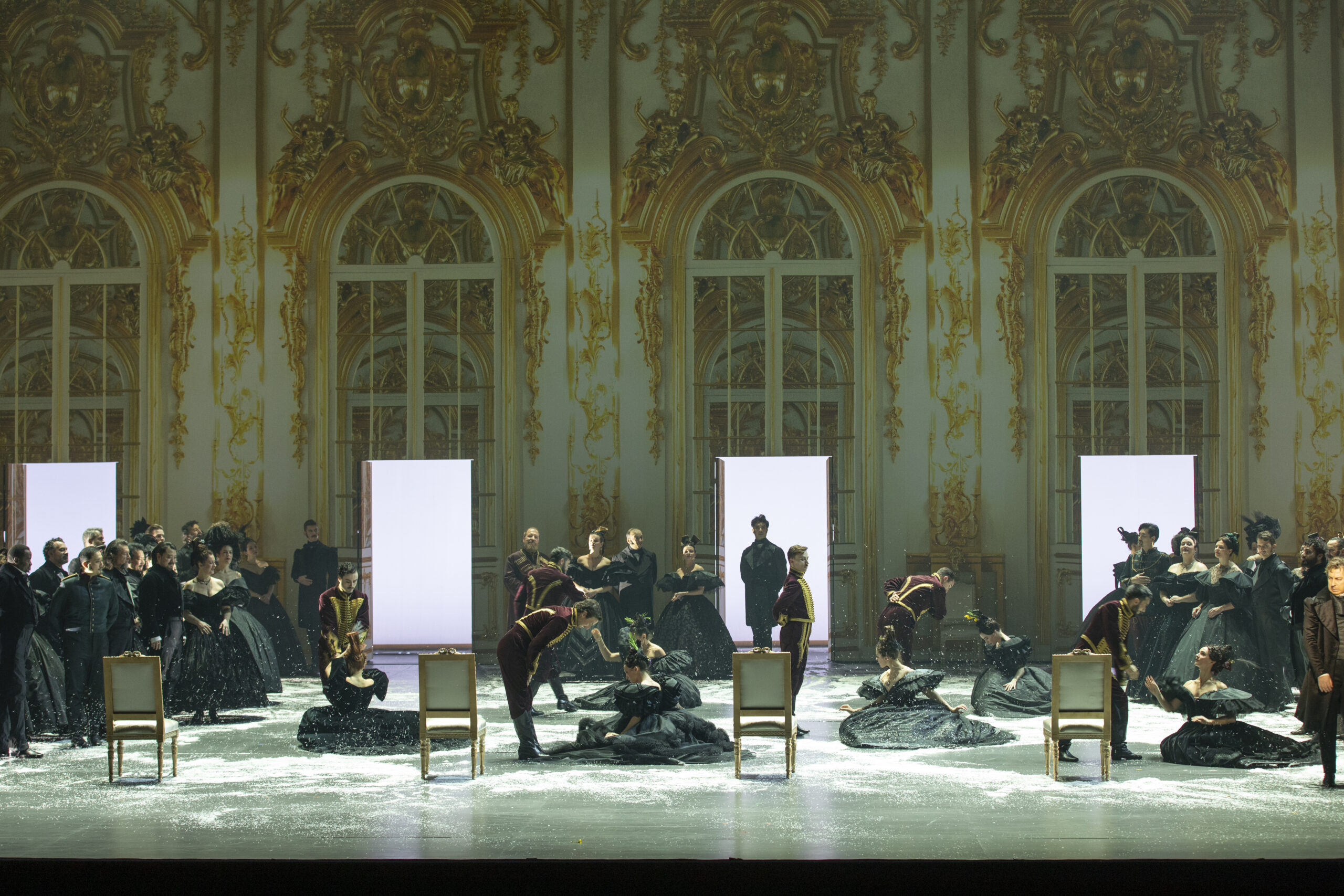
Photo: Guergana Damianova
In the pit, Semyon Bychkov brings a different kind of presence: quiet authority rooted in a deep Russian lineage. A pupil of the Leningrad school, his Tchaikovsky feels shaped from within—through line, patience, and unforced depth of sound. The orchestra sounds transformed: warmer, more elastic, more transparent. Singers are supported rather than carried. There is an authenticity here that comes not from display but from inheritance.
The evening’s emotional revelation is Lensky. Bogdan Volkov possesses a rare kind of lyric tenor voice, silver and luminous, with almost no baritonal shadow. The sound is heartbreakingly pure, recalling the great Swedish tenor Jussi Björling, whose Lensky remains legendary. In Volkov’s aria before the duel, tragedy arises not from weight but from beauty. The voice is so young, so unforced, that the moment becomes devastating.
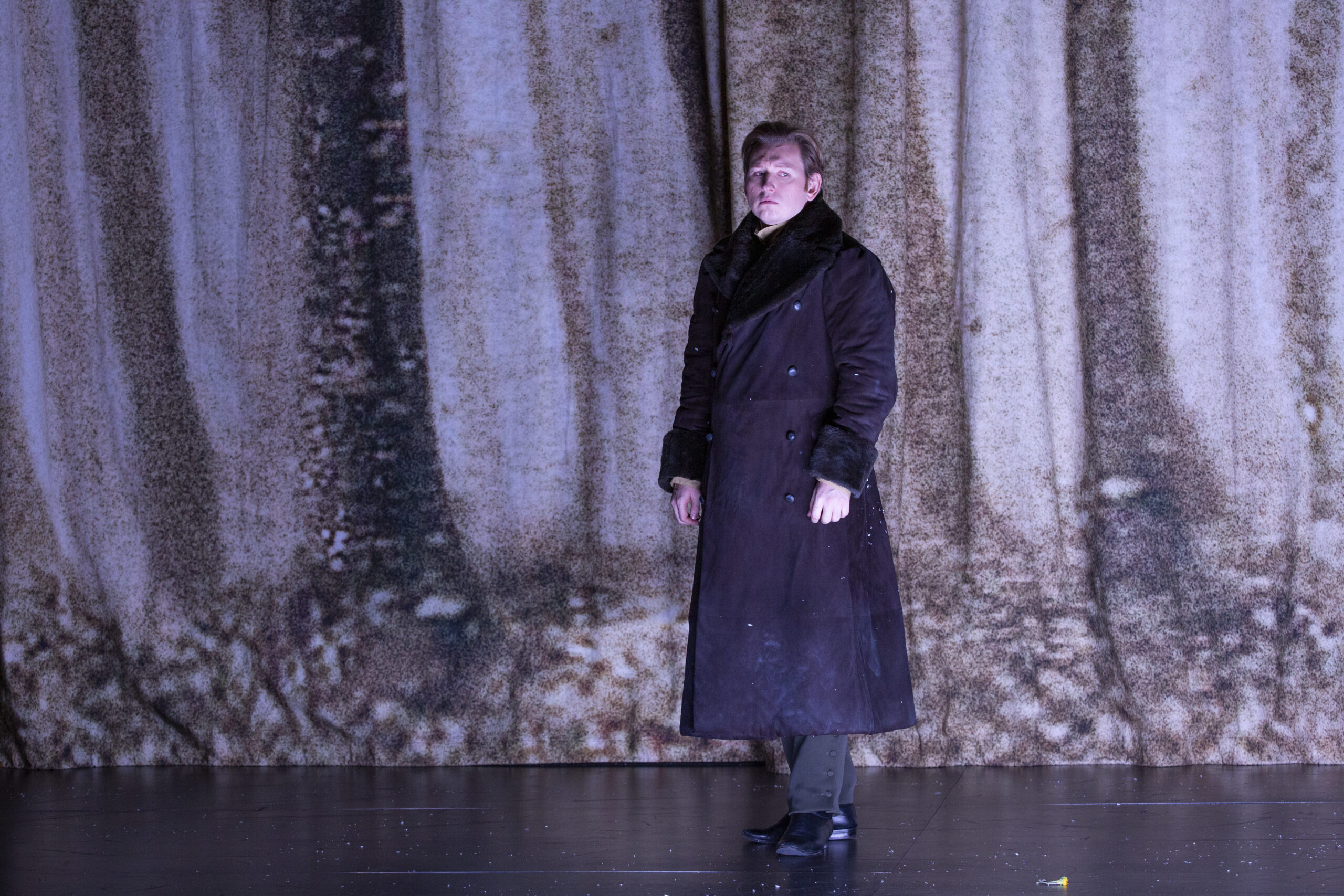
Photo: Guergana Damianova
By contrast, Boris Pinkhasovich’s Onegin, though vocally solid, lacks the tormented interiority that Fiennes’ staging clearly understands. The character appears reserved where fragility is needed, creating a subtle imbalance at the drama’s centre.
The smaller roles, however, are beautifully judged. Marvic Monreal’s Olga brings lightness and clarity to the domestic scenes, making the household feel alive and credible. Alexander Tsymbalyuk’s Prince Gremin provides one of the evening’s quiet pillars: warm, dignified, and sincere, his aria becomes a moral centre in the final act. And for the Garnier audience, the presence of Susan Graham as Madame Larina brings back memories of her many outstanding performances notably Octavian opposite Renée Fleming.
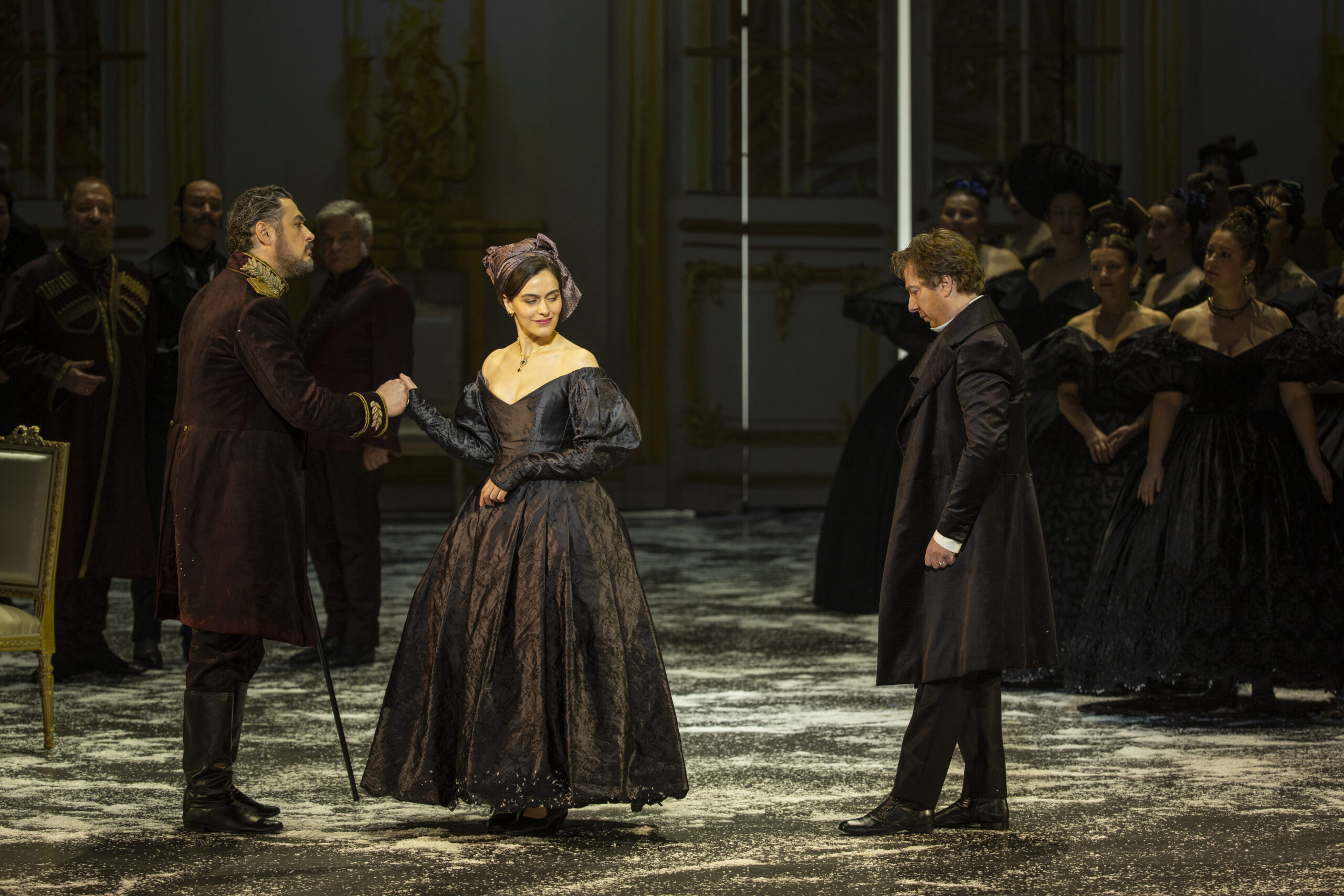
Photo: Guergana Damianova
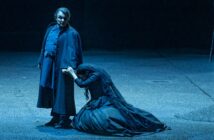
The final encounter between Tatiana and Onegin is staged with extraordinary restraint. Two figures stand in a room with the weight of years between them. Mantashyan’s stillness contains the memory of the girl from the letter scene. The refusal is quiet, devastating, and entirely human.
What this Onegin ultimately offers is something rare: a space in which the audience is allowed to dream. In a world that often feels harsh and unyielding, entering Garnier for these hours feels transformative. One sees it in the foyers during the intervals—spectators dressed to the nines, selfies in every language, people lingering as if reluctant to let the spell dissolve. This is not escape in a trivial sense, but a reminder of another emotional reality. For a few hours, we inhabit a world of interior feeling, beauty, and time suspended—and we leave changed by it.
Eugene Onegin continues its run at Opéra national de Paris through Feb. 27.