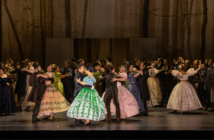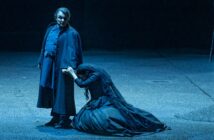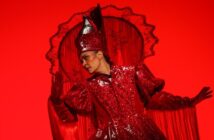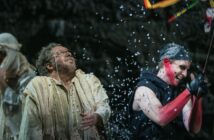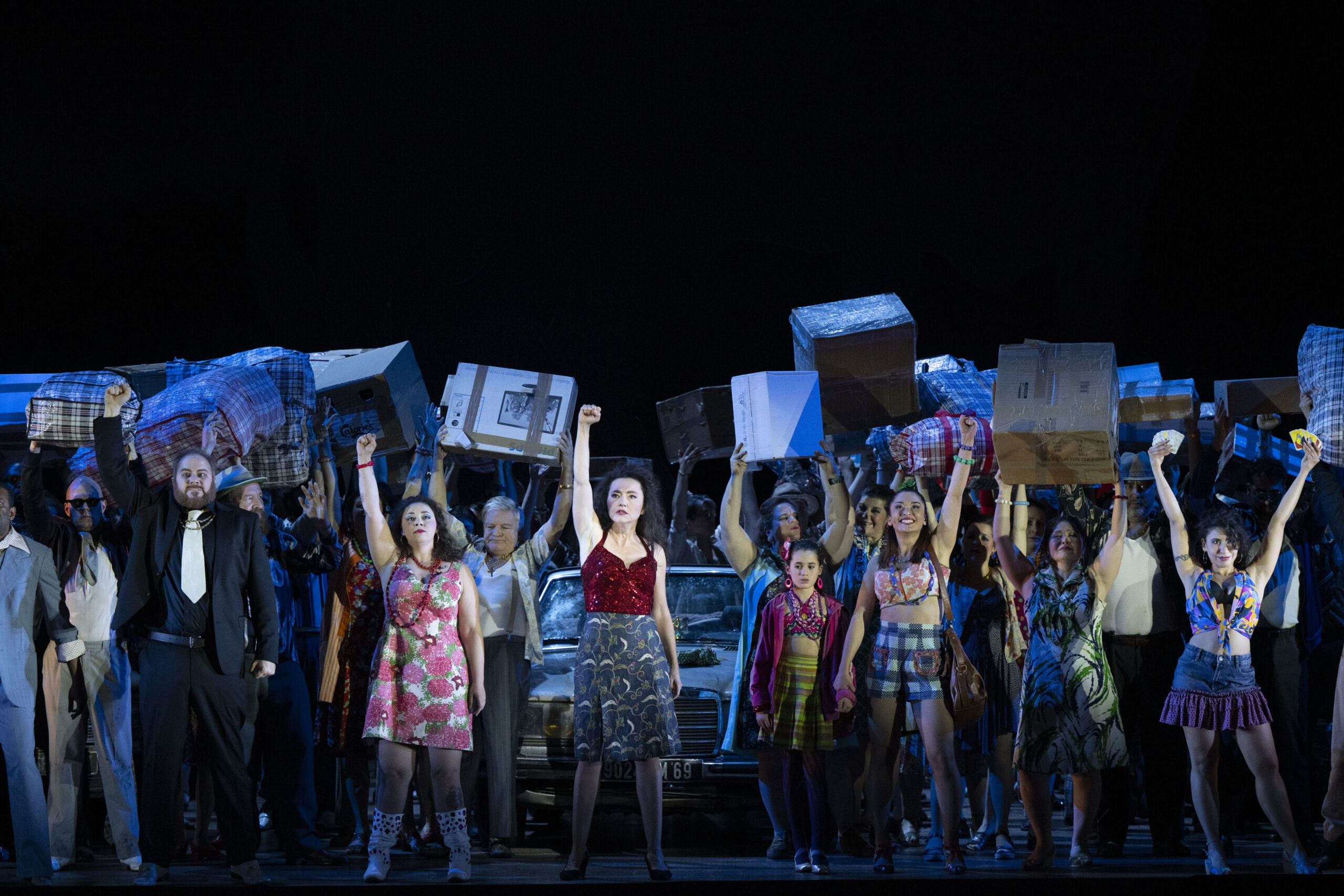
Calixto Bieito’s Carmen at the Opéra Bastille—a production created in 1999 at the Festival de Peralada (Spain) and revived in Paris since 2017—arrives with the reputation of a once-scandalous staging. Yet what unfolds on stage today feels less provocative than crude.
The production (seen Feb. 22) is built on a succession of aggressively literal gestures—sexual exhibitionism, staged violence, crudely stylized mob behavior—presented with little variation or psychological progression. Rather than revealing new facets of the characters, these devices reduce them to caricature: Carmen becomes a bundle of mannerisms, Don José a schematic figure of brutality, Escamillo a hollow emblem of machismo. The relentless emphasis on physical degradation and shock effects creates not tension but monotony, and one leaves with a sense not of discovery but of repugnance. What may once have registered as confrontational now reads as theatrically unimaginative, a vocabulary of provocation deployed without deeper dramatic purpose.
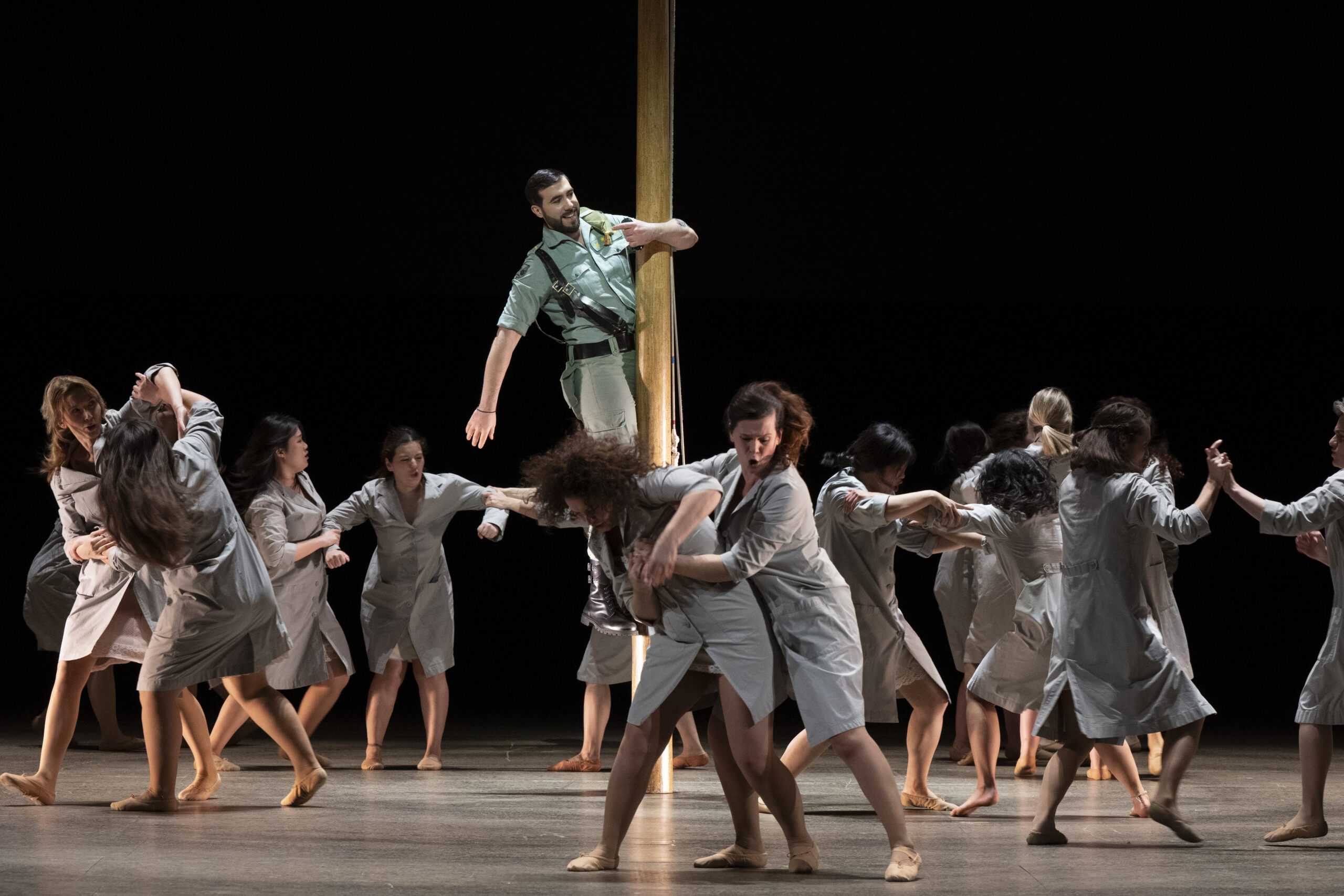
Photo: Benoite Fanton
This is particularly striking in a work that has proven uniquely open to reinvention. Few operas have undergone as many transformations as Bizet’s Carmen, which has gradually evolved from opéra-comique into a modern theatrical myth. Already in the early postwar period, Maria Callas approached the heroine not as a picturesque mezzo type but as a psychologically-charged tragic figure (a document of her interpretation beside Giuseppe Di Stefano survives in the filmed Mexico City performances).
Roland Petit’s 1949 ballet translated Carmen into modern dance theatre, foregrounding erotic power and physical conflict. This vision was powerfully confirmed by Mikhail Baryshnikov, who redefined the Toreador by replacing the traditional virtuoso cliché with an embodiment of controlled sensuality, dramatic intelligence, and magnetic physical presence. Peter Brook’s La Tragédie de Carmen (1981) stripped the score to its emotional core, recasting it as an intimate chamber tragedy he would later adapt for film. More recently, Dmitri Tcherniakov has relocated the drama into a contemporary psychological space, treating the narrative less as folklore than as a study of destructive relationships. Against such a lineage, one hopes each new production will uncover something previously unseen.

Photo: Benoite Fanton
The musical side of the Bastille revival offered mixed results but also genuine strengths. Stéphanie d’Oustrac, who had been so compelling in Tcherniakov’s 2017 Aix-en-Provence production, did not always find the same vocal ease here; the tone could turn uneven under pressure, and the characterization sometimes remained constrained by the staging’s more schematic direction. Yet her dramatic commitment was evident throughout. Erwin Schrott’s Escamillo, though vocally solid, projected less of the effortless charisma that can make the Toreador such a magnetic figure.
Amina Edris’s Micaëla brought a pleasing timbre and musical sincerity, even if the role’s full lyrical radiance—the kind that once made audiences erupt for artists like Angela Gheorghiu—did not entirely materialize.
Photo: Benoite Fanton
By contrast, Russell Thomas proved a compelling Don José, even if his instrument sits somewhat outside the traditional French lyric mold. The Verdian amplitude of his voice brings weight rather than suppleness, yet his vocal authority, musical control, and undeniable stage presence increasingly drew the drama toward him. In the final confrontation, in particular, he achieved a level of emotional intensity that momentarily transcended the limitations of the staging; the scene held genuine tension and tragic inevitability largely through his commitment alone, confirming him as an artist of considerable stature.
A particularly delightful surprise was the young Russian soprano Margarita Polonskaya as Frasquita, whose bright, focused voice added welcome freshness to staging’s pervasive coarseness.
One of the evening’s unquestionable triumphs was the Opéra national de Paris chorus. Magnificent not only in the opening scenes but throughout the opera—from the bustling crowd tableaux to the bullring finale—the ensemble demonstrated remarkable precision, energy, and tonal richness under the direction of chorus master Ching-Lien Wu. The children’s chorus, the Maîtrise de Radio France, prepared by Marie-Noëlle Maerten, contributed with equal vitality and freshness, adding vivid theatrical life whenever they appeared.
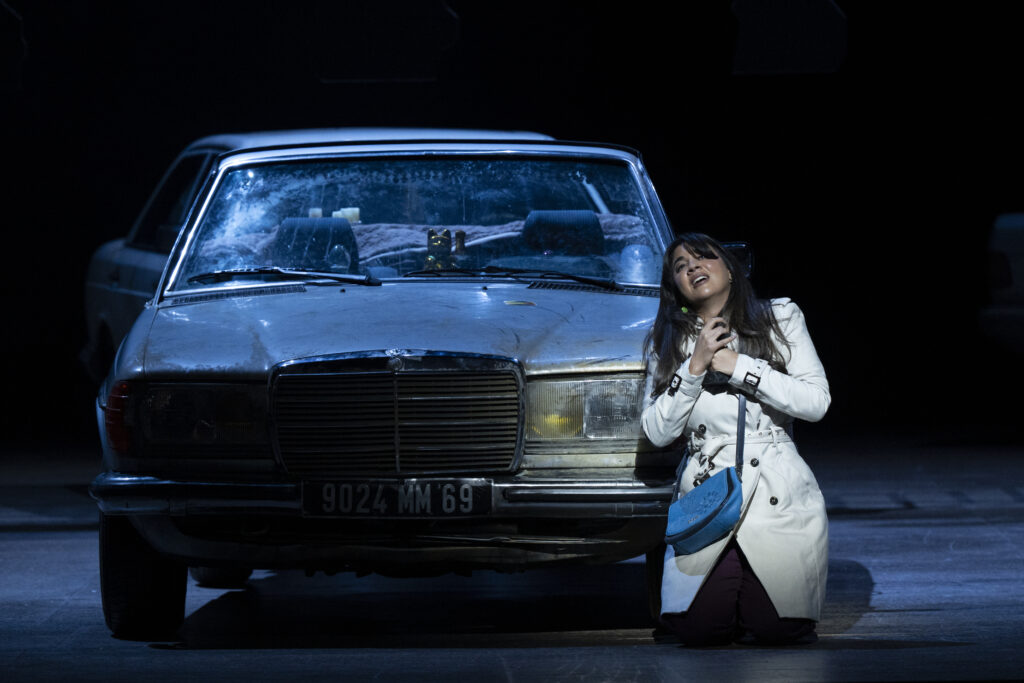
Photo: Benoite Fanton
Keri-Lynn Wilson’s conducting sometimes favoured urgency over flexibility; the overture in particular felt hurried, and certain tempo choices occasionally unsettled phrasing. Nevertheless, there were moments of strong orchestral colour and theatrical momentum, and the performance maintained forward drive.
In the end, the evening illustrated both the resilience of Bizet’s masterpiece and the importance of interpretive imagination. Carmen has survived countless reinterpretations because artists have repeatedly discovered new psychological and theatrical truths within it. Here, the musical forces often rose to that challenge, but the staging itself offered few revelations instead relying on gestures that, rather evoking shock, ultimately felt wearyingly familiar. In Calixto Bieito’s hands, the opera’s dangerous freedom collapses into mere crudity, leaving the impression not of tragedy but of theatrical impoverishment.
Opéra national de Paris’s Carmen continues its run through March 19.