
This page is also available in / Cette page est également disponible en:
 Français (French)
Originally from Otterburn Park in south Montreal and living in Germany for about 10 years now, the young Québécois conductor Étienne Lemieux-Després is a rising star on the international scene. He has collaborated with major companies and ensembles in Canada and in Europe, working alongside leading figures like Kent Nagano as a conductor, assistant conductor, coach and pianist.
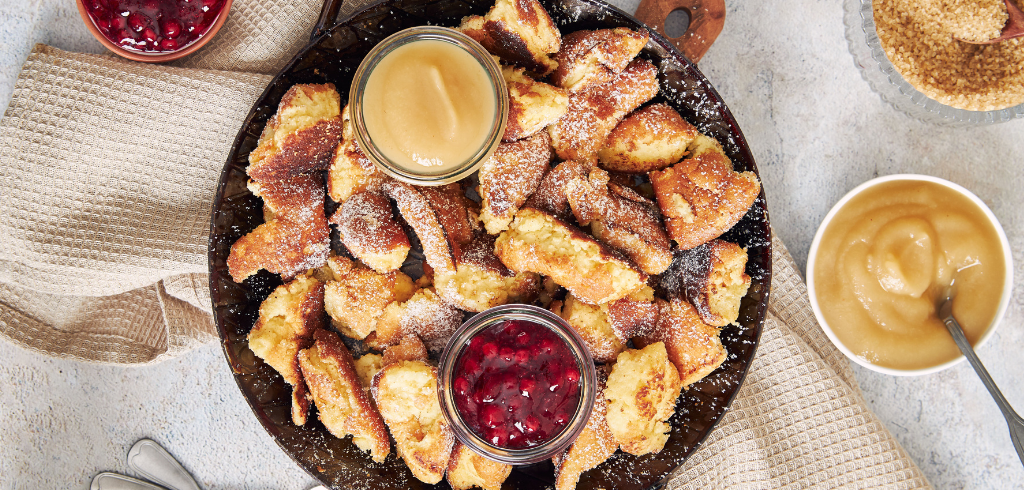
Between two rehearsals and travel, Lemieux-Després lured us into a world of imperial sweet treats with the emblematic alpine dessert: Kaiserschmarrn (Kaiser for “emperor” and schmarrn for “mess”).
This classic is one of the most popular delicacies in south Bavaria and the Austrian Alps. The concept is pretty simple: a very thick, sugary crepe torn into unequal strips. This is often accompanied by nuts, apple and caramel jam.

“Many legends exist as to the origin of this dish, but my favourite is that of a servant [who], in serving a cake to the Austro-Hungarian emperor, stumbled and in his attempt to make up for his clumsiness, the result was the Kaiserschmarrn,” says Lemieux-Després.
The conductor’s alpine ties also extend to his love of hiking in the mountains. Last October, he passed an exam to become a mountain guide in Germany, and will continue that training over the next three to four years.
Étienne takes advantage of his getaways to cook healthy, yet simple dishes. Kaiserschmarrn naturally became a travelling companion.
Ingredients
150 g flour
125 ml milk
4 eggs
30 g powdered sugar
1 tsp vanilla
salt
butter
Preparation
Mix together the flour, milk and vanilla. Add the egg yolks; mix well until mixture is smooth. In another bowl, add a pinch of salt to the egg whites and whisk them until stiff. Add the egg whites to the liquid mix.
In a non-stick pan, melt a knob of butter over medium-low heat. Pour the mixture in.
 When the underside is golden, separate the “crepe” into four pieces and quickly return each piece to the pan. Add a little butter to the sides in the cuts of each piece and flip. When the second side is golden, divide into more or less equal pieces. Sprinkle with half of the sugar, stirring over the heat until it is caramelized. Sprinkle with remaining sugar.
 “It is traditionally served with apple sauce,” says Lemieux-Després. “A common variation in Austria and the Bavarian Alps is to serve it with Zwetschgenröster, a type of jam with big pieces of plum. For me, this variation is the ultimate pleasure. Others like to add raisins. It’s not a practice that I particularly enjoy, but for those who like that, I recommend soaking them in rum before starting to make the dish and add them on top of the mix after pouring it into the pan.”
Translation: Karine Poznanski
This page is also available in / Cette page est également disponible en:
Français (French)