
This page is also available in / Cette page est également disponible en:
 Français (French)
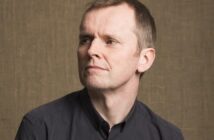
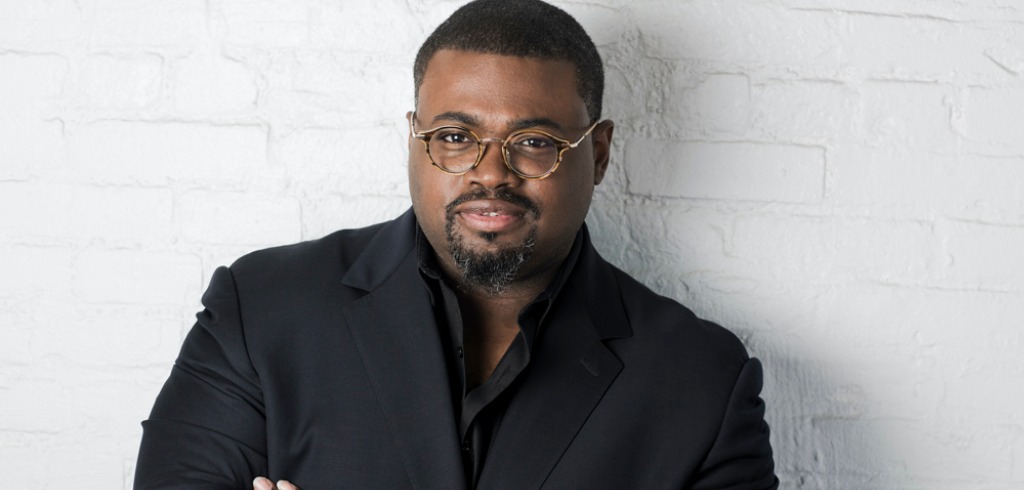
Russell Thomas is many singers at once—and he aims to excel at them all. The Miami-born tenor, celebrated for his interpretations of Italian repertoire and, more recently, German works, is preparing to make his role debut in Toronto this spring as Werther in Jules Massenet’s popular opera of the same name, with the Canadian Opera Company (COC).
Hailing the French opera’s “immense emotional impact,” Thomas says the work is a supreme marriage of music and text. “From the very beginning, when Werther walks in and sees the house and looks at the children playing, a whole world is being painted, not just with the orchestration but also with the words; that is, for me, the appeal of this opera.”
Opening May 7 and running through May 23 at Toronto’s Four Seasons Centre for the Performing Arts, Thomas will be joined by mezzo-soprano (and 2021 Operalia winner) Victoria Karkacheva as Charlotte. A who’s-who of Canadian artists (many alumni of the COC Ensemble Studio) are also featured, including bass-baritone Gordon Bintner (Albert), soprano Simone Osborne (Sophie), tenor Michael Colvin (Schmidt), basses Robert Pomakov and Alain Coulobe (Le Bailli and Johann, respectively) as well as current COC Ensemble Studio members Emma Pennell (soprano; Käthchen) and Ben Wallace (baritone; Brühlmann). A co-production between the COC, Vancouver Opera and Opéra de Montréal, Werther is conducted by Johannes Debus, the company’s music director. Behind the scenes, Montreal director Alain Gauthier is working with designers Olivier Landreville (sets), Mikael Kangas (lighting) and Lëilah Dufour Forget (costumes).
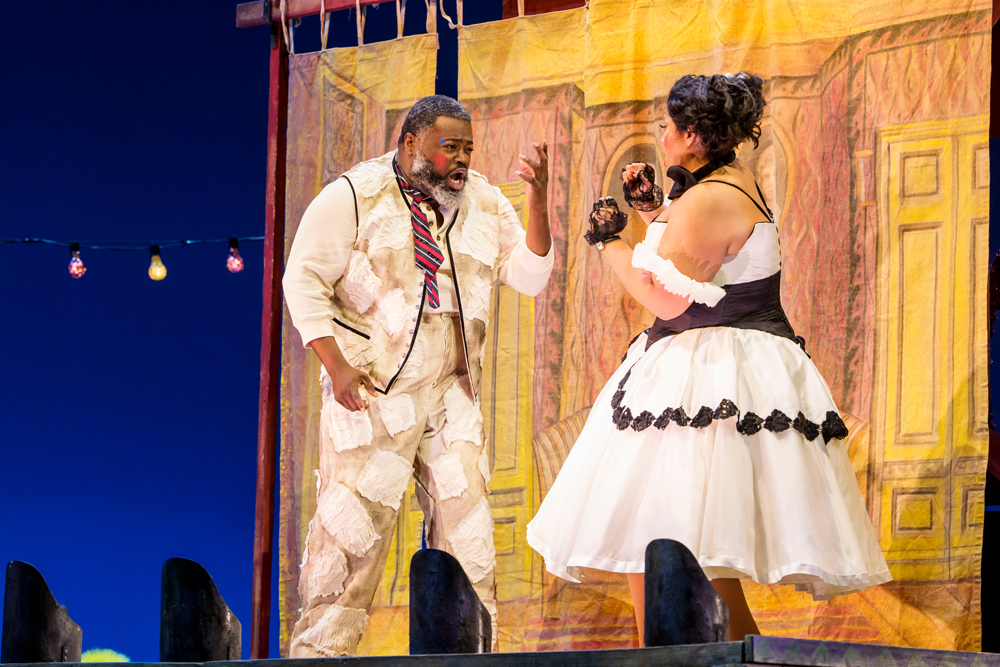
Photo: Todd Rosenberg Photography
A graduate of Metropolitan Opera’s Lindemann Program, Thomas is an acclaimed interpreter of both Italian lyric and German dramatic works, and has performed with houses on both sides of the Atlantic, including the Met, Lyric Opera Chicago, LA Opera, San Francisco Opera, Houston Grand Opera, Washington National Opera, Royal Opera Covent Garden, Opéra national de Paris, Deutsche Oper Berlin, Bayerische Staatsoper, Staatsoper Hamburg, the Palau de les Arts in Valencia and Oper Frankfurt.
He has worked with a range of notable conductors, including Sir Andrew Davis, Yannick Nézet-Séguin, Gustavo Dudamel, Ricardo Muti, Sir Mark Elder, Andris Nelsons, Alan Gilbert, Donald Runnicles, Sir Antonio Pappano, Teodor Currentzis and James Conlon. Thomas notably collaborated with director Peter Sellars and composer John Adams on the world premiere of the opera-oratorio The Gospel According to the Other Mary in 2012, recorded for Deutsche Grammophon and released in 2014.
From 2021 to 2024, Thomas served as LA Opera’s inaugural artist in residence where, in addition to singing Otello, Radamès and Calaf, he developed new initiatives to support singers from underserved and underrepresented communities. Thomas also commissioned and curated new works from a range of contemporary composers including Dave Ragland, Jasmine Barnes and Damian Jeter, and concluded his tenure with another new work, the world premiere of Fire and Blue Sky, a five-movement song cycle by composer Joel Thompson and librettist Imani Tolliver based directly on the tenor’s own past.
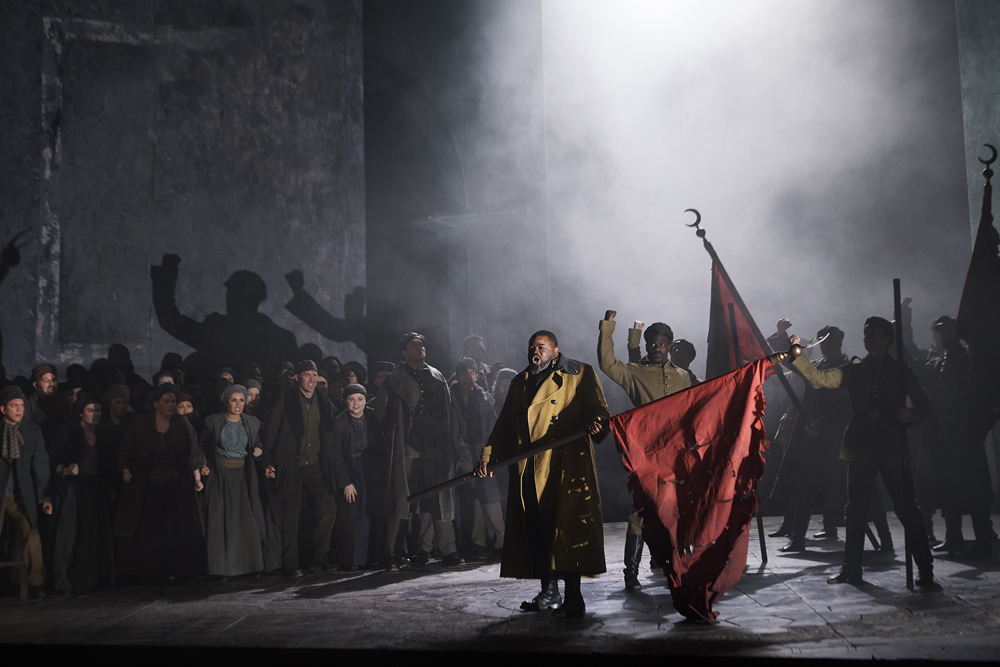
Photo: Michael Cooper
Always exploring new repertoire, early 2025 saw Thomas perform in an abridged concert presentation of Hector Berlioz’s Les Troyens presented by Seattle Opera, together with members of the Seattle Symphony and Seattle Opera Chorus; his Aeneas was paired with the Dido of mezzo-soprano J’Nai Bridges. Classical Voice North America writer Erica Miner noted that Thomas’s “lush, generous voice showed astonishing clarity and strength in the role’s punishing tessitura” and praised his “Vickers-like robustness” [2025] throughout the aria “Inutiles regrets.”
Last season Thomas added two new major German-language roles to his CV: the titular Tannhäuser, and Kaiser in Die Frau ohne Schatten. In a December 2024 New York Times review of the latter, Zachary Woolfe wrote that “Russell Thomas’s tenor is serenely steady and burnished in his role as the Emperor, its center of gravity deep but its top notes unforced and secure.”
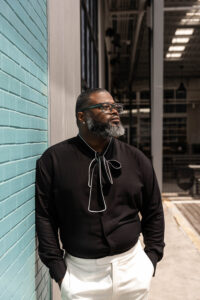
That mix of poetry and security originate, Thomas says, from the many varied demands a young artist in North America must navigate. “I think one of the best things about American training is that we are forced to be as good as possible at everything,” he says. “We have to be great at French, German, Italian, English and Slavic languages—we have to be able to do all the things. Our training is set up in that way.”
Thomas’s history with the Canadian Opera Company stretches back to 2012, when he sang the title role in Offenbach’s The Tales of Hoffmann. He has since graced a number of COC productions, performing as Don José (Carmen, 2016), Pollione (Norma, 2016), the lead in Verdi’s Otello (2019) and Turiddu (Cavalleria Rusticana, 2025). At the time of this interview, the tenor was knee-deep in intense Werther preparations—carefully studying the opera’s libretto, the details of the language and Massenet’s unique score. The aim, he says, is “making sure that I’m able to sing the poetry of this music. I mean, we always say, ‘opera is poetry; opera is lyrical’—but this opera, especially when the main character sings, is probably the most poetic music I’ve ever experienced in my life.”
Jules Massenet (1842-1912) began work on Werther in 1885, collaborating with French dramatists Édouard Blau, Paul Milliet and Georges Hartmann (using the pseudonym Henri Grémont), who together created a libretto loosely based on the novel The Sorrows of Young Werther (1774) by Johann Wolfgang von Goethe. Entering the repertoire of the Opéra Comique in 1903 (following its German-language and French-language premieres, both in 1892), the story of the gloomy young man madly in love with the married, family-bound Charlotte has haunted generations of audiences and singers alike. Numerous recordings of the work exist, from 1931, with famed French tenor Georges Thill in the lead (joined by the Orchestra and Chorus of the Opéra Comique) to 2024’s release featuring the Hungarian National Philharmonic Orchestra and French soprano Véronique Gens as Charlotte.
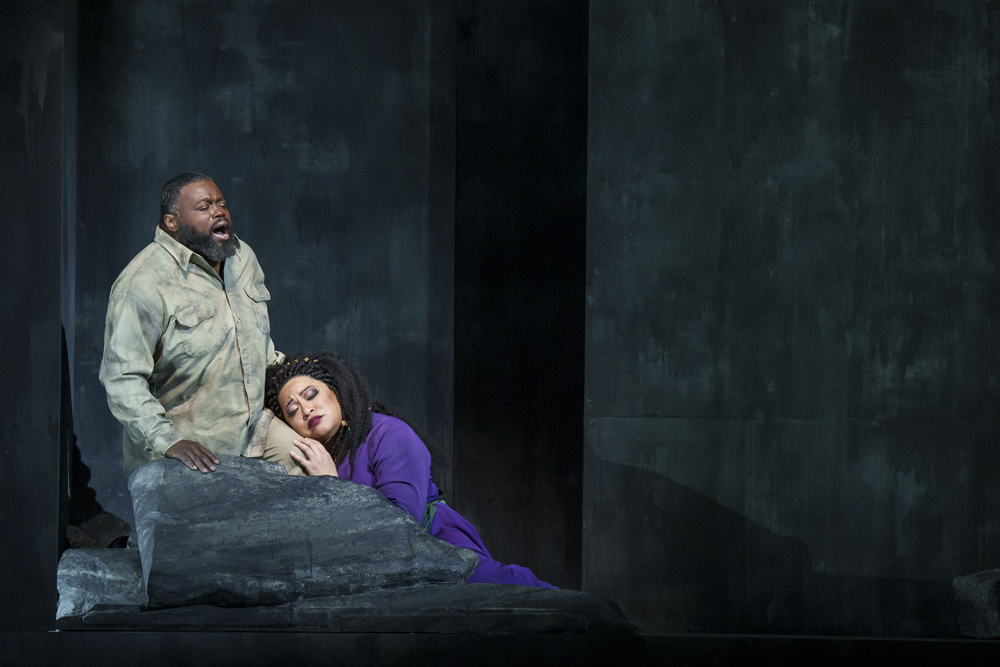
Photo: Todd Rosenberg Photography
Thomas started singing in church, and heard his first opera on a radio broadcast at the tender age of eight. His first exposure to Werther came in his teens, via a VHS recording of a 1977 Teatro de la Zarzuela Madrid performance with tenor Alfredo Kraus and mezzo-soprano Joy Davidson, the latter eventually becoming a mentor and teacher to the budding singer when he attended Miami’s New World School of the Arts on a full scholarship. He told Chicago Sun-Times reporter Miriam Di Nunzio in 2018 that “I went to New World because [Davidson] believed in me from the start and changed my life.”
Thomas’s first live experience of Werther was during a 1996 run at Florida Grand Opera in a production featuring Fernando de la Mora. The Mexican tenor left a huge impression on the young artist, and his interpretation, together with those of Kraus, Franco Corelli, José Carreras and George Thill, have lately provided important moments of insight, inspiration and instruction in his preparations. “I listen to old recordings for tradition’s sake,” he explains. “If there’s a tempo, if there’s a phrase, if there’s an extra note that someone adds—you should be aware of all those things as an artist.”
French-language facility is another important factor. Thomas said in a 2014 interview with online opera site Opera Traveller that he found singing in French a challenge, largely owing to the regional specificities around pronunciation. Does he feel differently over a decade later? “I just came from doing Carmen in French in Paris,” he says with a wry smile, “so no, I am not less self-conscious about it. There usually aren’t wild opinions about vowel pronunciations in Italian or German whereas in French, it depends on which coach or which French-speaking person is in the room at the time. Doing Carmen with the dialogues like I just did in Paris—that was my first time ever doing the [spoken]dialogues—everyone has a different idea on the way they think the line should go. Some of these [pronunciations]are really baked into the culture of performance. At the end of the day, it’s you, the artist, who is onstage, who has to bare your soul and be the most confident and comfortable with what you are presenting.”
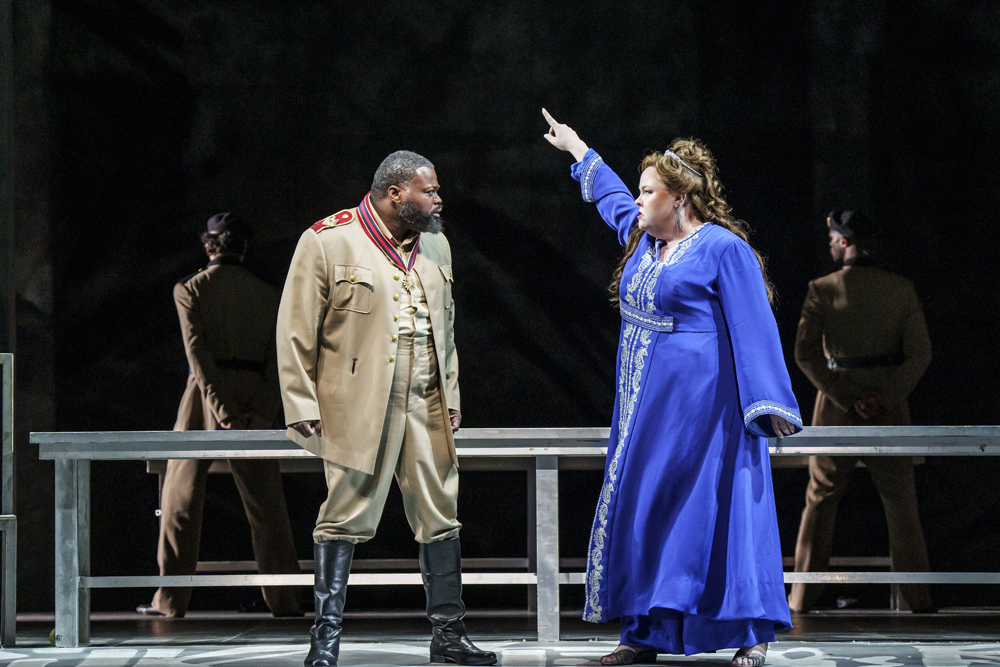
Photo: Todd Rosenberg Photography
Still, Thomas sees French repertoire as a natural extension of the Italian lyric tradition for which he is noted. Along with a number of leading roles in Verdi operas (Otello, Adorno, Don Carlo, Radamès, Manrico, Ismaele, Don Alvaro) Thomas is also celebrated for his interpretations of bel canto (Pollione and Roberto Devereux) and verismo (Calaf, Cavaradossi, Turridu, Canio), and he attributes his success with them—together with his German roles—down to that jack-of-all-trades grounding he received as a young artist.
“As an artist and as a tenor singing this repertoire, I feel like I have to be able to do Faust; I have to be able to do the French, five-act Don Carlos,” he explains. “Singing Les Troyens in Seattle in concert was major as well—it was like, okay I see why this music is so important; I see why this piece of art is so important for me as an artist. I would be very bored if I only sang the same five or 10 roles over and over and over again—I like a challenge.”
Thomas is also an outspoken advocate for new works, and for the cultivation they demand—something he feels is often lacking within the contemporary opera landscape. “We need more new operas, yes, but I think there needs to be quality control,” he says. “But then you have the question of who’s in charge of said quality control. I know gatekeeping is a very bad word, but gatekeepers are, or should be, quality control. There needs to be time and space in order for new works to develop and breathe, to do a first run somewhere and then say, ‘Okay. we need to tweak this’ or ‘This act is too long’ or ‘Change this this this’ —artists need the space to make those adjustments.” What else does the current landscape need? Not just new opera, according to Thomas, but “new orchestral works and new song cycles. I commissioned three artists to write new chamber music, vocal chamber music for tenors, in 2024. This is the work that I think we all need to keep making happen.”
At the moment, Thomas is immersed in the world of Massenet. Werther is, he says, part of a much broader continuum for him as an artist. “At the end of my career, whenever that may be, I want to be able to say, ‘I did that.’ I want to be able to say that I did all the things that I challenged myself to do, and I was good at all of those things.”
Russell Thomas sings the title role in Canadian Opera Company’s Werther from May 7–23 at Toronto’s Four Seasons Centre for the Performing Arts.
www.coc.ca
www.russellthomasopera.com
This page is also available in / Cette page est également disponible en:
Français (French)