This page is also available in / Cette page est également disponible en:
 Français (French)
-
Chandos5
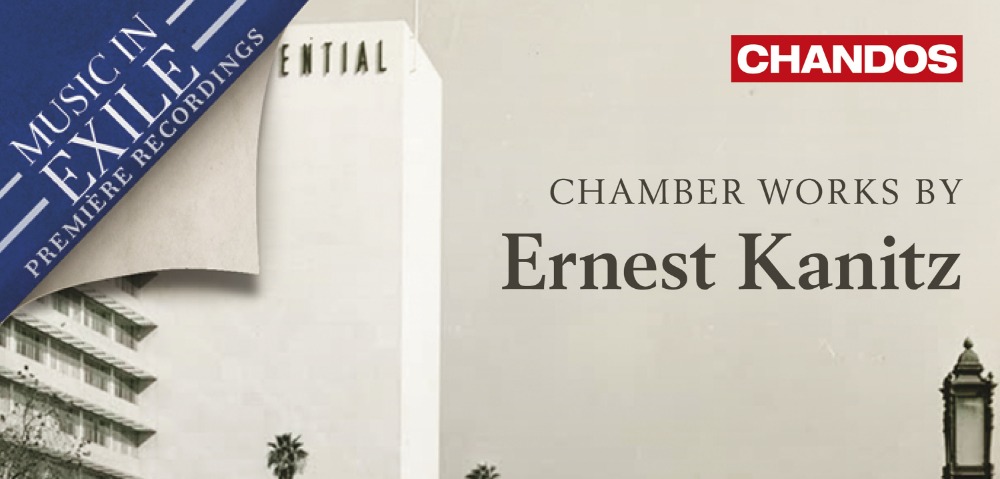
ARC Ensemble: The Chamber Works of Ernest Kanitz
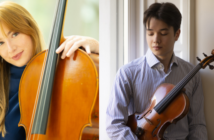
ARC Ensemble: Erika Raum & Marie Bérard, violins; Steven Dann, viola; Thomas Wiebe, cello; Joaquin Valdepeñas clarinet; Kevin Ahfat, piano
Guests: Wallace Halladay, saxophone; Anna Štube, violin; Joel Quarrington, double bass
Chandos, 2025
ARC Ensemble’s Music in Exile series continues to unearth the lost musical treasures of a war-torn 20th century. In its latest instalment, the ensemble has revived the strikingly varied and enigmatic chamber works of Ernest Kanitz—a composer exiled from his native Vienna following the German annexation of Austria. Though Kanitz’s move to the United States was marked by multiple professorships at American conservatories, his compositional career did not regain the momentum it enjoyed in pre-war Vienna. After his death in 1978, his music was largely lost and forgotten.
ARC’s Artistic Director Simon Wynberg offers Kanitz a most splendid reintroduction. As in the other recordings in this series, Wynberg’s liner notes provide a richly detailed biographical and musicological portrait of the composer. He observes that Kanitz’s immigrant experience was not marked by “the usual deep-seated regret and exasperation at the deficiencies of the New World.” Rather, the composer discovered “a more open-minded public” and an “atmosphere of freedom” in America—qualities reflected in his buoyant musical language.
Kanitz music is full of contrast—of tempo, colour, and character. In this way, his music embodies the spirit of possibility of the New World. The tempo changes—of which there are many in each piece—are quite sudden, and dramatic. Yet the transitions are well accomplished, as Kanitz subtly weaves musical material from one section to the next.
Take, for example, his String Quartet in D Major which begins with an elegiac movement. Here, the low, undulating cello line evokes the slow, somnolent drift of death which is suddenly interrupted by a flurry of tremolos in the higher strings. The light of the afterworld then breaks through, albeit momentarily, and the lulling slumber returns.
These are bold, adventurous compositions which carry the listener through many worlds. Kanitz has a thoroughly 20th-century compositional toolbox—impressionistic textures, angular melodies, and innovative harmonies. Yet his music has a deeply personal imprint, one that transcends the limits of time and space.
This page is also available in / Cette page est également disponible en:
Français (French)