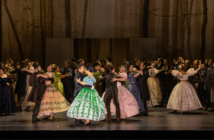
After more than a decade shaping the sound of the Ensemble Intercontemporain and several years working largely in New York, Matthias Pintscher returns to the Paris stage with his fourth opera, Nuit sans aube (seen March 11). Lasting just 90 minutes, this finely wrought work confirms the composer’s distinctive sonic imagination. The score unfolds in luminous orchestral colours and reveals a striking sensitivity to the expressive possibilities of the human voice.
At moments one hears distant echoes of Pelléas et Mélisande, premiered on this very stage in 1902, and even something of the darker psychological atmosphere of Debussy’s unfinished opera La Chute de la maison Usher. The vocal writing moves in a supple style close to “déclamation lyrique,” hovering between speech and song. Pintscher shows a particular affinity for the shadowed hues of the mezzo-soprano register, whose dark timbres lend the work much of its dramatic gravity.
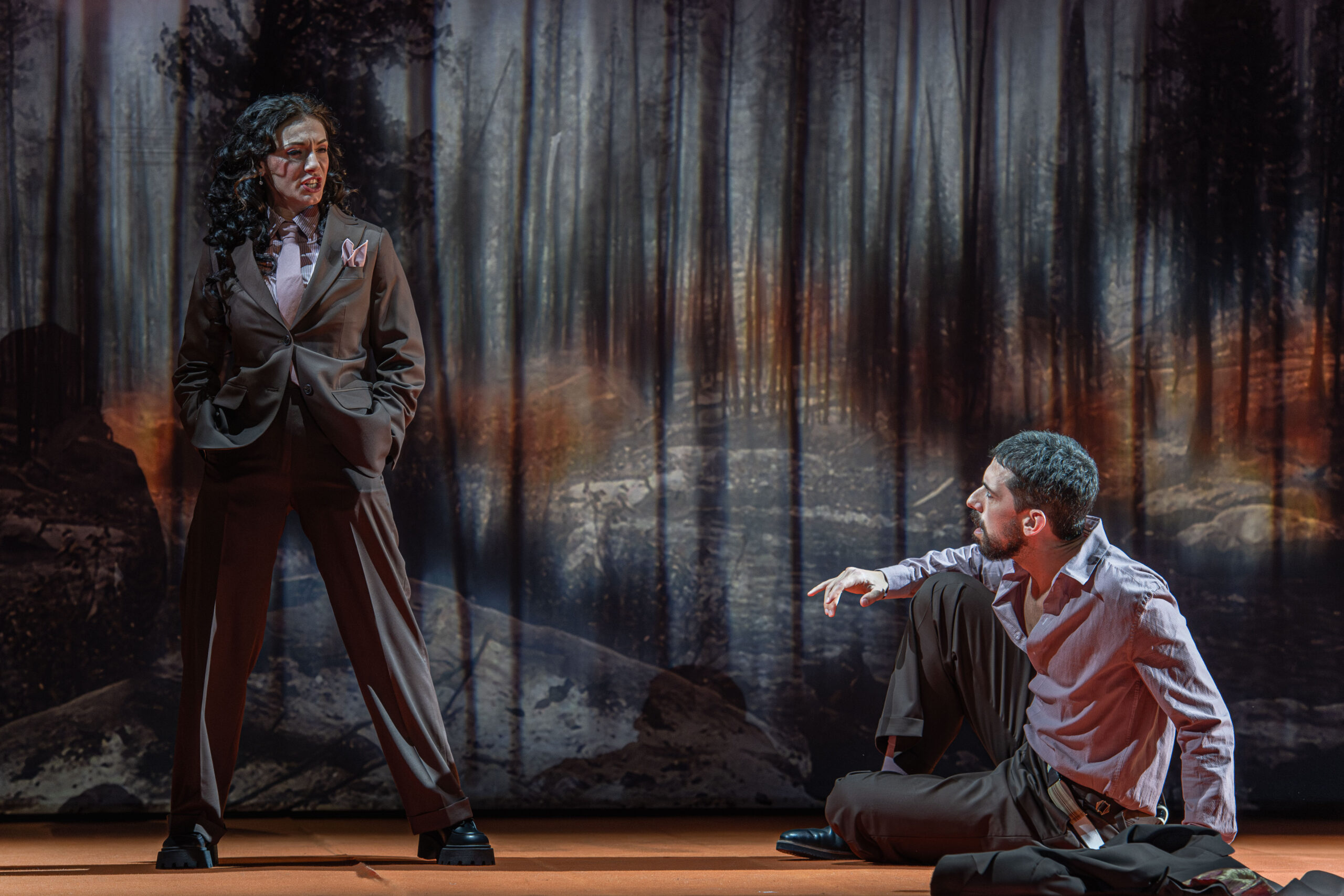
Photo: S. Brion
At its core, Nuit sans aube belongs to the tradition of the German Romantic fairy tale. The opera draws on a story by Wilhelm Hauff (1802–1827), whose tales often hinged on dangerous exchanges between human emotion and supernatural power. In Hauff’s The Cold Heart, the young Peter trades his living heart for a cold artificial one, freeing himself from fear while losing compassion and warmth. Pintscher’s opera echoes this unsettling transformation: its own Peter moves through a shadowed world in which the human heart—both literally and symbolically—becomes the object of supernatural intervention.
The elliptical libretto by Daniel Arkadij Gerzenberg evokes the symbolist universe of Maurice Maeterlinck. As Peter ventures deeper into the forest, the boundary between the human and the uncanny grows uncertain. Like many such tales, the drama follows the logic of myth rather than psychological realism: characters appear less as individuals than as archetypal figures moving through a landscape of moral trial. One thinks of the Rhine legends and the ambiguous Lorelei, whose song is at once enchantment and danger. Pintscher’s music captures this twilight world of suggestion and ambiguity with remarkable finesse.
After its premiere in German at Berlin’s Staatsoper Unter den Linden in January 2026, the work reached the Opéra-Comique two months later in a seamless and natural French version.

Photo: S. Brion
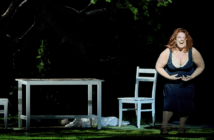
The Paris cast met the score’s formidable demands with impressive commitment. Particularly striking was the Serbian mezzo-soprano Katarina Bradić as the Mother, who also appeared in the Berlin premiere. Long admired for her work in contemporary repertoire, Bradić brought a dark-hued voice of warmth and authority, shaping her phrases with breadth and control while projecting a commanding stage presence.
As Clara, French soprano Catherine Trottmann offered a beautifully poised performance. Her lighter, focused timbre brought moments of lyric radiance to a score often coloured by darker tonal regions, and in ensemble passages her voice floated effortlessly above the orchestral textures.
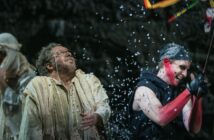
In the central role of Peter, American bass-baritone Evan Hughes carried the opera’s dramatic weight with stamina and conviction. Pintscher’s writing is demanding, requiring extended passages of declamatory intensity against a dense orchestral fabric. Hughes conveyed the character’s psychological turmoil with compelling focus, at times recalling the haunted figure of Edgar Allan Poe’s Frederick Usher.

Photo: S. Brion
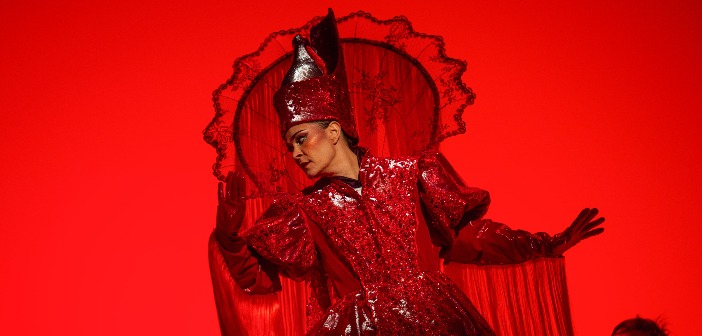
Marie-Adeline Henry as Anubis and Hélène Alexandridis as Azaël embodied the opera’s supernatural forces with striking authority.
Conducting his own score, Pintscher led the Orchestre Philharmonique de Radio France in a performance that revealed the work’s subtle textures and luminous colours with precision. His orchestration—transparent yet richly layered—unfolded with a painter’s sensitivity to timbre. Particularly effective was the spatial deployment of percussion and bruitage, placed in the front loges on either side of the stage. The resulting rustlings, whispers, and sudden flashes of sound surrounded the audience, as if emanating from the forest itself.
Visually, the production offered a series of striking images. The sparse décor by Adam Rigg created an atmosphere both poetic and unsettling, while the presence of taxidermy animals suggested a strange forest suspended between life, sacrifice, and death. Video projections by Hana Kim and lighting by Yi Zhao subtly animated this eerie landscape, enhancing its dreamlike quality. The stylized costumes by Molly Irelan reinforced the production’s symbolic visual language.
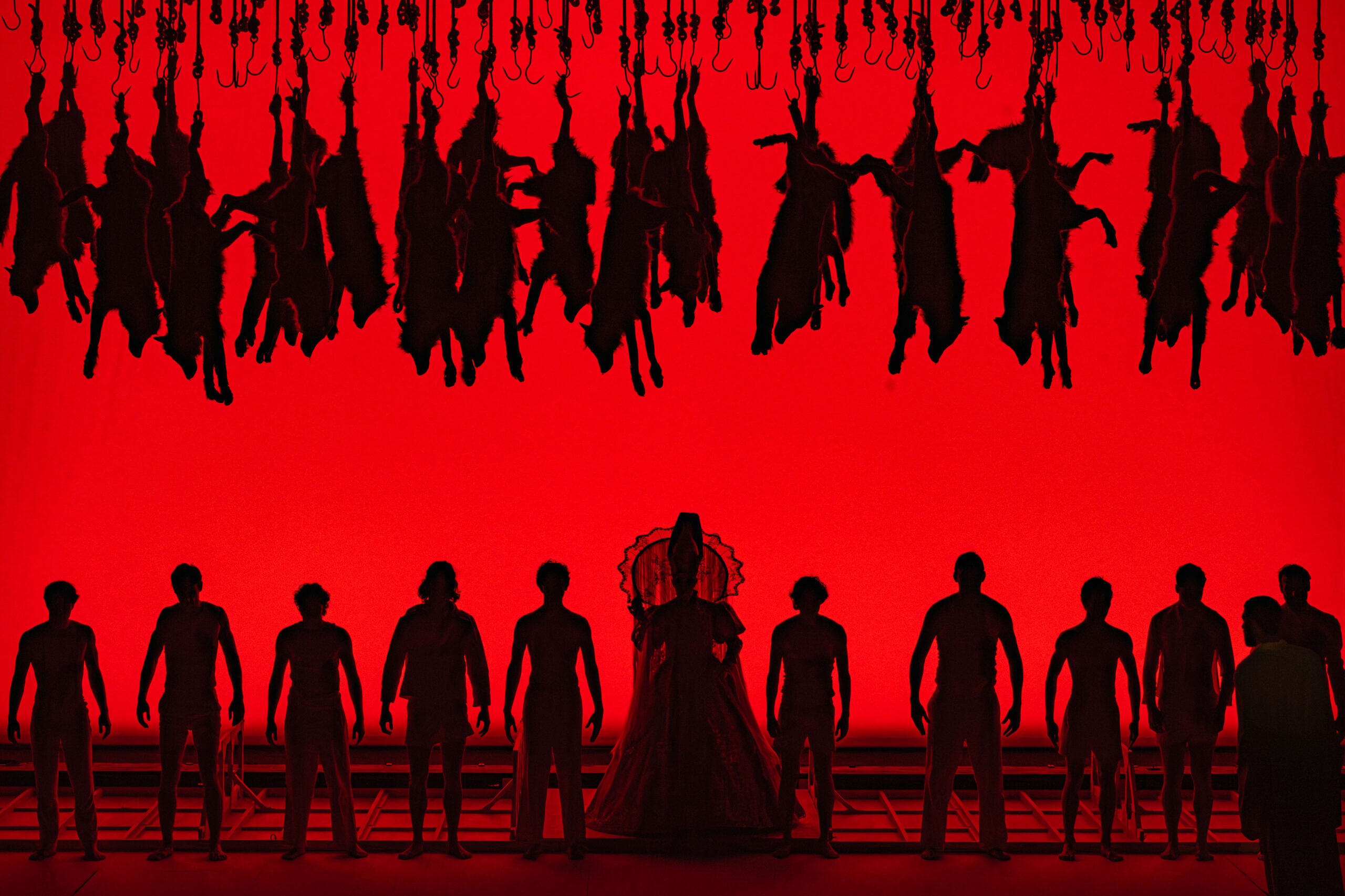
Photo: S. Brion
It is only in the dramatic direction that the staging raises questions. Director James Darrah Black appears intent on imposing an additional psychological narrative upon the work, particularly through an exaggerated portrayal of the female figures. The women—clad in fur coats and rigidly stylized hair—emerge as a grotesque chorus of destructive mothers. The image risks introducing an unnecessary layer of misogyny into a story whose symbolic logic is quite different. What is in fact a deeply troubling fable, closer to the mythic ambiguity of the Lorelei, is reframed as a rather heavy-handed allegory in which the hero’s suffering is implicitly traced to maternal domination. In doing so, the staging occasionally diminishes the opera’s more enigmatic dimension.
Under the leadership of Louis Langrée, the Opéra-Comique has increasingly established itself as a theatre of discovery, balancing new creations with the revival and rediscovery of neglected works. Recent seasons have seen notable successes with productions such as Le Postillon de Lonjumeau by Adolphe Adam and the rarely performed Offenbach opera Fantasio.
With Nuit sans aube, audiences encounter a score of real substance—atmospheric, finely crafted, and often of remarkable beauty. If the staging occasionally over-explains what the music leaves suggestively unresolved, the score itself remains the evening’s true achievement: an evocative and richly imagined work that confirms Pintscher as one of the most distinctive voices in contemporary opera.
For more on the Opéra-Comique season visit www.opera-comique.com/en