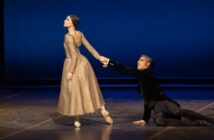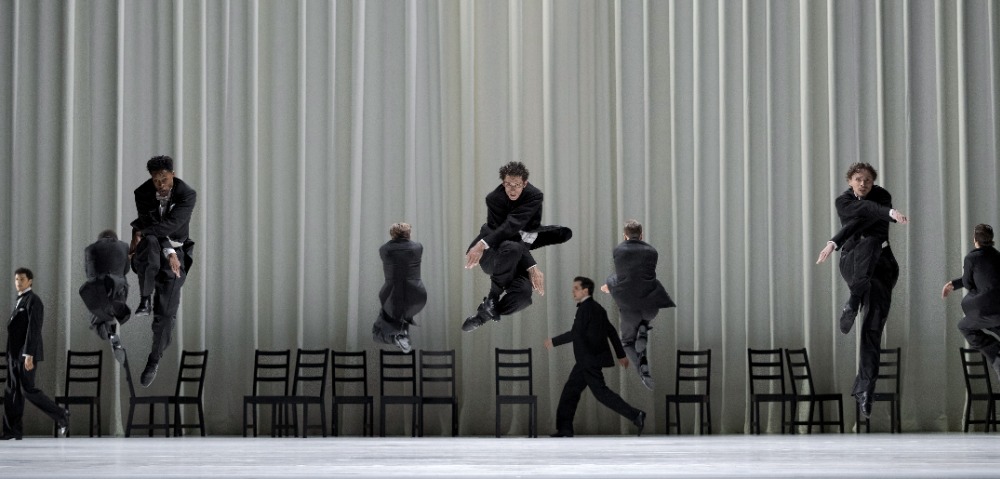
The National Ballet of Canada opened its 2025-26 season on Nov. 1 with the world premiere of Bobbi Jene Smith and Or Schraiber’s Procession. Former dancers with the renowned Batsheva Dance Company based in Tel Aviv, the choreographic pair—who are also a couple offstage—bring a practice steeped in collaboration to their first work for the company. The result is a jubilant, boldly-conceived and visually-striking piece that is perhaps the most successful new National Ballet commission in many a year.
The ballet is inspired by questions prompted by the idea of procession: “It’s travelling where? It’s going away from what? It has so many question marks and it’s been so much fun to dig into them,” says Smith. A procession is sometimes used literally in several striking iterations as tuxedoed men and women in plain black dresses are starkly silhouetted against a light gray pleated curtain backdrop. These processional journeys provide a context for random solos and interactions.
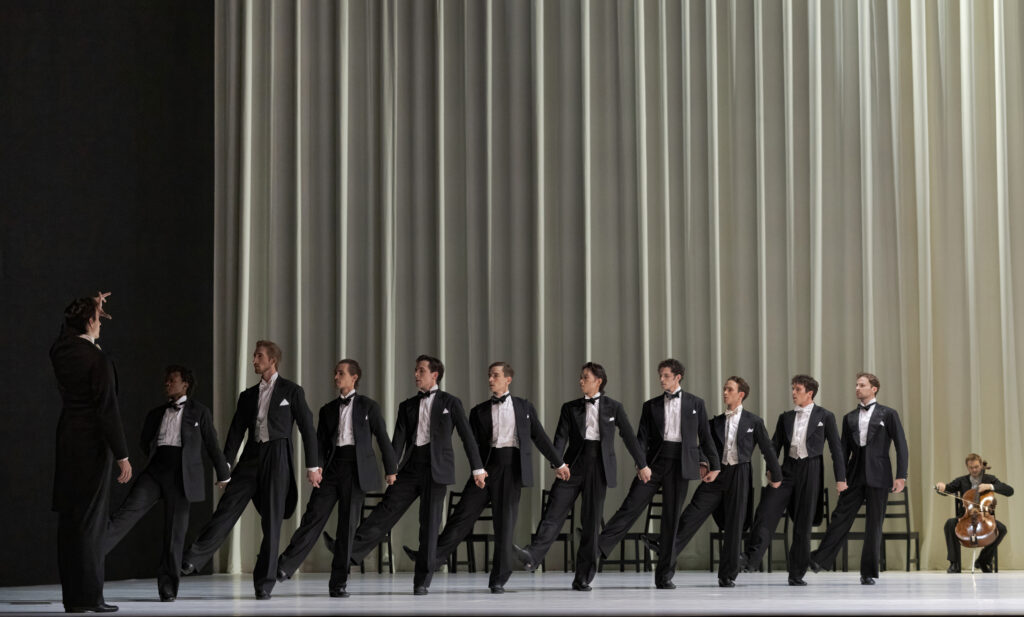
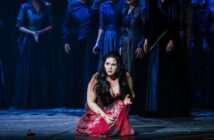
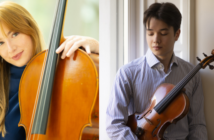
But the impact of Procession goes beyond astonishing dancing, seizing on song, solo instrument playing and a remarkable score to make its impact. Integral to the action are mezzo-soprano Rachael Wilson (oddly billed as a soprano in the program) and cellist Coleman Itzkoff who not only sing and play, but interact with the dancers. Wilson gets to sway to the delicious rhythms of a 17th-century Spanish song while Itzkoff enthusiastically joins in with the full orchestra, or delivers a potent, sad drone accompaniment. Dancer Ben Rudisin is a sort of high end doorman, parting the front curtain for the two soloists to exit at the end of each part, a visual that connects with the more formal aspects of procession that permeate the concept.
This is an ensemble piece where larger, group movement supersedes splashy solo opportunities. There is enough of a loose, framing “narrative” to tie things together with indications of a wedding or other celebratory event in the first half, and a funeral wake in the second. Striking ensemble moments include stately processions set to the brass fanfares of Purcell’s Funeral Music for Queen Mary (1695), or in complete contrast, all the men seated in a perfectly-coordinated foot and knee-slapping sequence.
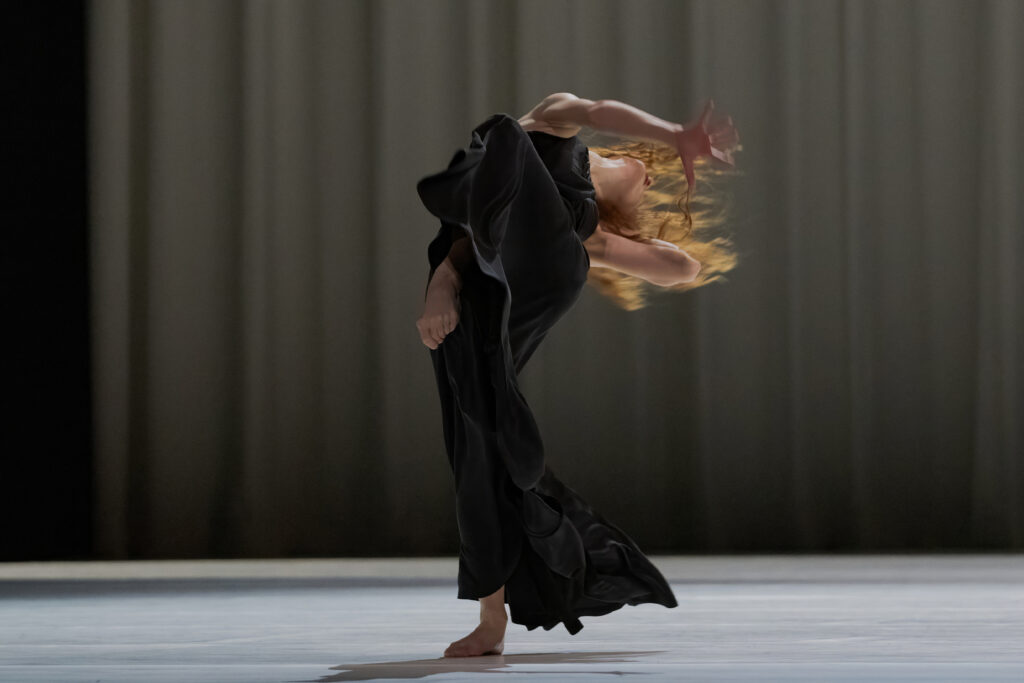
These scenes anchor short, frenzied soliloquies, or passionate pas de deux, often related to the big life wedding and funeral events. The movement vocabulary is eclectic: the women’s opening sequence finds them in wide, deep grand plié, upper bodies held at extreme angles. The unforgiving, stark aesthetic means that any small slip in synchronization was immediately apparent, but this is a small quibble. The third movement of Mahler’s Symphony No. 1 inspires folk-like dances that wouldn’t be out of place at a Jewish wedding. The men break out of their fun stomping sequence into a hive peppered with random head-bobbing sautées and surprise tours en l’air.
Memorable solos include corps dancer Connor Hamilton’s frenzied, hair-whipping dervish in Act 2’s “Spanish” interlude and Act 1’s baroque-inspired tango for couples comprised of principal Siphesihle November and first soloist Hannah Galway, and principals Genevieve Penn Nabity and Ben Rudisin.
A trio of men are separated from the rest at several junctures, sometimes alone in front of the show curtain. They express pent-up frustration (?) with agitated, complex hand and arm movements and heavy breathing. These sequences were reminiscent of Marco Goecke’s Morpheus’ Dream from last season which also saw Rudisin excel in delivering similar anguished gestures, as he does here.
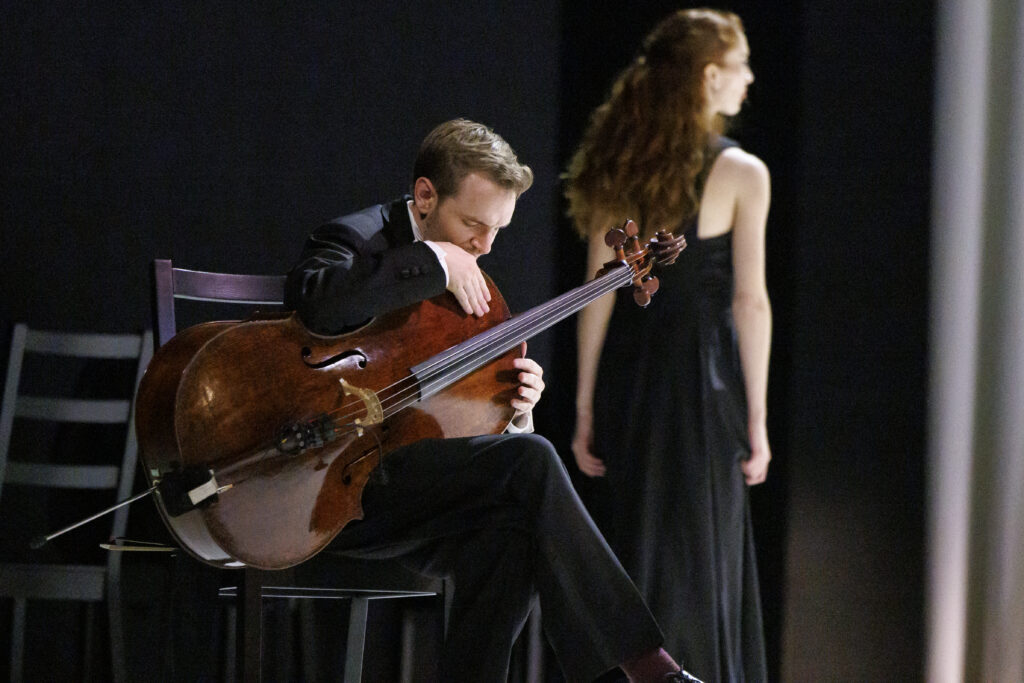
The grounding effect of the orchestral arrangements of works by Purcell, Vivaldi, Rameau, Ravel, Mahler and du Bailly cannot be underestimated. The traditional dance rhythms baked into so much baroque music are intriguingly juxtaposed with the contemporary dance vocabulary onstage—and it all melds beautifully. The National Ballet Orchestra under their music director and principal conductor David Briskin deliver cellist Itzkoff’s arrangements with convincing attention to their myriad styles.
Wilson’s sumptuous vocals, especially in de Falla’s haunting lullaby, “Nana,” and her cheeky, jazzy take on Purcell’s “Musick for a While” add another level of communication, which although quite disparate from what we’re used to at the ballet, somehow manages to enhance rather than distract.
There’s humour too. Without spoiling a potential coup de théâtre, dancers moonlight as auto mechanics, and much of the choreography doesn’t take itself too seriously. The grand finale, danced to Vivaldi’s La Folia, is raucous and crowd-pleasing in the most natural way. Procession feels like a new work that will find a beloved place in the company’s repertoire for many years to come.
National Ballet of Canada’s Procession continues its run at Toronto’s Four Season Centre for the Performing Arts through Nov. 8.