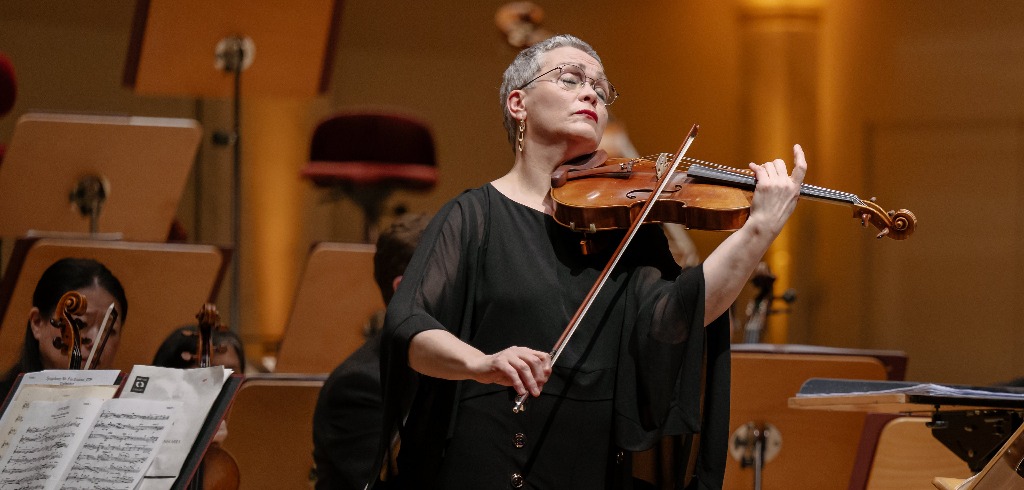
The second concert in Konzerthausorchester Berlin’s “Vom Anfangen” (“On Beginnings”) festival featured works that could be described as unfinished in different ways. This superbly-curated evening brought together Schubert, Bartók, Kurtág and Puccini—strange bedfellows perhaps—in a program of stimulating connections (seen Feb. 20).
As detailed in the program notes, György Kurtág (currently celebrating his 100th birthday) cites Schubert as his inspiration to compose, and for his ideal of musical beauty. In that light, the orchestra, under their chief conductor Joana Mallwitz, began with Schubert’s two-movement “Unfinished” symphony of 1822. There is much debate as to whether this work was truly unfinished, or was purposefully left in its current form by Schubert.
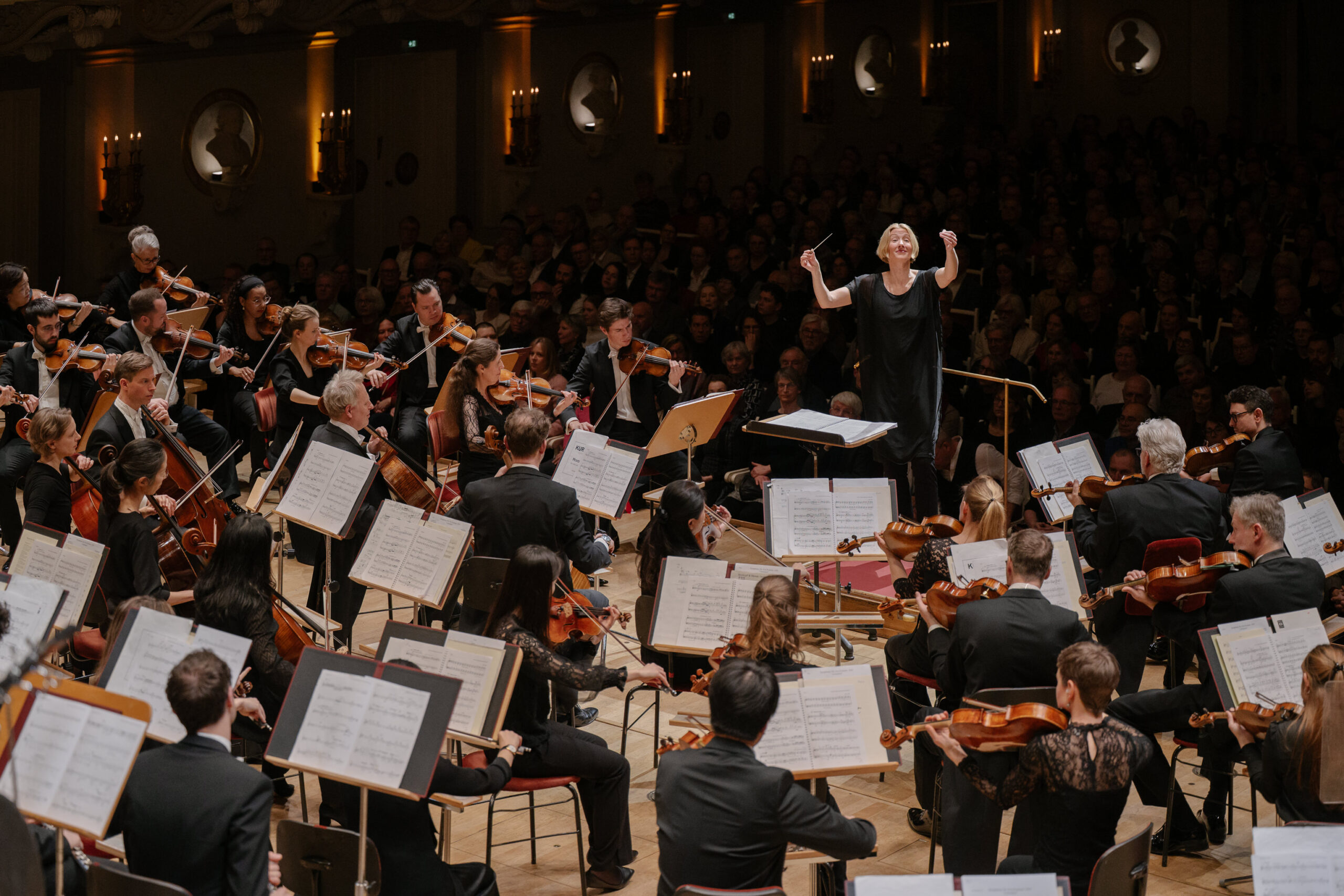
Photo: Simon Pauly
What Mallwitz and her forces highlighted was the sturm und drang of the piece through big contrasts of dynamics, balanced by some refined solo playing. In the famous theme of the opening movement, strings were hushed with an especially engaged cello section. In the second movement, the oboe solo emerged within a chamber music-like context.
While it’s unclear as to whether Schubert’s symphony was truly left unfinished, Béla Bartók died before he could fully orchestrate the sketches for his Viola Concerto. Tibor Serly’s subsequent orchestration has been criticised for overly smoothing-out Bartók’s intentions. This concert featured soloist Tabea Zimmermann’s own version which is the result of her many years studying sketches from Bartók’s estate.
In the opening moderato movement, Zimmermann immediately established why she is considered one of the world’s greatest violists. Beautiful, rich tone and virtuosic flexibility are her hallmarks. She captured the haunted, mournful quality in several ‘duets’ with various sections of the orchestra. Particularly striking was an arc-like theme tossed between soloist and the principal clarinet. The final allegro vivace was like a hoedown, reminding us of Bartók’s deep connection to Hungarian folk dance rhythms. This section reminded me of old recordings of native zither music I have listened to at Budapest’s Museum of Ethnography.
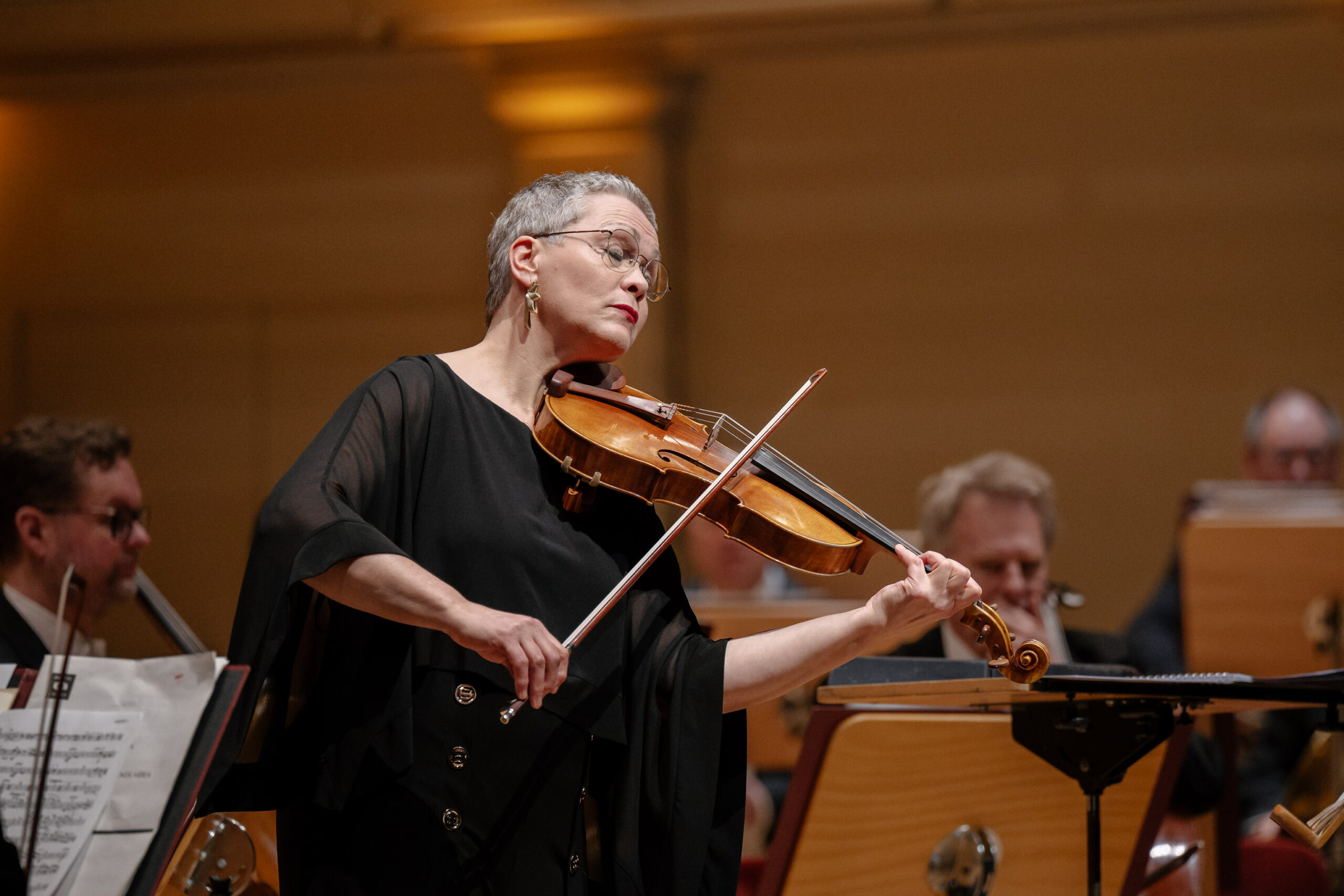
Photo: Simon Pauly
Kurtág’s 1954 “Movement” for Viola and Orchestra comes from very early in his career, before his encounters with the atonalism of Schoenberg and Stockhausen. As such, this student work has quite a different character from the highly fragmented, minimal style we usually associate with the great Hungarian composer. Zimmermann brought out the expressive qualities of the piece and thrilled in its final wheedling, scalar section.
Like the Bartók concerto, Puccini’s opera Turandot was left unfinished due to the composer’s death in 1924. The opera premiered two years later with an ending fashioned from Puccini’s sketches by fellow composer, Franco Alfano. Many others, including Italian modernist Luciano Berio, have since offered their own attempts to come to terms with what Puccini intended.

Photo: Simon Pauly
The orchestra paid tribute to this great unfinished work with a Turandot suite arranged by Manfred Honeck and Tomáš Ille. Although it is widely considered to be Puccini’s most forward-thinking work in terms of experimentation with tonality, in the context of even the milder versions of Bartók and Kurtág in this program, the score doesn’t seem all that adventuresome.
While it was certainly thrilling to hear Mallwitz blasting through many of the opera’s big tunes, one couldn’t help but ruminate on the effect of hearing these famous arias played, rather than sung. Liù’s plaintive “Signore ascolta” on clarinet and the children’s chorus on trumpet (from the first balcony) are still gorgeous, but lose some of their communicative effect without the sound of a human voice singing actual words. The orchestra left the audience cheering with the rousing, if bombastic, finale to the suite.
For more on Konzerthausorcheter Berlin’s season, visit www.konzerthaus.de/en/