Rigoletto, Giuseppe Verdi’s masterpiece and one of opera’s most tragic stories, opened Canadian Opera Company’s winter season on Jan. 24 to a full house on a frigid night. To start, the audience warmed up their vocals with a rousing rendition of “O Canada,” sung with more bravado than usual, given the recent political climate.
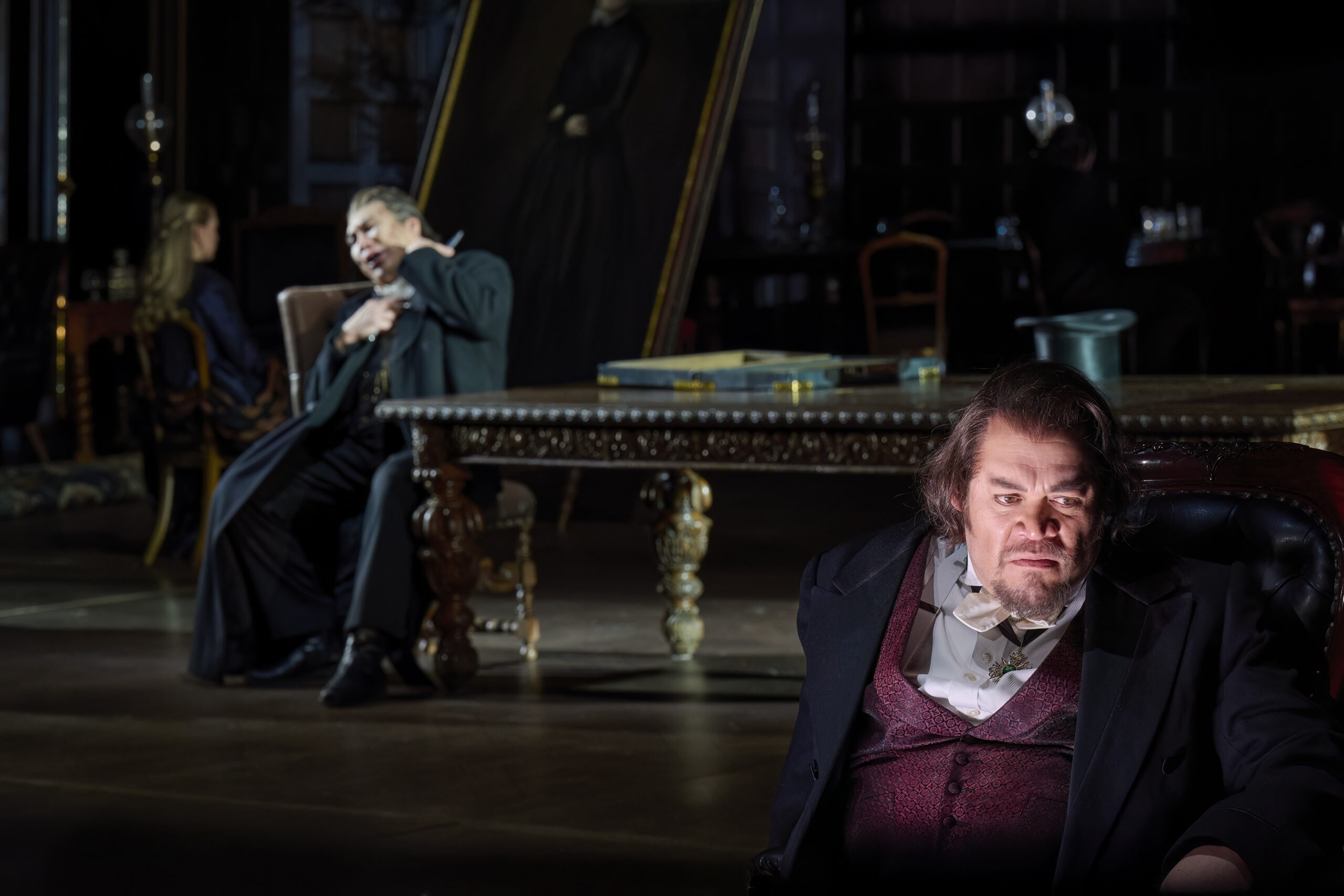
Photo: Michael Cooper
The Story
Rigoletto is a jaded jester in the court of the Duke of Mantua. His master is an arrogant philanderer who boasts of his many amorous conquests. When Rigoletto mocks Monterone, whose daughter has been dishonoured by the Duke, Monterone curses him with the same fate. Despite Rigoletto’s attempt to keep his most prized possession—his daughter Gilda—out of the hands of the court’s world of lecherous men, she still falls prey to the handsome Duke. Even after witnessing the Duke’s unfaithfulness, Gilda is unwavering in her love for him. Rigoletto’s plan for revenge against the Duke backfires, when Gilda sacrifices herself for the one she loves.
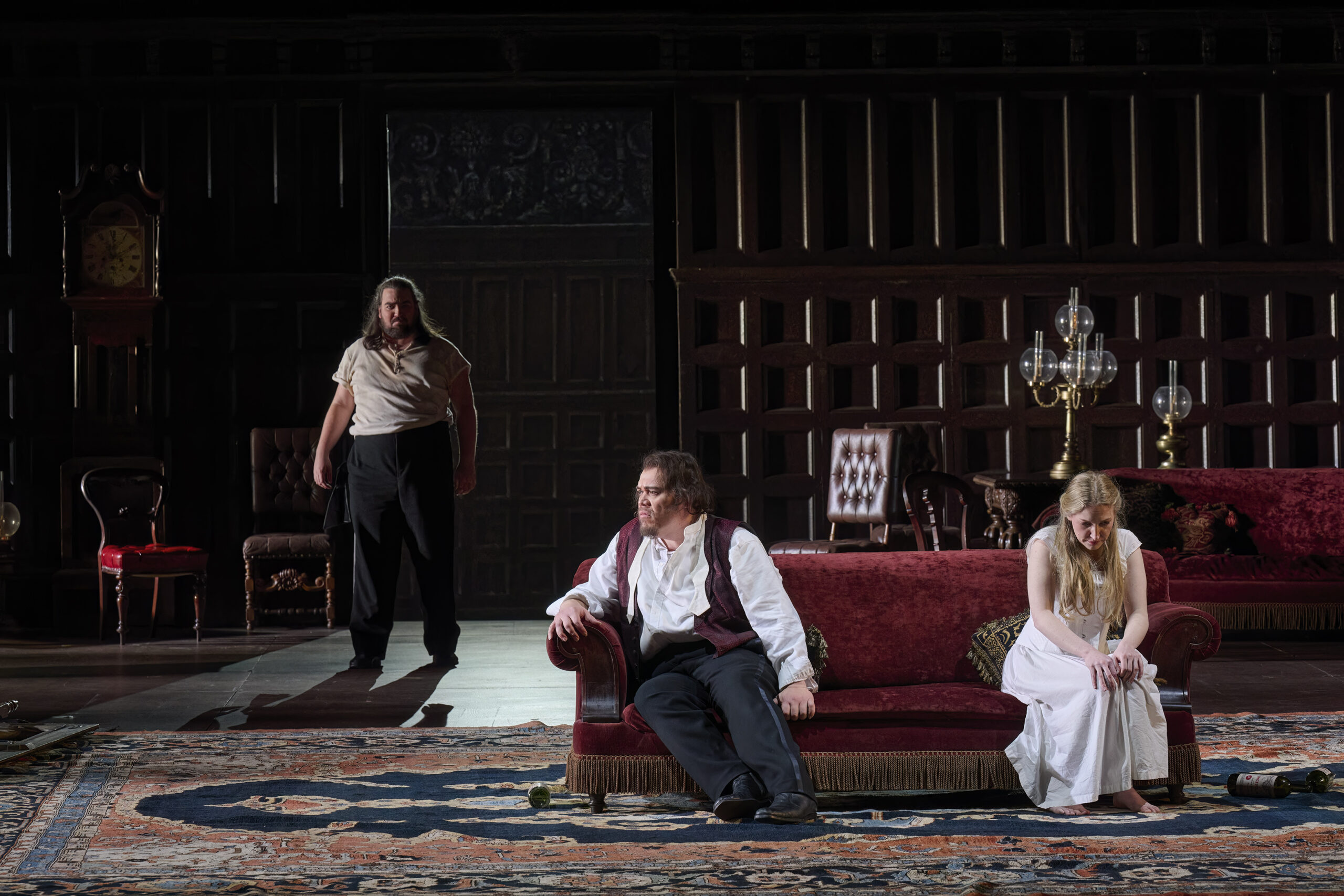
Photo: Michael Cooper
The Cast
Baritone Quinn Kelsey is widely considered the world’s reigning Rigoletto, and rightly so. He fully inhabited the role of the hunchback jester, both vocally and dramatically. His honeyed baritone was rich and powerful. One of his best moments was “Cortigiani, vil razza dannata” in Act II, when he laid bare the ranges of Rigoletto’s emotions. First, he threatened and demanded the courtiers to return his kidnapped daughter; when that fell to deaf ears, he resorted to the desperate plea of a broken father.
At first, I wasn’t sure if tenor Ben Bliss was the right fit for the Duke. His voice did not project over the orchestra in the first scene, and his “Questa o quella” was rather underwhelming. But he settled into the role nicely thereafter with a brighter sound, bringing equal measures of vile and tenderness with his fine acting and range of vocal colours. His “La donna è mobile” was polished without being overdone. This was Bliss’ role debut, and unquestionably a successful one.
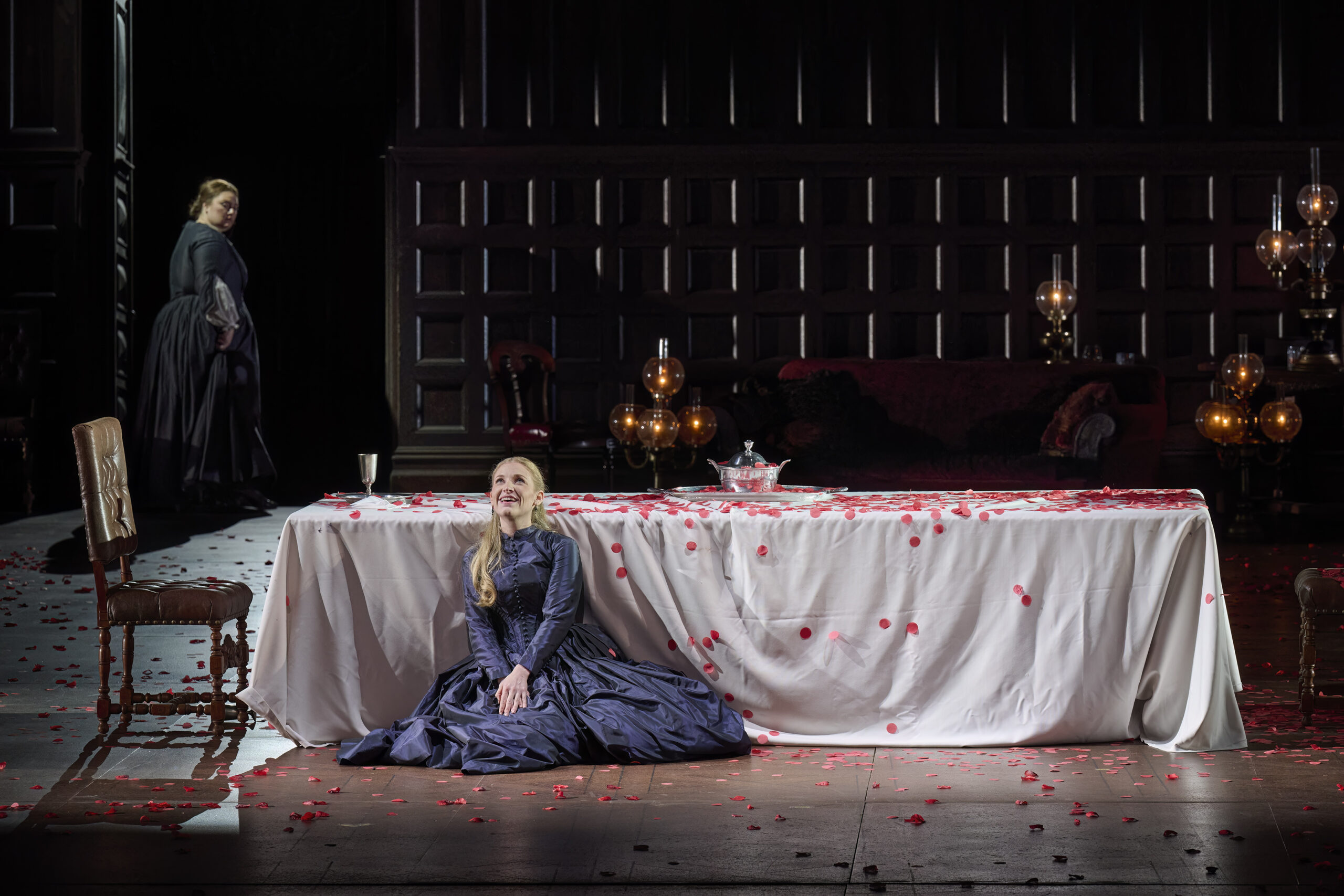
Photo: Michael Cooper
Canadian soprano Sarah Dufresne stepped into the role of Gilda (shared with Andriana Chuchman who sings the later performances) just over a month ago when the original soprano withdrew from the production. Making her COC debut, Dufresne is a natural Gilda, both in her diminutive stature and angelic voice. Her pure sound and crystalline tone befit the young Gilda, and her “Caro nome” floated effortlessly with clear phrasing and some intricate ornamentation. In the later acts, she switched to a fuller sound with the same sparkling top, depicting the character’s loss of innocence.
Peixin Chen from China was the other singer making a COC debut. Chen possesses the gift of an impossibly deep and stentorian bass, which was perfectly suited to the role of Sparafucile, the menacing assassin. The COC hit the jackpot with Chen and Dufresne; the company should keep them both on its regular roster.
There were solid performances from the mostly-Canadian supporting cast: Gregory Dahl (Monterone), Nathan Keoughan (Marullo), Julius Ahn (Borsa), Stephen Hegedus (Count Ceprano), Emily Rocha (Countess Ceprano) and Simona Genga (Giovanna). Special commendation goes to Zoie Reams. Even though her appearances as Maddalena are brief, her rich, powerful mezzo and magnetic stage presence were memorable.
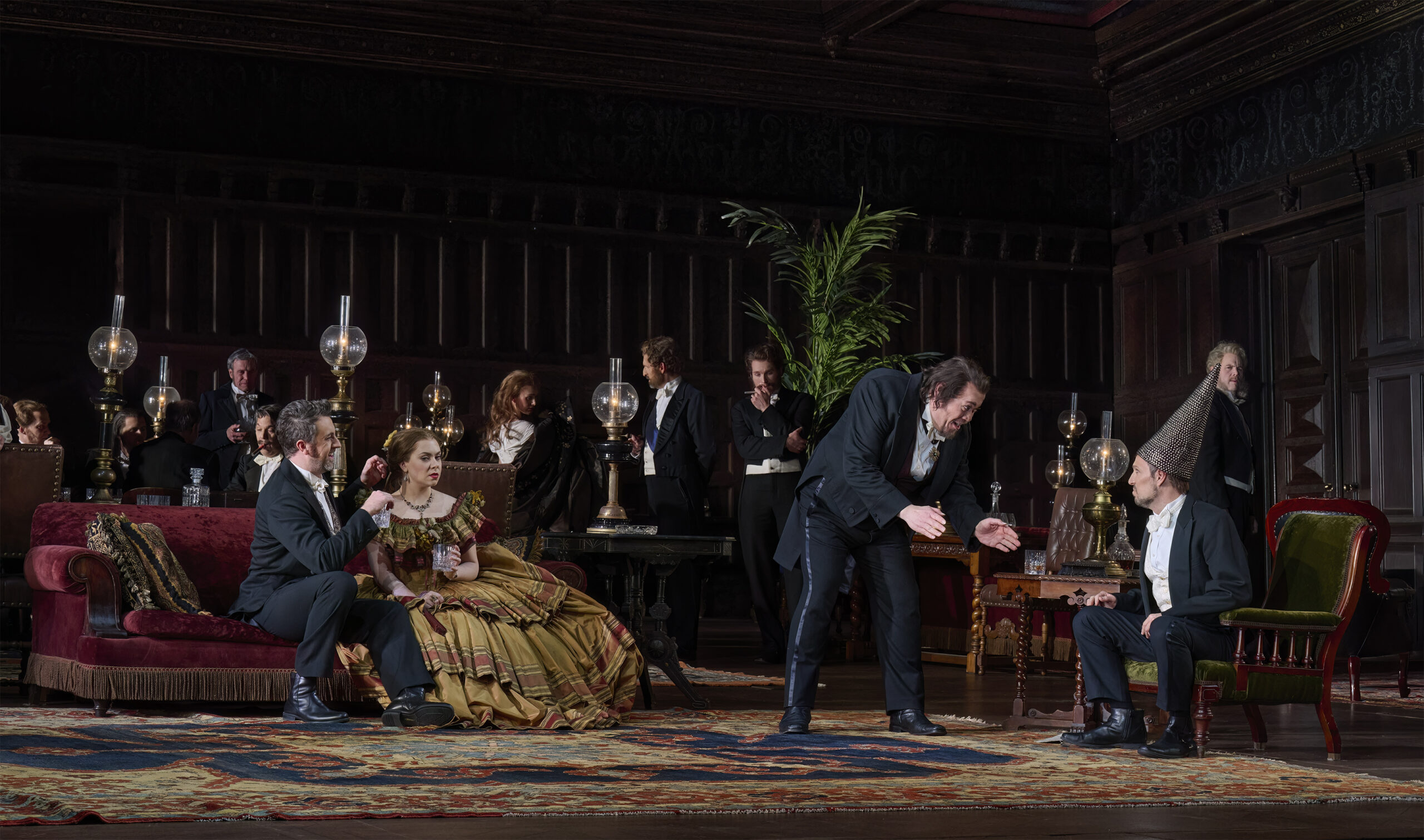
Photo: Michael Cooper
Musical highlights
Rigoletto is full of musical highlights. The love duet “È il sol dell’anima” was sublimely sung by Bliss and Dufresne, their declaration of love was tender and believable, culminating in a resplendent high D-flat. The famous quartet “Bella figlia dell’amore” showcased the perfect balance of voices between Kelsey, Bliss, Dufresne and Reams.
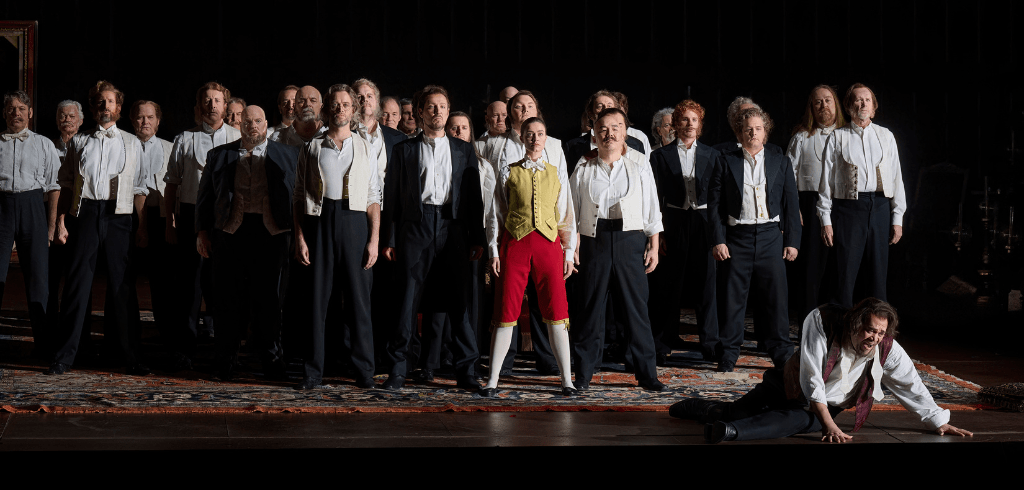
This production also featured excellent singing from the COC men’s chorus. Conductor Johannes Debus injected vigour and contrasting dynamics into Verdi’s lush score, with balanced restraint that did not overpower the vocalists.
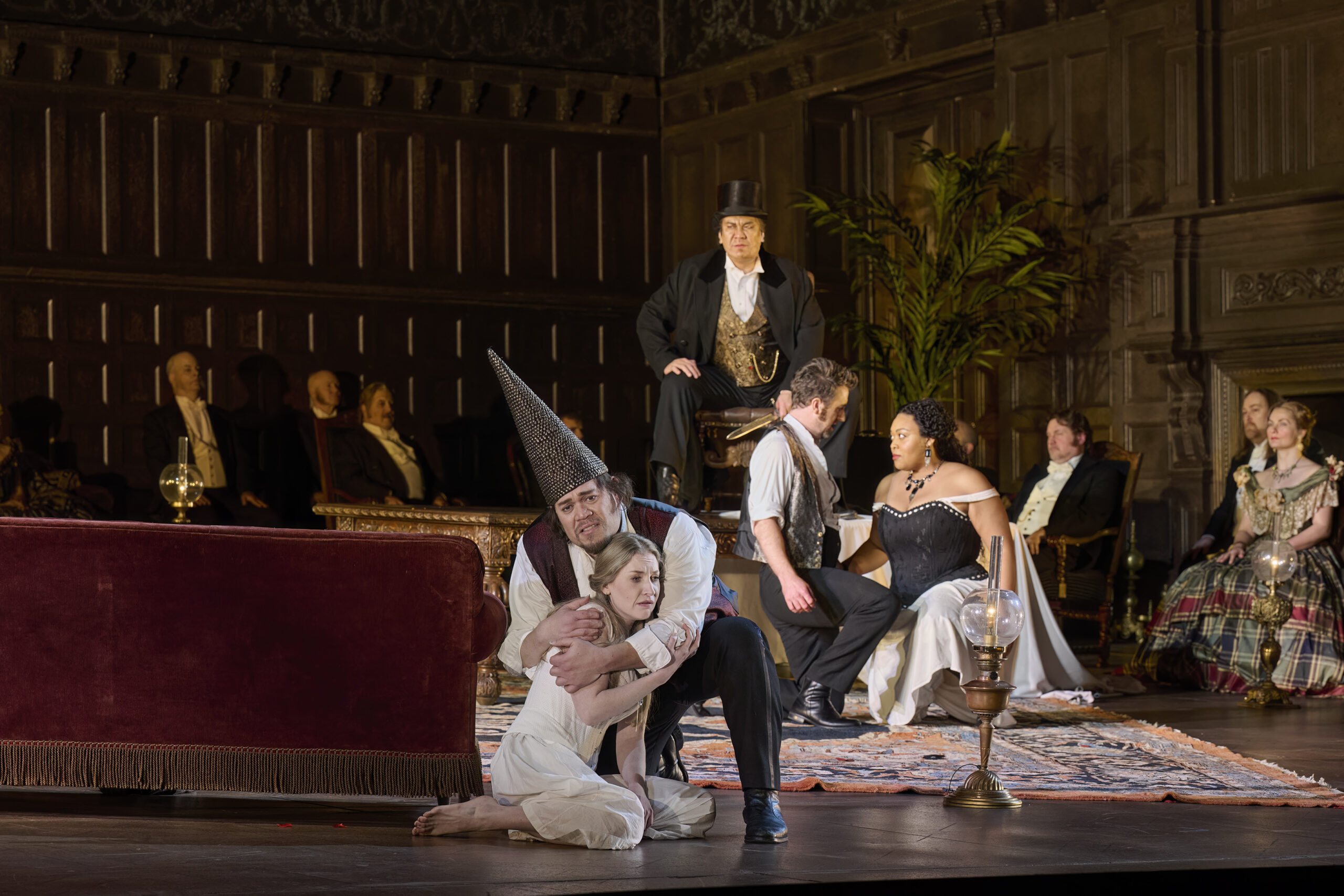
Photo: Michael Cooper
Gripes
Michael Levine’s opulent Victorian set with pattern details was a delightful sight. The single set doubles as the Duke’s court and “playground”—a kind of gentlemen’s club, and as Rigoletto’s home. Director Christopher Alden’s choice to have all of the action under the same roof was problematic. In the scene in which Rigoletto was home with Gilda, men were inexplicably sitting and smoking in the periphery. The blurring between what is inside and outside was thematically confusing and incongruent with the story-telling, and sometimes the side-actions just became distractions from the mainstage vocalists.
Having Rigoletto in an armchair observing the scene from the sideline was another baffling choice. Even the abduction scene—with Gilda, instead of her pursuers, climbing a ladder—was a lost metaphor.
Despite the staging shortcomings, this COC Rigoletto is a winning production that should not be missed.
Canadian Opera Company’s Rigoletto continues its run at Toronto’s Four Seasons Centre for the Performing Arts until Feb. 14. www.coc.ca