This page is also available in / Cette page est également disponible en:
 Français (French)
Steven Osborne wants to take his audiences on a trip of the musical variety. The Scottish pianist will be in Montreal March 1 for a recital presented by the Ladies Morning Musical Club (LMMC). The program of works by Schubert and Beethoven marks his premiere solo recital with LMMC.
“I really like programs where there’s a journey,” he says. “When I have a sense of story, I feel like I’m connecting better to the audience.”
Appointed an Officer of the Order of the British Empire for Services to Music in 2022, Osborne has performed on a number of prestigious stages, including the Wiener Konzerthaus, Amsterdam’s Concertgebouw, and Suntory Hall in Tokyo. He has also enjoyed residencies at London’s Wigmore Hall, the Royal Scottish National Orchestra, and the City of Birmingham Symphony Orchestra. Prior to his concert in Montreal, Osborne will be performing at Barbican Hall. “I’m trying to sink into the music so that I’m not overthinking,” he says, “but there’s definitely thought involved.”
Born in Scotland, Osborne studied with Richard Beauchamp at St. Mary’s Music School in Edinburgh and Renna Kellaway at the Royal Northern College of Music in Manchester. Early in his career he won first prize at the Clara Haskil Competition (1991) and the Naumburg International Competition (1997), and has since gone on to be the recipient of a number of awards including The Royal Philharmonic Society Instrumentalist of the Year, two BBC Music Magazine Awards and two Gramophone Awards.
“Ever since I could reach the keys as a toddler, I was obsessed,” Osborne recalls, “and I don’t know why. Every day when I’d wake up, I went straight to the piano.” During his school days, Osborne also played the cello. “You feel the movement of the line when you’re bowing,” he explains, “so I try and find a way of moving [at the piano]that somehow makes you feel in your body how the music moves.”
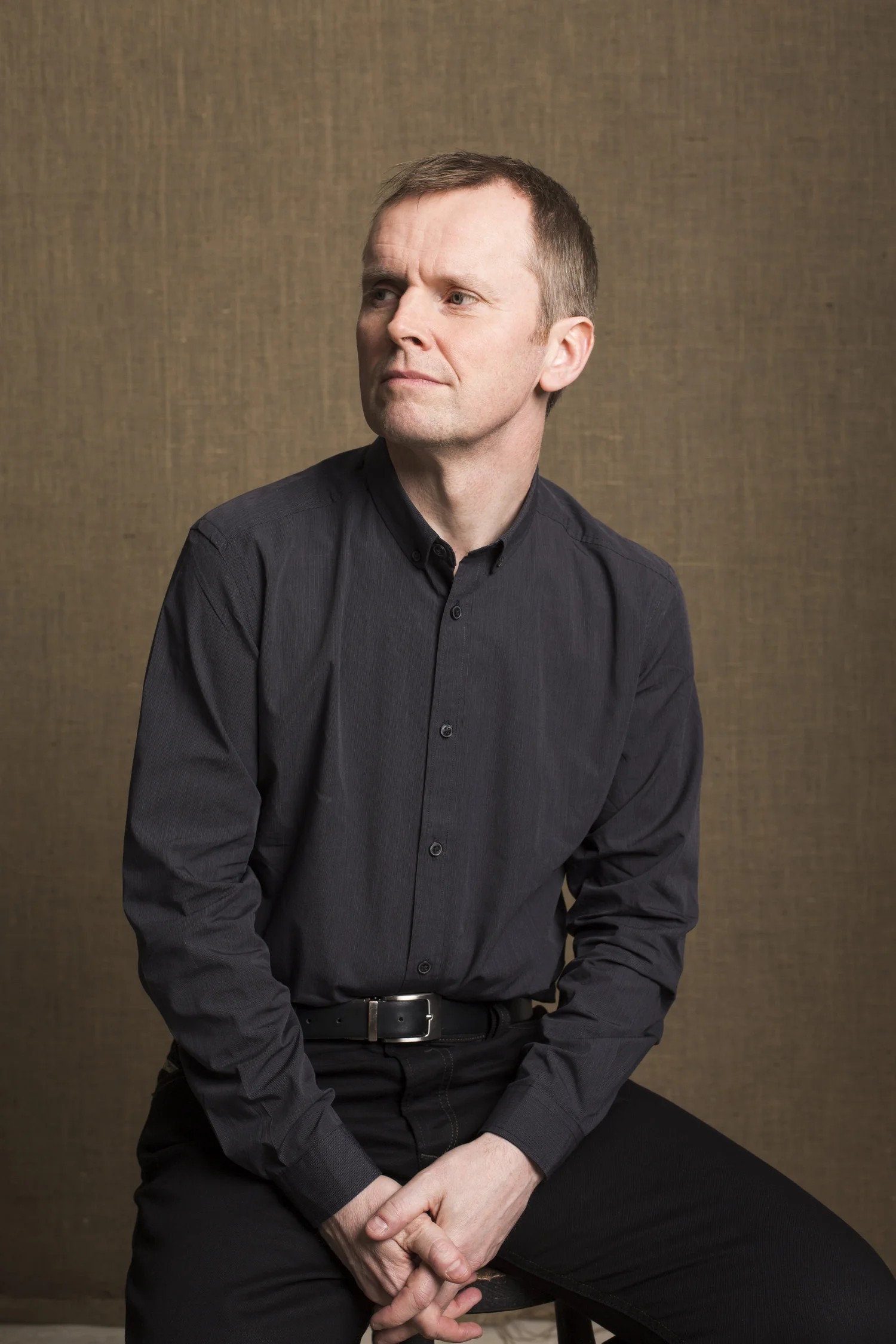
Line and movement are crucial elements within his teaching work as visiting professor at the Royal Academy of Music and the Royal Conservatoire of Scotland. On his website, Osborne shares a variety of personal ideas and experiences, including one entry from 2012 titled simply “Teaching,” with this trenchant observation: “It’s not enough for the teacher to feel the music strongly—you have to engage with someone who might feel it in a totally different way.” Reflecting on that thought more than a decade later, Osborne says that “the hardest thing as a teacher is not to tell someone how to play. I spend a lot of time trying to get them to get in touch with their instincts and sometimes they don’t even think they should be doing a certain thing—you know, obedience, suppressing your own feelings for the sake of reproducing exactly what’s written. One of the main jobs that I’ve got as a teacher is to try and get them to really believe that if they really followed their instincts, they would do something no one else could.”
Osborne’s own discography underlines the wisdom of this belief. An exclusive Hyperion artist since 1998, his three dozen or so albums include works by Messiaen, Debussy, Ravel, Rachmaninov, Mussorgsky, Beethoven, Liszt, and Tippett as well as duets with English pianist Paul Lewis. A 2016 album of works by American composers Morton Feldman and George Crumb was praised by, among others, Kate Molleson, who noted in The Guardian that “(t)his is a pianist whose recent solo discs have featured music by Schubert and Mussorgsky, and he brings something of their singing and robust tones even to the most hushed and abstract of Feldman’s lines.”
A decade on, Osborne remains “very proud” of the album. “It was very hard work. The feeling of Feldman’s music rests in the very precise and subtle shifts in how the music moves.”
Osborne credits famed pianist Alfred Brendel (who died last year at the age of 94) as a particular inspiration, for his interpretations of Feldman’s work, and beyond. “He has this amazing control of time and uses it very precisely. It’s funny, he was very literalistic as a teacher but the way he plays is absolutely not—it’s all about character.” In addition to Dinu Lipatti and Clara Haskil, Osborne singles out American pianist and composer Keith Jarrett as “a huge influence. I did a lot of improvising over the years and a lot of that came out of what he did—that completely free, open stuff.”
“I like extremes,” he admits. “I think things that are very quiet; things that are very loud. I like things that are heartfelt. And I’m completely allergic to bluster—that kind of pretense. And so all of that feeds into the kind of music I’m attracted to.” His relationship to music, including the Beethoven and Schubert works he’ll be performing in Montreal, has changed throughout the years. “The main thing that’s changed is I’ve trusted my instincts—I’m trusting much more what I feel like I have to say with the music.”
Ladies Morning Musical Club presents Steven Osborne in recital at Montreal’s Salle Oscar Peterson on March 1. www.lmmc.ca
This page is also available in / Cette page est également disponible en:
Français (French)