This page is also available in / Cette page est également disponible en:
 Français (French)
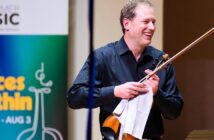
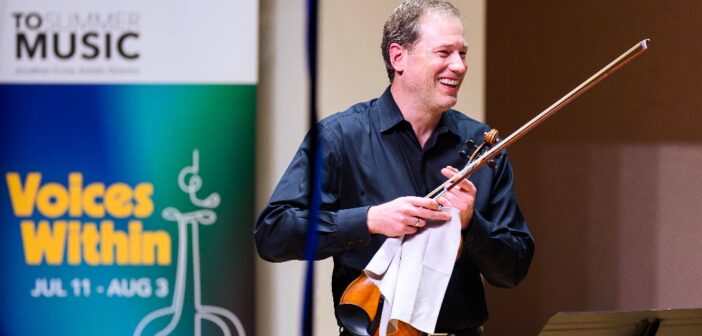
Last summer, Toronto Summer Music announced the departure of its artistic director, Jonathan Crow, after 10 years in the role. He will leave at the end of summer 2025, which marks the festival’s 20th anniversary. In this exclusive interview, Crow, who is also concertmaster of the Toronto Symphony Orchestra, reflects on programming, musician training, and offers advice to the new generation of classical artists.
As a collaborative musician, you seem to need to be the consummate friend-maker. How do you do it?
I suppose chamber music is best when performed by people who actually like one another? Seriously though, one of the things I learned as a young musician—and especially as a young string player—was how to interact with others, both on and off stage. My earliest violin memories aren’t of working by myself in a practice room; they’re memories of violin ensembles, chamber music and youth orchestras! I like to think that musical training, including what we do at TSM, is actually extremely relevant to training how to interact with others in all career paths—and during life in general.
What are some factors young musicians should consider about their training before embarking on a degree?
I think young musicians—and young people in general—shouldn’t be afraid of not knowing what they might be doing a few years down the road. Life is not predictable, and career goals can change as one grows and goes through different phases of education. I’ve had many music students that became great doctors and lawyers, as well as many great violinists that switched over from career paths in science. Work hard at what you do, be open to what life brings, and don’t be afraid to pursue what interests you at the moment. Education is never wasted!
How is AI technology changing how we teach, learn, perform, and experience music?
I’m probably in the minority, but I haven’t seen much change in my life from AI! I can’t imagine AI replacing live music, and certainly don’t want to watch a computer try to interpret Brahms onstage. Live music has apparently been dying for a hundred years—to be replaced by vinyl records, cassette tapes, CDs, laser discs, etc. Maybe AI will be the one technology that finally wins that battle, but somehow I doubt it!
Is curation of a program a factor in filling an auditorium? How have you done this so successfully?
This is a huge question! So many things go into choosing programs and artists, and success can be measured in many unique ways. Choice of program is certainly a factor in ticket sales, along with artists, concert date, and probably what kind of parking is available at the venue! At TSM, we try to find a balance between comfortable repertoire staples and new works which audiences might not know—as well as a balance between new and familiar performers. Every year is a different puzzle which is fun to try and fit it all together.
What advice do you have for young musicians starting out, or at mid-career, or later in life?
In music? I suppose everyone is looking for something a little different from their musical pursuits and that’s a great thing! Whatever you do on a musical instrument, be consistent. A few minutes a day over a long period of time will get you a long way, regardless of whether you’re hoping for a career as a concert soloist or just want to enjoy sight- reading holiday carols with friends. (Okay, if you want to be a concert violinist perhaps you’ll need to practise more than a few minutes a day!) But my point stands: two hours a day every day is far better than 10 hours on the weekend and then doing something else all week.
How do you educate musicians of all levels, throughout their lives?
I think it would actually be a sad thing to achieve the “perfect” performance of a piece of music! I like to think that every time I get on stage, I’ll be able to do something just a little better than the last time. And every time that I play music with different people—chamber music, orchestra and concerti—I learn something from the people around me who might do something just a little differently from what I might expect.
What are some good online resources?
It’s amazing what’s out there these days—not just performances which are pretty easy to find online, but also performance prep seminars, health-and- injury-prevention videos, and all kinds of material for how to practise effectively and how to deal with nerves. What I love on YouTube is not just videos from current stars, but also recordings of many of the all-time greats from a century ago! You can actually hear Brahms playing the piano and Bartók’s original field recordings of his Romanian Folk Dances. Check out Mind over Finger for lots of material on practising and links to other resources.
Visit www.torontosummermusic.com for the festival’s full schedule of programming.
This page is also available in / Cette page est également disponible en:
Français (French)