
This page is also available in / Cette page est également disponible en:
 Français (French)
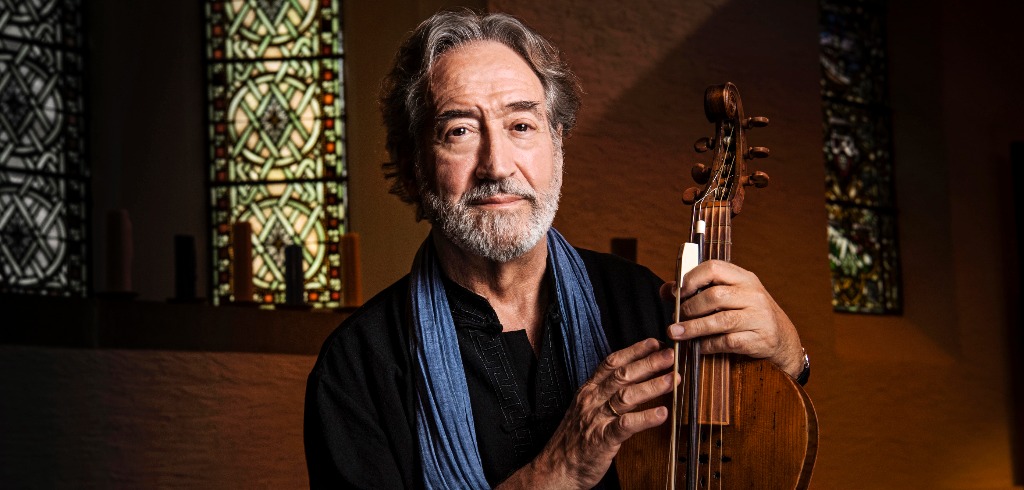
When Jordi Savall spoke with La Scena Musicale in 2022, he was on a North American tour that took him to Ottawa and Montreal with his ensemble Hespèrion XXI. At the time, his repertoire centred on the golden age of consort music, a period spanning the 16th and 17th centuries.
This year marks the 85th birthday of this illustrious viola da gamba player and conductor, a specialist in early music and unearther of rare gems. Despite his years, Savall demonstrates a passion for research and the unknown that remains as strong as ever. Indeed, in addition to his specialist ensembles, he works with a team of researchers to assist him in these quests. “I’ve always had this interest. I have found so much beautiful music that had been completely forgotten. That prompted me to give up the cello and devote myself to the viola da gamba and its repertoire,” he said during our previous interview.

For several years now, Savall has been developing a series of programs that bring together various musical traditions, notably incorporating music from the New World—including works by white settler composers created during their maritime voyages. Unfortunately, travel restrictions to the United States imposed by the second Trump administration prevented the participation of some of the musicians, causing a change of plans. As a result, Savall has chosen to return to the European Middle Ages and early Renaissance to help guide the audience toward a less familiar corner of the repertoire that is now part of the world’s cultural heritage.
The concert opens with a piece by a certain Marcabru (1110–1150), “one of the first troubadours, whose song embodies the spirit of the Crusades,” Savall says in a press release. “This European spirituality evolves into the polyphony of Josquin des Prés, where the call for peace (“Dona Nobis Pacem”) contrasts with the realism of the musical ‘battles’ evoked by Mateo Flecha or Pierre Attaingnant, who imitate the sounds of war with great rhythmic richness.”
In the second part of the program, Savall will perform works that, although written by white composers, were, in his own words, “inspired by popular festivals and expressed the identity of people of mixed race and slaves.” Indeed, a large part of the program will be devoted to traditional music from various oppressed peoples, including spirituals and Sephardic prayers.
Finally, the artist and his Catalan compatriots will introduce the audience to another little-known aspect of the non-Western, yet colonial, repertoire: Peruvian folk music, as presented in a collection known as the late 18th-century Codex Trujillo.
There is no doubt that on April 18 at Maison symphonique de Montréal, Savall will offer a moment of humanity and brotherhood that reflects his deeply held values as a musician.
Translation: Gianmarco Segato
This page is also available in / Cette page est également disponible en:
Français (French)