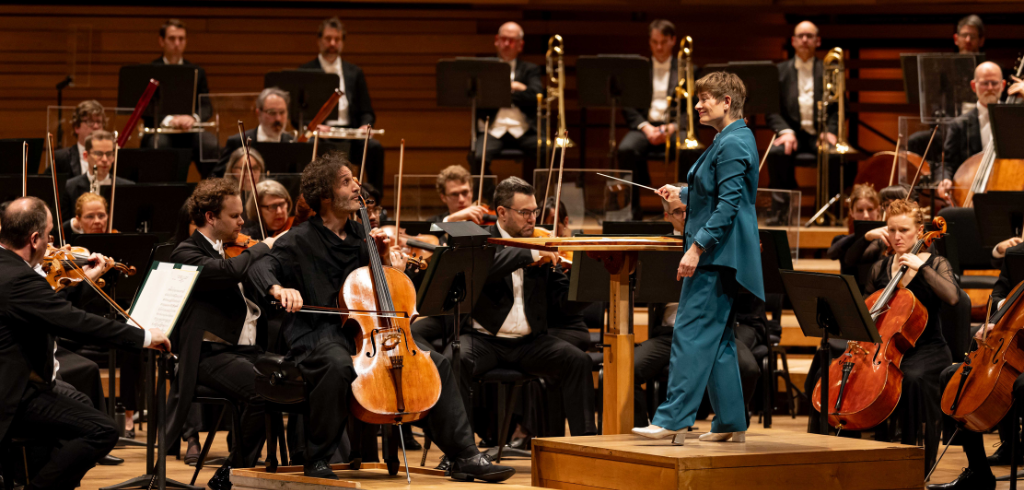
Despite Orchestre symphonique de Montréal Music Director Rafael Payare’s absence due to his busy schedule conducting elsewhere, there is no shortage of exciting programming at OSM this November. Witness German conductor Anja Bihlmaier, Principal Guest Conductor of the BBC Philharmonic, who made her OSM debut on Nov. 26. Dressed smartly in head-to-toe teal, she led the orchestra through a program of English music before diving into Tchaikovsky’s famous final masterpiece.
First up was the Ballade in A minor by British composer Samuel Coleridge-Taylor’s (not to be confused with poet Samuel Taylor Coleridge). Bihlmaier’s somewhat stiff and pushed approach, that thankfully relaxed as the night went on, made the piece feel rushed at times. The accelerated tempo muddled some three-note chromatic ascending-descending phrases in an intense section that needed more articulation and separation. The rest of the string-heavy composition was pleasant. The ballad itself is dramatic and lyrical, with Coleridge-Taylor making great use of the lower bass instruments that Bihlmaier aptly drew out.
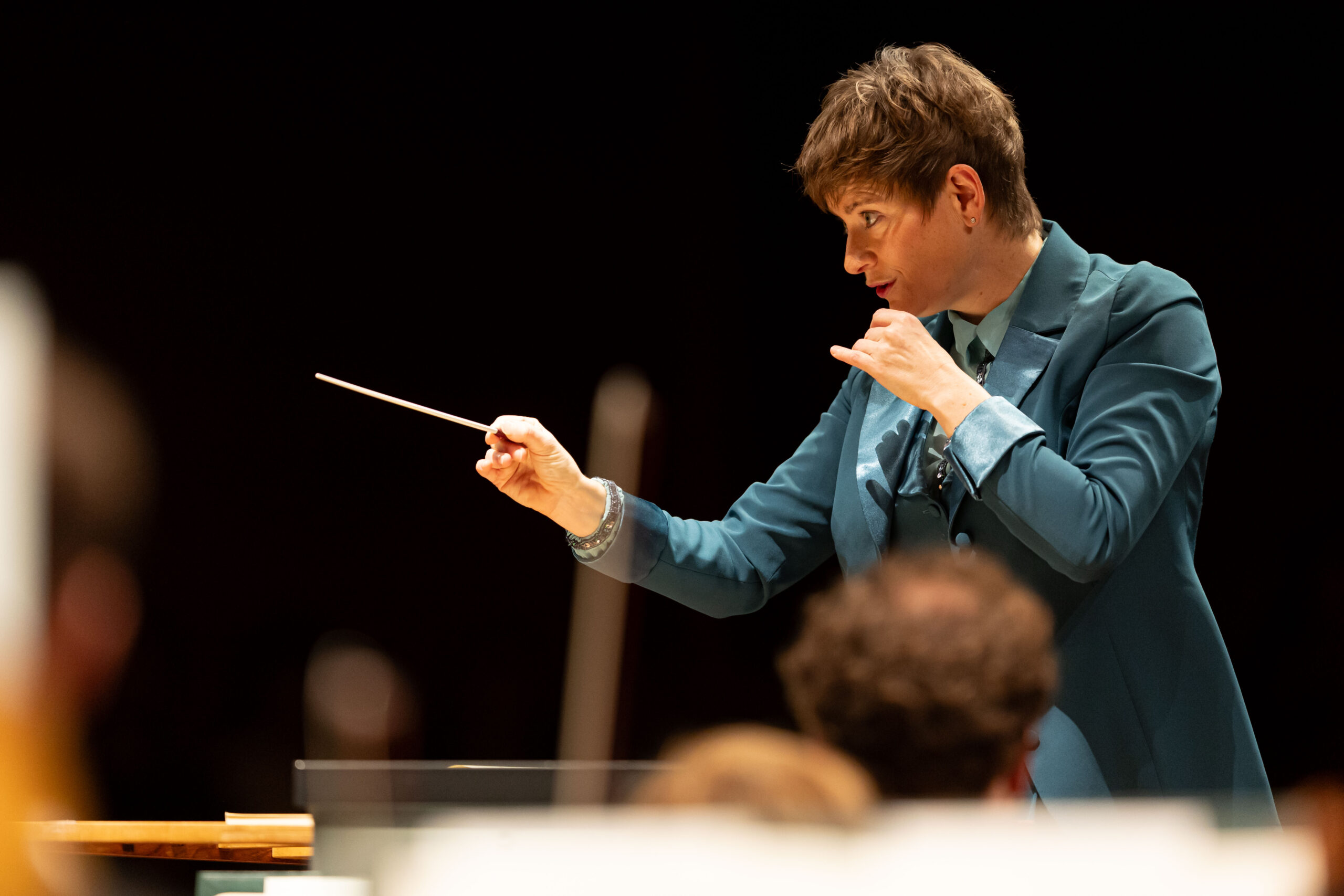
Photo: Antoine Saito
Next in a first half dedicated to British composers, was Edward Elgar’s Cello Concerto in E minor. German-French cellist Nicolas Altstaedt played it with finesse and passion. The concerto is full of despair, written in the aftermath of the First World War. An anguished cello solo from Altstaedt solemnly delivered the anguished solo that opens the first movement. The intensity ramped up throughout the movements with both Altstaedt and the OSM and playing with great emotion.
Something that Elgar incorporates beautifully in this concerto—and that Bihlmaier and Altstaedt delivered so well—is the seamless transition from melody to melody, musician to musician. In the early minutes of the piece, for example, Altstaedt’s cello part ended on a note that melted into a new viola tune. Here, the sparse orchestration makes it easy to hear instruments essentially finishing each other’s sentences. We didn’t get a chance to hear an encore from Altstaedt before intermission, unfortunately.
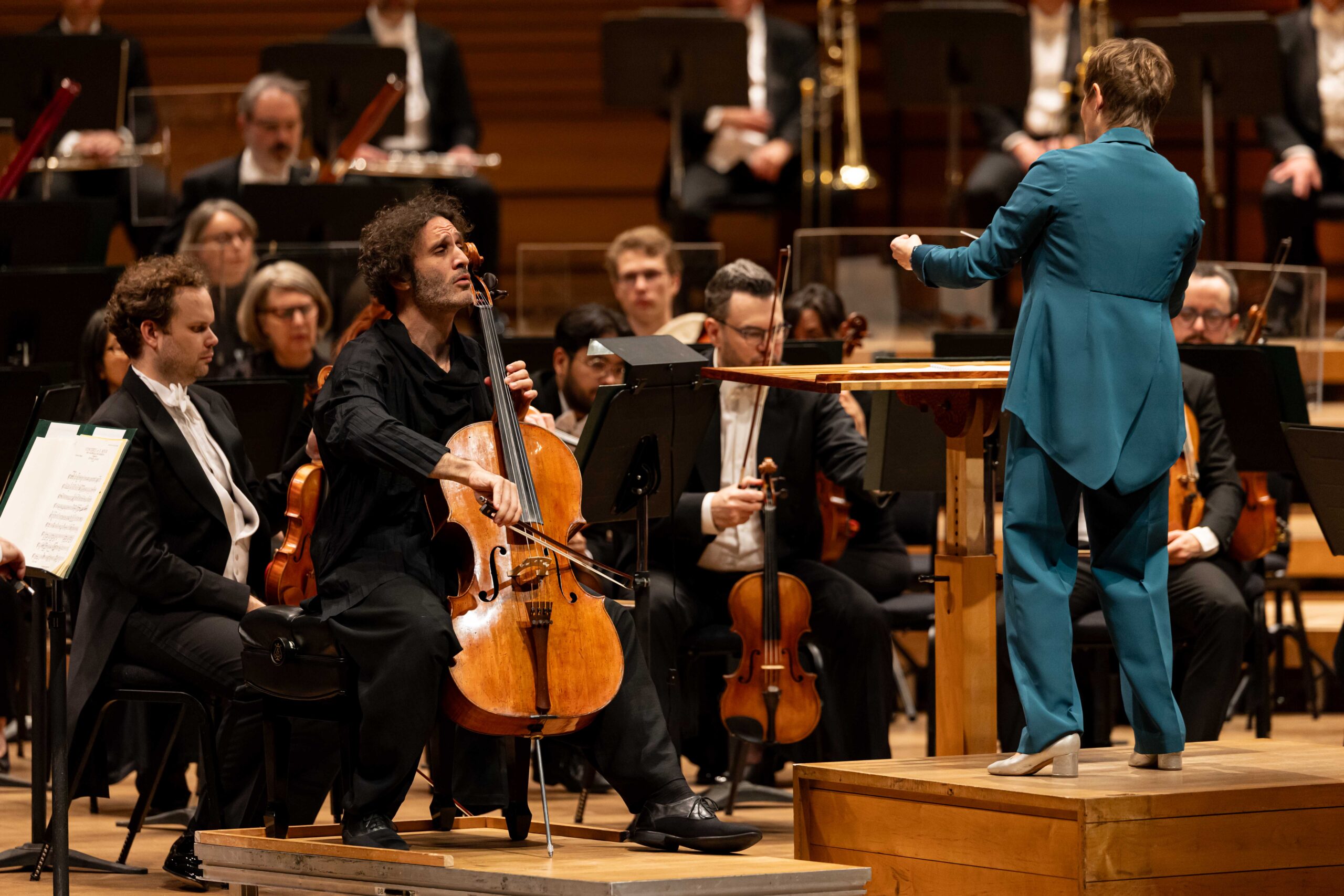
Photo: Antoine Saito
When Tchaikovsky died suddenly in 1893, it was just nine days after the premiere of his Symphony No. 6 in B minor in Saint Petersburg. The symphony was his final gift to the world, and highlights his growth and maturity as a composer. Understandably oft-misunderstood as ‘pathetic,’ the title “Pathétique” is actually more similar to the Russian word for “passionate” as opposed to something pitiful.
Tchaikovsky’s musical genius is undisputable in the symphony’s complex orchestration, its simple yet memorable melodies, and the range of emotions it evokes. The disproportionately long first movement contains a gorgeous theme in D major. It was like a romantic descent, then a breath, then a beautiful cascade that flowed through the rest of the piece.
The cascade theme subsided, closing in on itself quietly each time before starting louder and stronger in its repetition. Each recapitulation and each dynamic swell by the strings made the piece feel alive and breathing. Bihlmaier felt more at ease after the intermission. Even though I expected it, the sudden and furious boom of the timpani, accompanied by the brasses, still made me jump, although the rest of the movement once again became subdued.
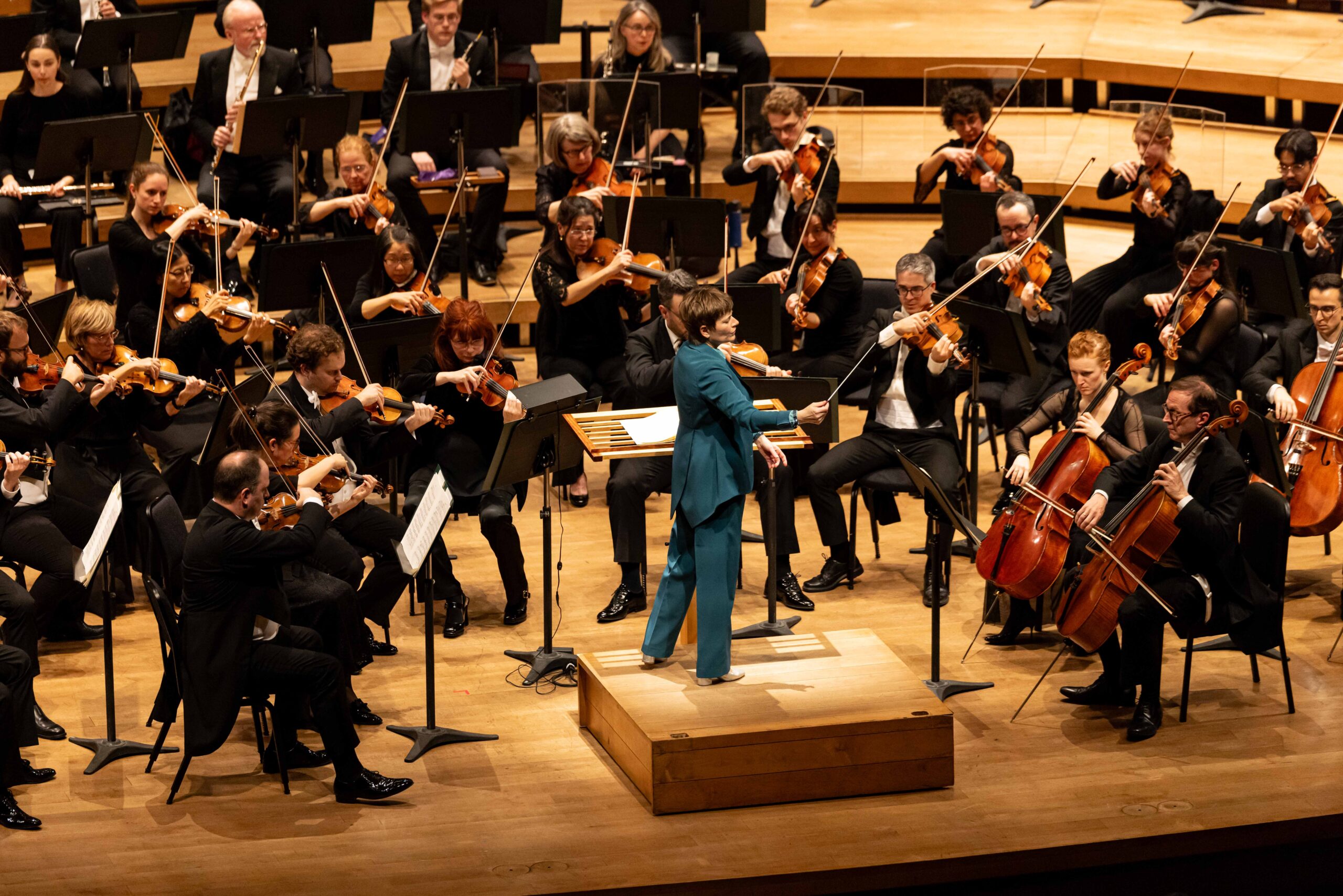
Photo: Antoine Saito
The second movement was sweet, written in a rare 5/4 time waltz that’s been called a ‘limping’ waltz due to its ‘unsteady’ rhythm. To me, its skips and flighty pizzicato are very similar to the style in which Tchaikovsky writes his ballets. If you listened closely, you could hear a little Nutcracker here, a little Swan Lake there. Double basses kept a steady beating pace, while short phrases were passed throughout the orchestra.
In the faster third movement Bihlmaier rightfully restrained the musicians’ natural urge to play louder. The timpanist is to be commended for their playing in both this symphony and the earlier Coleridge-Taylor piece. The movement ended loudly and majestically with a sweeping gesture that prompted much applause: an unfortunate breach of concert etiquette for a piece whose true ending is not so merry.
Bihlmaier undoubtedly anticipated the audience reaction to the false finale. With hardly a pause, she jumped straight into the final movement as if to quell the applause as soon as possible. Its slow and longing tempo is unusual for a final symphonic movement. The cascading theme from the first movement returned partially, this time with poignant pauses. Near the end, a subtle gong sounded—an allusion to what? Numerous theories can be read online. From there, the musical texture receded with all but the lower bass instruments gone. The instrumentation subsided further, with “gradually thinning texture” (as per the program) until only the double basses were left, playing at a whispering pppp before fading to nothing.
For more on Orchestre symphonique de Montréal’s season, visit www.osm.ca