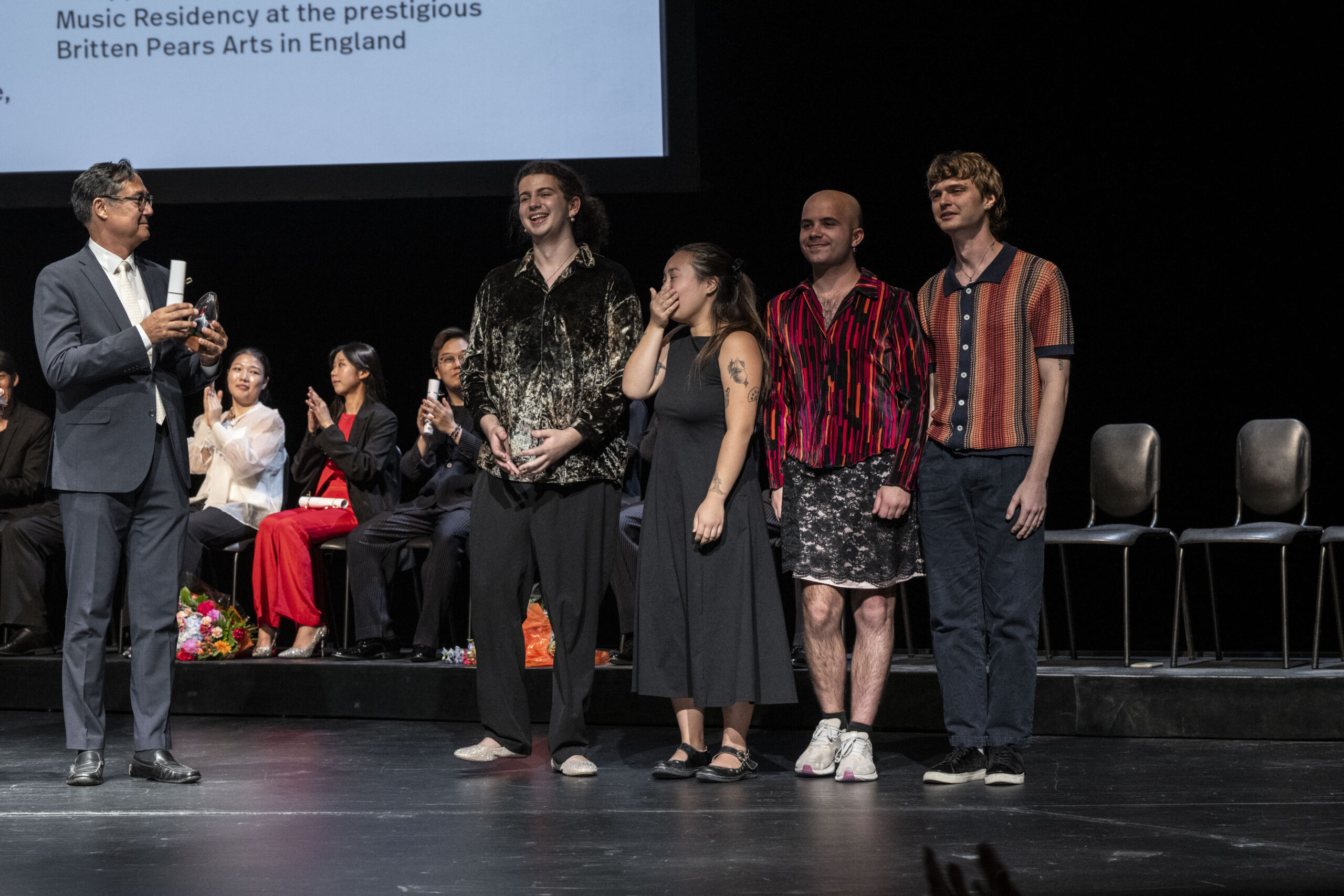
The fifteen Banff International String Quartet Competition (BISQC) jury made what many would say was a bold decision to award first prize to an American quartet that eschews the trappings of a traditional string quartet and champions both new music and their own LGBTQ identities, unreservedly.
The Poiesis Quartet, formed at Oberlin College four years ago, are BISQC’s new ambassadors, and they will enjoy career-changing support for the next three years, including professional management in North America and Europe, several significant residencies in the U.S. and abroad, a recording, and guaranteed appearances at dozens of concert venues. They also won Cdn$25,000 and an additional $4,000 for the best performance in the third round of the newly commissioned quartet by Kati Agócs.

The three finalists prepared their own 45-minute programs, and each submitted a short essay explaining the rationale for their selections. Those essays were included in the audience’s program. Besides projecting a non-conformist identity, Poiesis programmed four pieces by living composers, including their own commission from Chinese-Canadian Kevin Lau. One doesn’t typically hear a premiere at a music competition.
They played compellingly throughout the week. Their Bartók No. 5 was riveting on Saturday (Aug. 30), but the buzz around campus was that programming no recognizable music at the crucial, final stage of a competition might have been foolhardy. The jury disagreed.
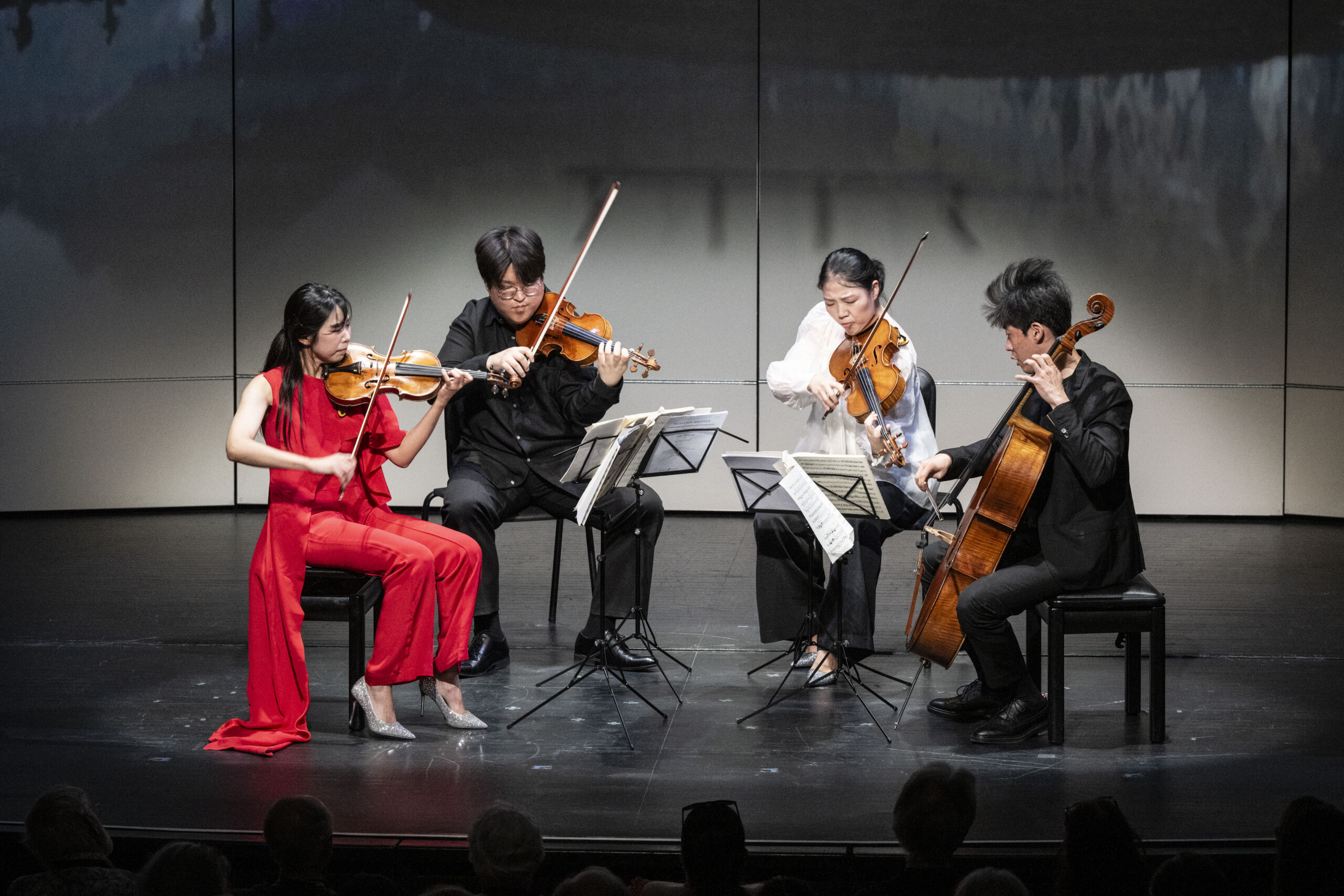
The other two finalists, Arete Quartet from Korea, and Quartet KAIRI, based in Salzburg, also delivered less-offered selections. Second-prize winner Arete was the most conventional, although their Three Divertimenti for String Quartet by Britten had a range of elements that gave it a distinctly contemporary flavour. They also played the opening movement of Mozart’s Op 19, nicknamed Dissonance, and Janáček’s String Quartet No. 1., which we’d heard KAIRI and Cong Quartet play earlier in the week. The scoring over the week was cumulative, and no doubt their performances were consistently good, although they were short on “a unique artistic voice and presence.” I would have ranked them third, if I’d had them in the final at all.
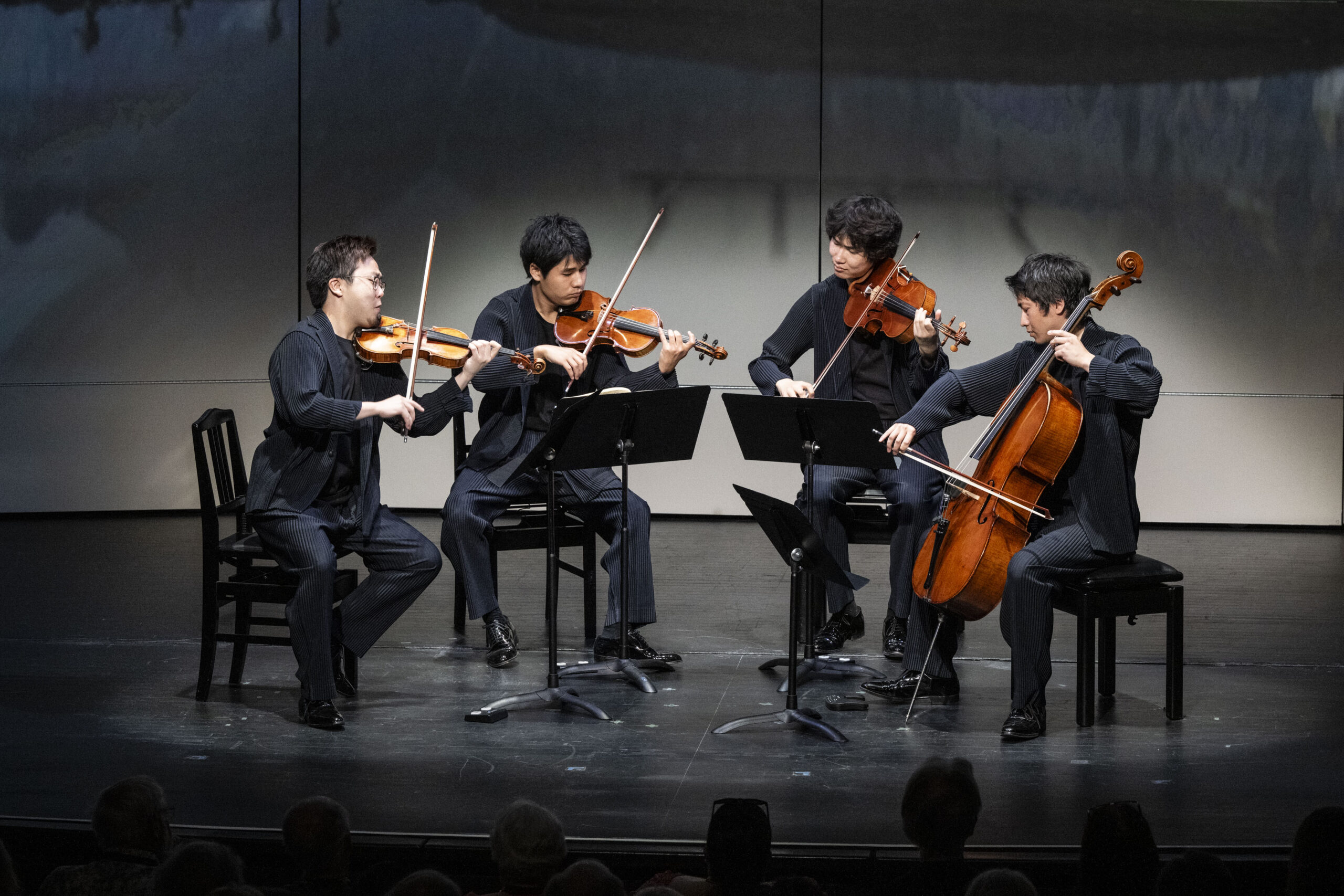
KAIRI’s final round once again demonstrated their range of control and power. They finished their set with a spellbinding performance of Shostakovich’s String Quartet No. 8 in C minor. Their opening Largo was haunting, and the hard-driving, intermittently jaunty second movement was totally entertaining, which should be the goal. But the concluding Largo, played at practically a whisper, at a senior-with-a-walker tempo, was edge-of-your-seat exceptional. They also played Landscape by Takemitsu, a piece with no musical line, focusing instead on silences between emphatically played chords, exploring what the Japanese call ma, “the physical space between notes and harmonies.” They gave us a taste of Mozart to start with the opening and closing Allegretto movements of his String Quartet No. 21.
In a media session after the award ceremony, Poiesis said winning BISQC ends a chapter in their development. They won’t compete again. What they will do is pursue their vision of what their progressive ethos can reveal to 21st-century audiences. They want to be more than mere representatives of a minority fighting for respect and space in the broader culture. At one point, speaking of how difficult it was growing up queer to find acceptance, let alone artistic recognition, violinist Sarah Ying Ma became very emotional, unable for a moment to answer a question.
“I just never thought I’d be doing this. … the string quartet gave me some place where I felt I belonged,” she said. One writer had once told her, “the future of chamber music is queer. And we really live by that. There’s so much space for diversity and a lot of space for not necessarily just representation, but expansion of new understandings and integrating different traditions within what we normally see as tradition.”
BISQC director Barry Shiffman observed that at the beginning of the week, Poiesis’s unusual personality had the elderly audience murmuring about their unconventional stage presence, but he sensed, by the time the group had shown they were consummate, versatile musicians, the talk was largely about their playing.
BISQC has made a statement in sending this unique group of musicians into the world with its imprimatur. Not only will Poiesis benefit from the acceptance and recognition they’ve received in Banff, but the competition’s own reputation as a launching pad for new careers will no doubt be etched in international competitions’ history.
The next BISQC will be held at the end of August 2028.