
This page is also available in / Cette page est également disponible en:
 Français (French)
Guided by an idea as simple as it is inexhaustible—the art of imitation—La Nef’s latest program offers a fascinating musical journey through the centuries. From the Middle Ages to contemporary composition, Jeux d’imitation, jeux de miroirs will highlight the enduring nature and richness of the imitative process, which have never ceased to inspire composers.

Photo: Emmanuel Crombez
At the heart of the project lies an ancient—yet surprisingly modern—concept: the gymel (from the Latin cantus gemellus, or “twin song”). As Vincent Lauzer, the project’s musical director and flutist, explains: “The starting point was the medieval gymel, a form of composition and improvisation that seeks to break the monotony of the melody by expanding the sonic textures.” In practical terms, this involves splitting a musical line into two closely related voices, creating a play of echoes and harmonic enrichment. This practice, often improvised in the past, opens the concert with songs such as “Belle qui tiens ma vie” reworked as vocal and instrumental tutti pieces. A similar kind of musical dialogue is also found in Thomas Morley’s viola da gamba duets and in William Cornish’s “Ah Robyn, Gentle Robyn.”
Later in the program, imitation takes on a descriptive and evocative quality: bird songs in the works of William Williams, and in famous pieces by François Couperin and Louis-Claude Daquin featuring the cuckoo. The journey continues to contemporary works where imitation becomes a medium for sonic experimentation. Ole Buck reimagines the gymel for recorder and toy piano, while John Cage explores the unique timbres of this miniature instrument. Finally, Matthias Maute and Steve Reich demonstrate an extremely precise, almost mathematical style of composition, where repetition and displacement produce a hypnotic complexity.
This progression within the concert—from improvisation toward a highly structured composition—forms one of its central themes. “In the older repertoire, which is less strictly written, we’ll allow ourselves the space to play more freely,” says Lauzer, emphasizing the importance of collective work and rehearsal time in fostering this freedom.
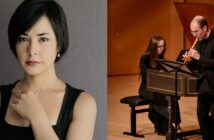
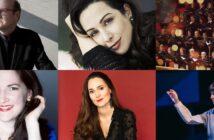
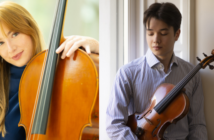
The group of versatile musicians—Lauzer, Dorothéa Ventura, Alice Boissinot Guastavino, Marie-Laurence Primeau, Pierre-André Doucet—are each adept at switching from one instrument to another to further enhance the theme of imitation. “When listening to the concert, I’d like people to realize the versatility and complexity of a concept that, at first glance, seems simple,” says Lauzer.
La Nef, Jeux d’imitation, jeux de miroirs, Centre Sanaaq, April 21. www.la-nef.com
Translation: Gianmarco Segato
This page is also available in / Cette page est également disponible en:
Français (French)