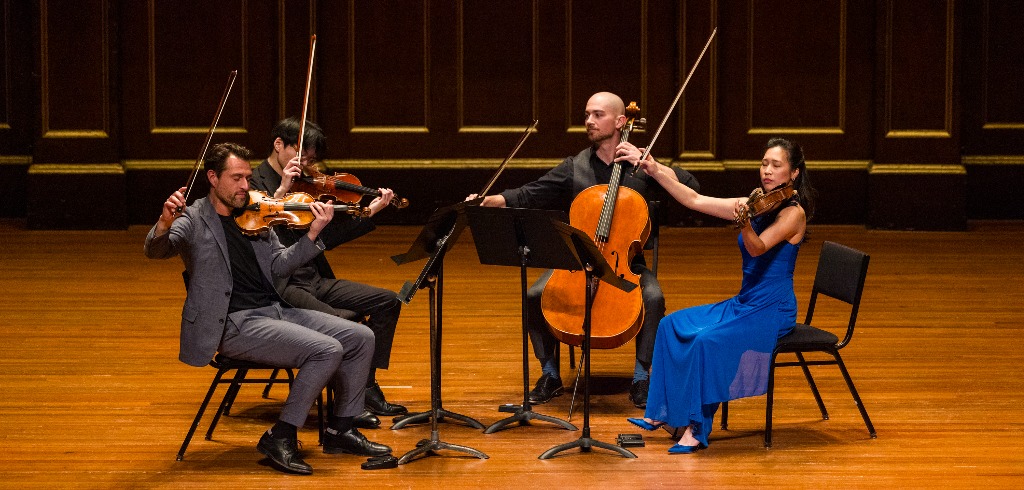
On Feb. 8, the temperature in Montreal plummeted to -16°C and a biting wind lowered it by some magnitudes more. The city was in need of some warmth and sun, and they got it. The Dover Quartet rolled into town to play for the Ladies’ Morning Musical Club and fortuitously gifted the audience in Oscar Peterson Concert Hall one of Joseph Haydn’s (1732-1809) “Sun” quartets–op. 20, no. 4. in D major.
Note: there is nothing particularly sunny about the opus 20 quartets. The nickname comes from one of the early editions having a picture of a sun on its cover. The concert was fleshed out with Franz Schubert’s (1797-1828) Quartet no. 11 in e minor, D.353, with Felix Mendelssohn’s (1809-1847) Quartet no. 6 in f minor, op. 80 after the intermission.
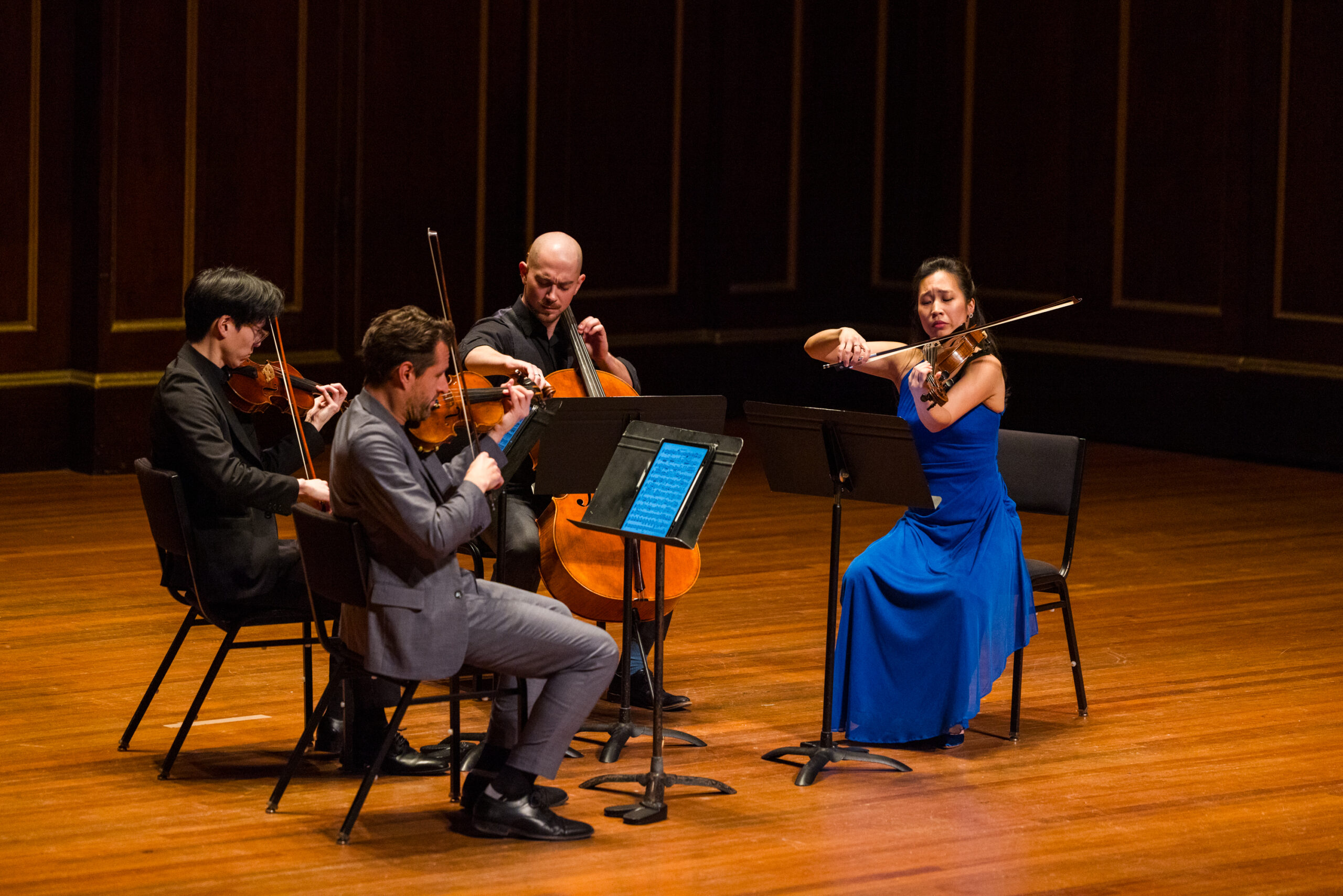
Photo: Robert Torres
What you missed
The reputation of the Dover Quartet precedes them. Originally formed at the Curtis Institute in Philadelphia in 2008, they have been crowned as one of the greatest quartets of the last 100 years by the BBC Music Magazine. Although it is difficult to gauge greatness over an entire century, they did not disappoint. All the workmanship was impeccable: they were in tune and could have released a recording of the concert on the spot. The ensemble demonstrated a fluidity as parts were passed off from one instrument to the other.
Their careful interpretation brought together works that were written over the course of almost a century. On paper, the three quartets span two musical eras—the classical and romantic. The late-18th-century Haydn (1772) is a precursor to romanticism, an exemplar of the pre-romantic Sturm und Drang movement. The Mendelssohn (1847), the latest quartet, melds the composer’s flair for virtuosity (in other works sometimes gratuitous) and romantic idioms with an almost Beethovenesque treatment. The works thus have a common thread of classical craftsmanship and a romantic aesthetic.
The Dover Quartet deserves particular praise for allowing the composers to shine. That is, they never let their egos override the music with personal virtuosic tangents. They allowed the music to put its best foot forward, and that was no small task. The playing in these works is exposed, virtuosic, and requires top-notch ensemble playing. Vertiginous speeds are de rigeur for many of the movements, but as breathtaking as it was, the playing never seemed ready to fall off the rails.
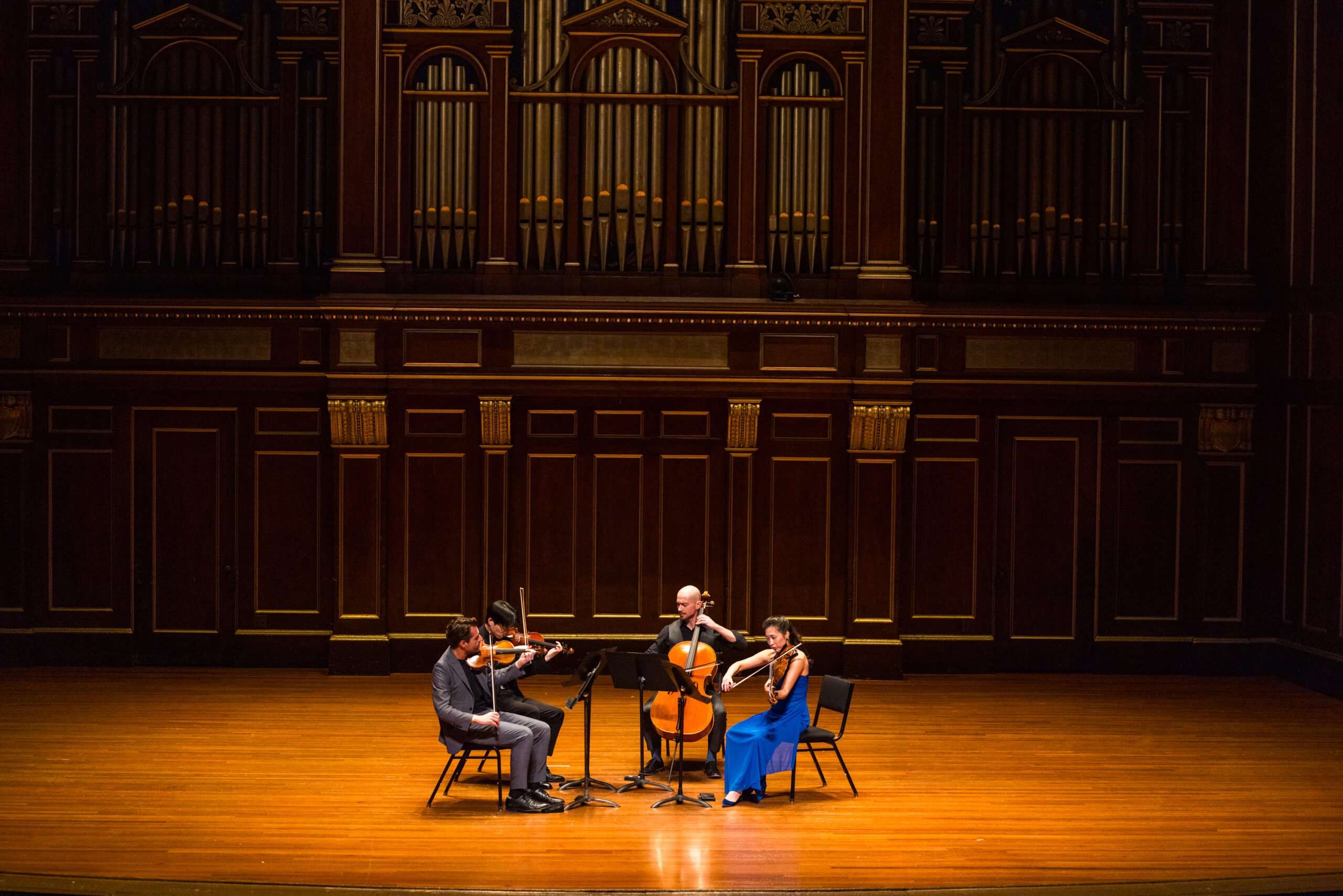
Photo: Robert Torres
Classical vs Romantic
There is little to complain about, apart from the cold that fortunately stayed outside the hall. The educator and pianist, Carl Adolf Martienssen, postulated that there are two types of musicians–the ‘classical’ type who strives for a polished gem that is breathtaking in its refinement, and the ‘romantic’ type who eschews polish for directness and vigour. This latter is also more error-prone. Whether Martienssen’s hypothesis is correct can be debated. We could find, however small the number, passionate listeners who might prefer the latter type’s greater risk, more flamboyance. I am not one of them, the music was flamboyant enough.
Mendelssohn wrote his quartet shortly after his treasured sister, Fanny, passed away. It has been said that it is the work that expresses his grief the most. I was expecting nostalgic sadness. Instead, the spotlight was shone on angst and disharmony (progressive even for Mendelssohn)—not a defect, only an unexpected aspect of the interpretation.
In the evening following the concert, the Dover Quartet gave a masterclass for chamber music students at McGill University. This afternoon concert was a masterclass for listeners. These are definitive performances and how these works should be played, and the audience thought so too, springing to its feet without hesitation to recognize the artistry they had just heard.
LMMC continues its 2025-26 season with Scottish pianist Steven Osborne on Mar. 1. Read our exclusive interview here. www.lmmc.ca