Hungarian State Opera is presenting the first revival of its 2023 production of Mozart’s Idomeneo in András Almási-Tóth’s pandemic-inspired conception. Having seen the premiere two years ago, the execution now feels even stronger, including some significant cast changes. In 2023, the company opted for the more ‘usual’ mezzo-soprano as Idamante, but this time we were treated to a tenor, following Mozart’s own version written for the opera’s 1786 Vienna iteration.
Casting a male tenor in a male role creates a very different dynamic dramatically, and in no way do I mean to slight the many mezzos who have successfully embodied Idamante. By its nature, a female voice is often more dynamically supple and can better negotiate the role’s considerable coloratura. I wouldn’t want to be without mezzos in pants roles like Idamante, but given the success of the young Budapest tenor Artúr Szeleczki, a student of legendary Hungarian soprano Éva Marton, hearing this version was a bit of a revelation.
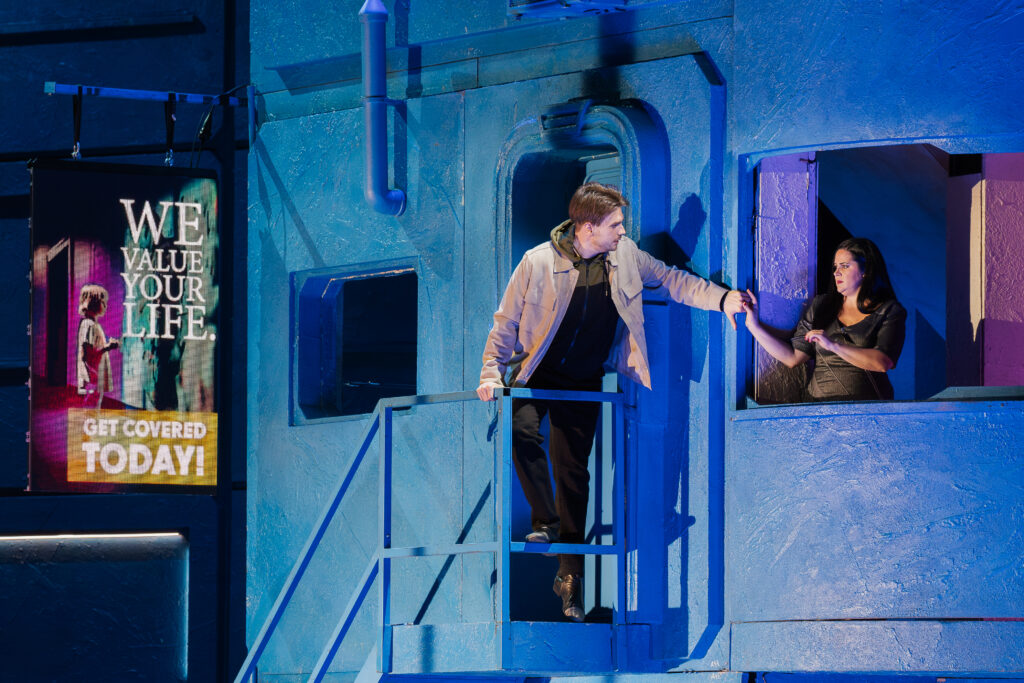
Szeleczki possesses a beautiful timbre and he seemed untroubled by the role’s technical difficulties. It is also long, with multiple da capo arias and intricate ensembles. The young tenor handled all of this with great assurance, perhaps betraying a hint of strain in the late Act II quartet. His physical comfort was that of a budding singer/actor who will no doubt become even more convincing dramatically as he gains stage experience.
Almási-Tóth’s concept came on the tail end of pandemic lock-downs but seems just as apropos today, especially in its cynicism directed towards an increasingly corporatized society. Here, Idomeneo’s hesitation to make good on his promise to kill the first person he meets after being rescued from the sea results in a pandemic. His reluctance is understandable given his first encounter is with his son, Idamante. This brings down a horrible sickness on his subjects and by Act II, society has deteriorated and nature has taken over. Sickness is manifested in both the chorus and dancers’ disturbing, jerky movements.
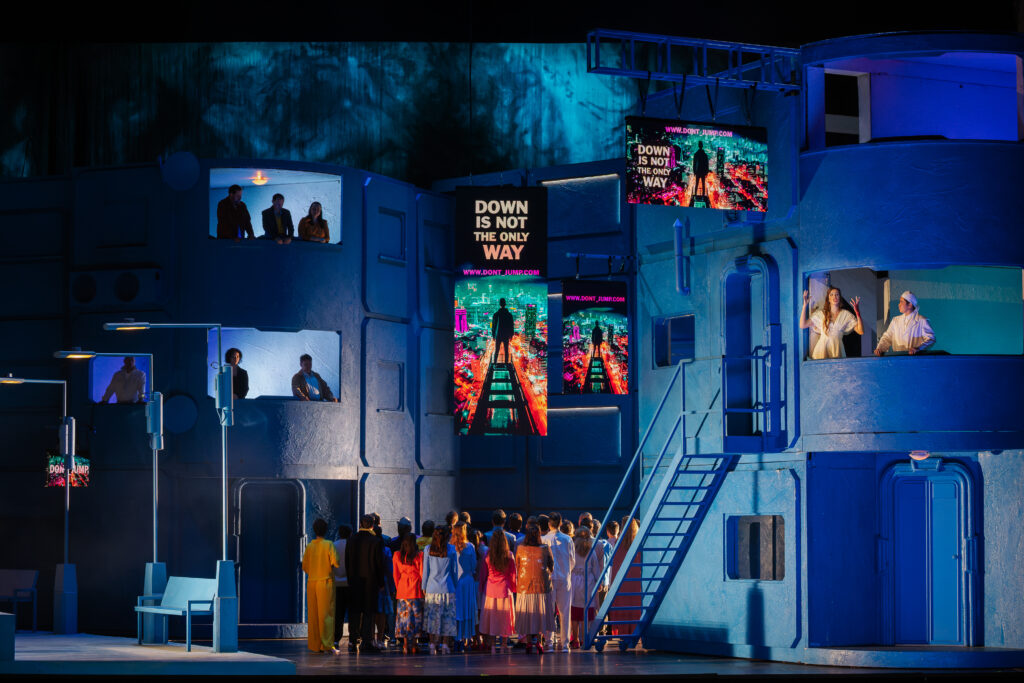
Beyond these physical manifestations, the director takes aim at banks and privatized medicine with signage proclaiming “We Are the Safe Bank! Exclusive War-Loan Now!” Mental health is treated with dubious sympathy: “Down is Not the Only Way. www.don’tjump.com.” It doesn’t take much of a jump to present-day vaccine wars and cash grabs around contemporary wars.
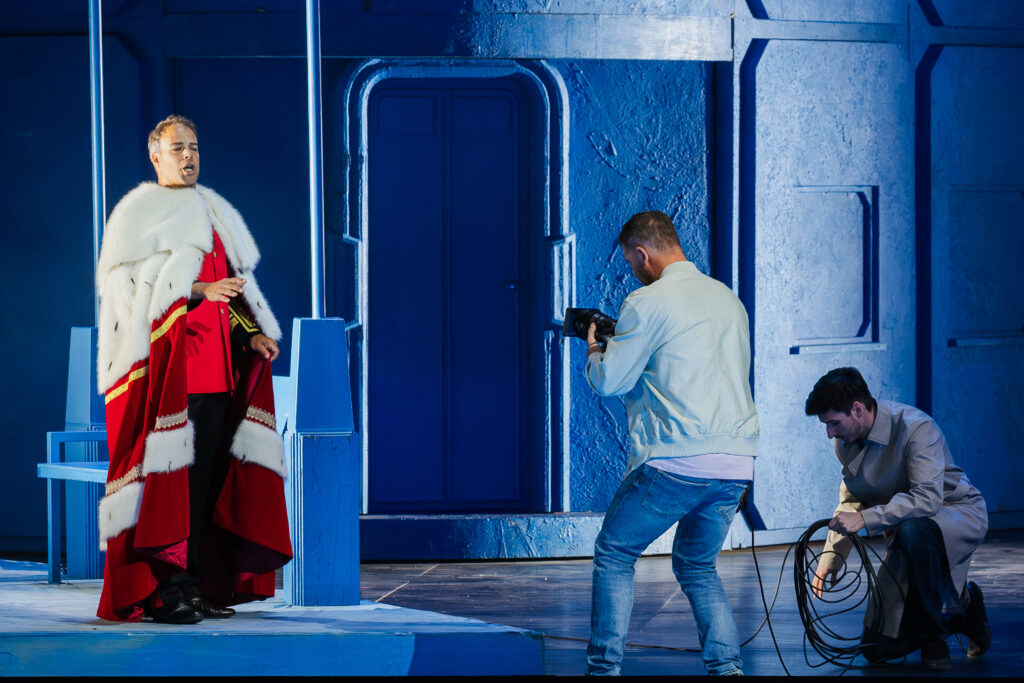
Into this somewhat depressing realm, the rest of the cast relish their opportunities to create memorable portrayals. Back from 2023 is tenor Szabolcs Brickner as Idomeneo. He tackles big arias like “Fuor del mar,” as well as the often-cut “Torna la pace,” with great assurance. Certainly, the fioritura isn’t always perfect, but most tenors steer clear of the fuller versions of these arias altogether, and if memory serves, the vocalism is much cleaner than in 2023. Brickner projects all angles of this fascinating character: his initial joy-turned-to-horror upon realising he will need to sacrifice his son and in the end, coming full-circle as an ambiguous, almost-too-confident leader.
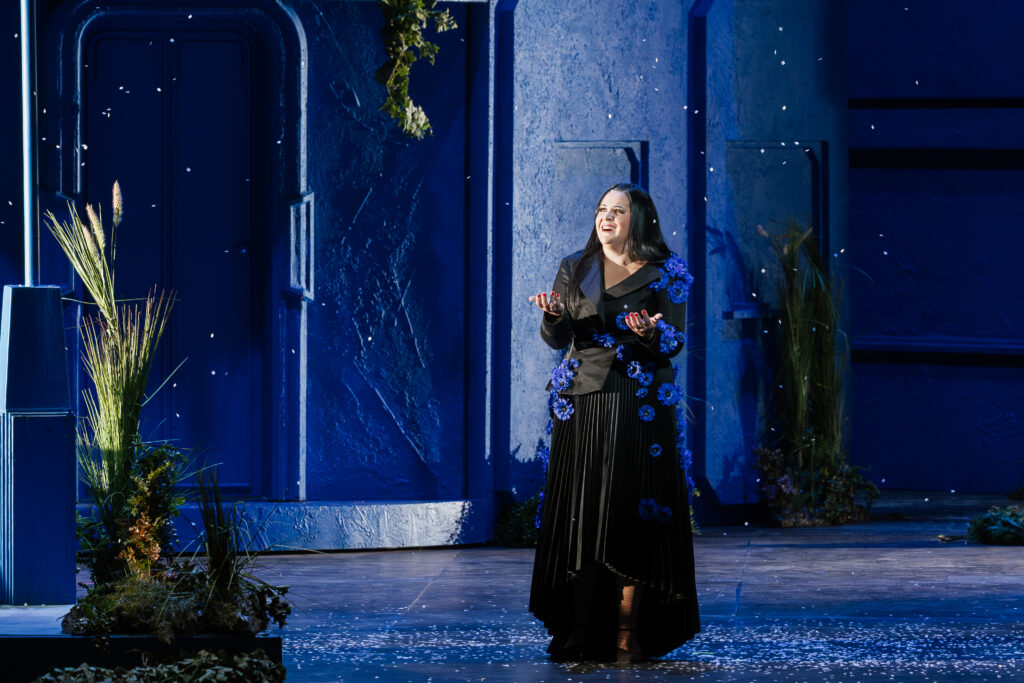
Soprano Zita Szemere was an enchanting Ilia, emitting pure, beautiful tone delivered with nuanced rhetoric. I loved how she smiled mischievously at her bedroom window after having turfed Idamante out of her bed for failing to commit. Little details like this turn a rather standard lyric role into more of a well-rounded human being.
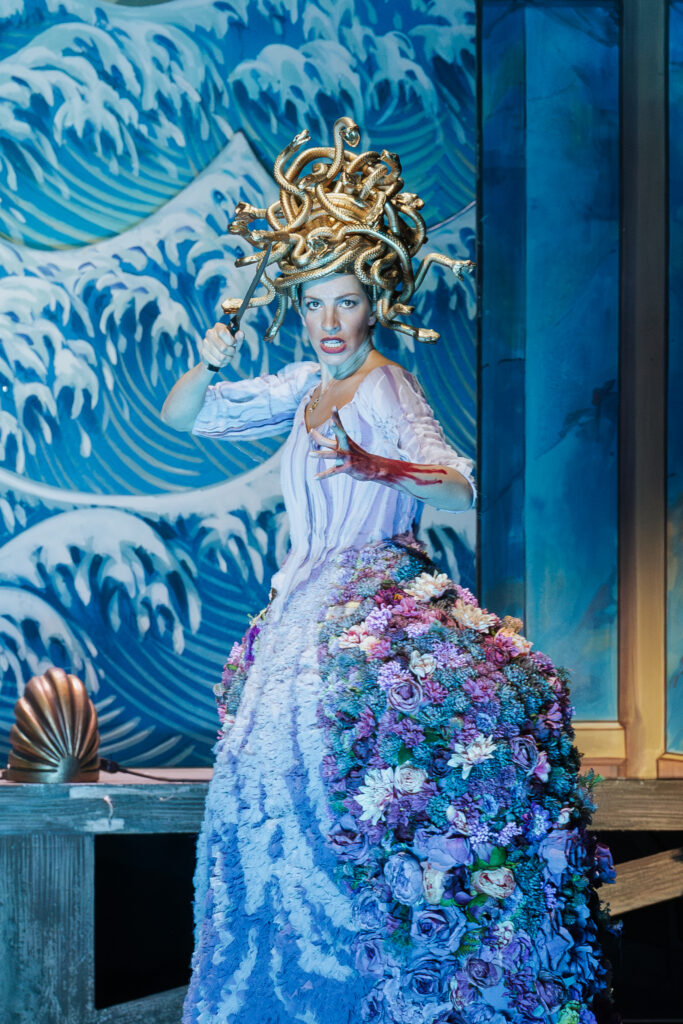
The role of Elettra can steal the show, which soprano Laura Topolánszky just about managed to do. She is fully engaged with Almási-Tóth’s curious but fascinating decision to show Elettra as damaged from the start, even before the pandemic arrives. From her opening scene, Elettra is afflicted with a bloodied claw of a hand which she holds aloft throughout the opera. Topolánszky uses her striking height to her advantage as she staggers and preens over the rest of the mere mortals around her. This is matched by her aristocratic, rich, creamy tone. Surely Donna Anna is in her future?
The program mentions that cuts were made to ensure a more manageable evening which is a shame for tenor Ninh Duc Hoang Long as Idomeneo’s advisor, Arbace. In fuller versions of the score he has two complex arias, but here, at least he still got to deliver the poignant recit “Sventurata Sidon” in which he laments the downfall of his nation.
Adam Cser led the orchestra from a raised pit. Under his baton, they played with verve and stylistic sensitivity. The chorus were effective as victims of a scourge, acting and singing with conviction.
Idomeneo may not have the name recognition of a Figaro or Don Giovanni, but it is a remarkable score in its own right. It is an early Mozart work which goes beyond merely presaging those later dramatic masterpieces. This Budapest performance confirmed this status with some superb music-making in a striking concept.
Hungarian State Opera’s Idomeneo continues its run through June 20. www.opera.hu/en