
This page is also available in / Cette page est également disponible en:
 Français (French)
-
Pentatone4
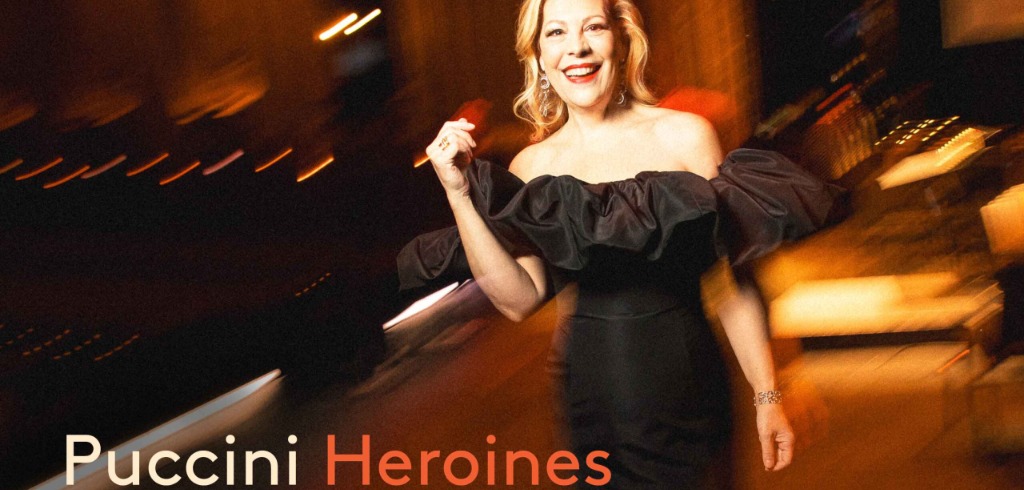
Puccini Heroines
Sondra Radvanovsky, soprano; Lyric Opera of Chicago Orchestra; Enrique Mazzola, conductor
Pentatone, 2026
Puccini Heroines is a sort of followup to Sondra Radvanovsky’s Three Queens program, also recorded live at Lyric Opera of Chicago. This time she manages an aria for pretty much every Puccini leading lady plus a couple from supporting roles as encores. There aren’t many surprises (at least not until the end) with Mimì’s “Sì. Mi chiamano MImì”, Tosca’s “Vissi d’arte,” Butterfly’s “Un bel dì vedremo” and Manon’s “Sola, perduta, abbandonata” all included along with some less well-known arias from Le Villi and Edgar among others. In what I think must have been the concert’s published program, nine arias as well as about 24 minutes of orchestral music intermezzi and preludes were included.
It’s very well done. Radvanovsky has a very pure sound. It’s never strident, never metallic even with loud high notes. There’s almost a clarinet-like quality in the overtones, which is most distinctive. She has colours, too. When appropriate, she can darken her tone quite markedly. There’s a good example at the start of “Sola, perduta, abbandonata” in which she also shows that she can hold a high note for quite a long time. It’s really Puccini singing at its finest and she is well supported by the Lyric orchestra conducted by Enrique Mazzola.
She has some fun at the end, too. I think the last number in the program must have been Turandot’s “In questa reggia” which, among other things, shows that she has no problem with loud! The first encore is Musetta’s “Quando me’n vo’” from La bohème and I imagine it must be a while since Radvanovsky has sung that in a staged production! It’s a cheeky aria and she makes the most of it, as you do. But then she’s back with “O mio babbino caro.” It’s totally tongue-in-cheek and a great way to send the very enthusiastic audience home happy.
The recording quality is excellent. It’s clean and clear with excellent dynamic range—at least on the hi-res digital version I had for review. It’s available as a physical CD, 44.1kHz/16 bit and 96kHz/ 24 bit lossless, MP3 and Dolby ATMOS. There’s a fairly lavish booklet with extensive notes plus full texts and translations.
There’s a generous 52 minutes of singing backed up by the orchestral pieces. It’s a treat for Radvanovsky fans.
This page is also available in / Cette page est également disponible en:
Français (French)