

This page is also available in / Cette page est également disponible en:
 Français (French)
-
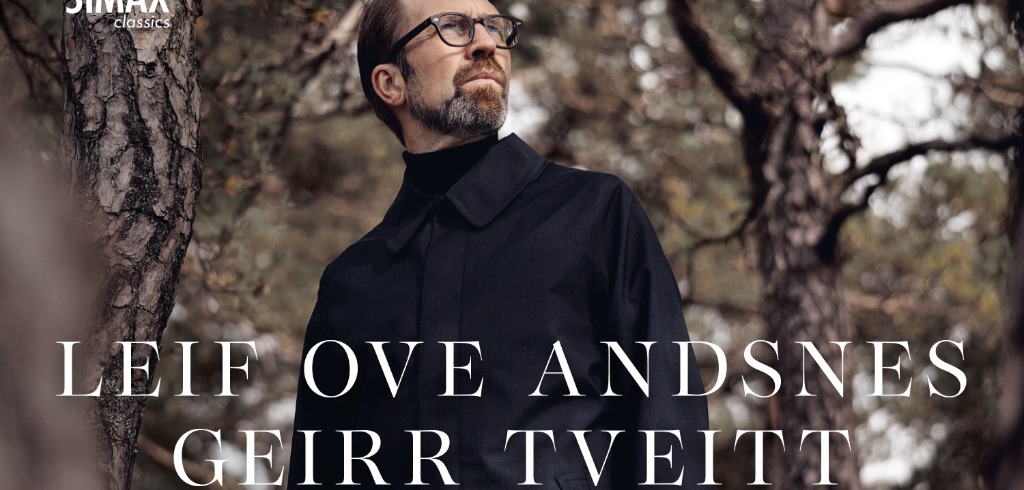
Simax Classics5
Geirr Tveitt
Leif Ove Andsnes, piano; Solveig Andsnes, vocals
Simax Classics, 2026
Norway’s most acclaimed pianist, Leif Ove Andsnes, provides a riveting introduction to the music of Geirr Tveitt. Following in the footsteps of Edvard Grieg—who died just one year before Tveitt was born—Tveitt sought to develop a distinctly Norwegian musical language rooted in the country’s majestic natural landscapes and rich folk music traditions.
Sonata No. 29 “Sonata etere” is the only sonata to have survived a devastating fire to Tveitt’s farmhouse in 1980, which destroyed 80 per cent of the composer’s works. Based on two simple melodies, the piece begins with a sparse, almost minimalist texture, but soon gathers a very impressive momentum—both in its harmonic range and rhythmic drive—which it sustains throughout. How Tveitt manages to manipulate the simple motives—condensing them, drawing them out, turning them inside out and upside down— is wonderfully exciting. While full of surprises—impressionistic gestures and sudden drops in register—this piece has a clear logic to it.
Tveitt’s excellent piano writing is rendered clear, accessible, and vivid in Andsnes’s adept hands. His articulations—such as the gorgeous, pedalled staccatos at the beginning of the second movement—are particularly striking. Throughout the performance, he and the composer seem to work as one, crafting each note with exquisite care yet still shaping the music into a greater, narrative whole.
Fifty Folk Tunes from Hardanger are delightfully evocative miniatures, written in a richly colourful harmonic language while still preserving their characteristic folksiness. We can hear the bubbling of a pint in What Beer! and the clacking of cowbells in The Call of the Dairy Maid.
The latter third of the album consists of a set of songs in which Andsnes accompanies his sister, Solveig Andsnes. Here, we encounter a more purely evocative, ethereal musical language which provides a striking contrast to the structurally and harmonically denser music of the Sonata and the Folk Songs. Solveig’s tone—pure, earthy, and ethereal—renders these songs beautifully.
It is rare to hear Norwegian diction sung, especially by a native speaker, and Andnes renders the language as clear and as luminous as the nordlys (northern lights) that she evokes in song.
This page is also available in / Cette page est également disponible en:
Français (French)