
This page is also available in / Cette page est également disponible en:
 Français (French)
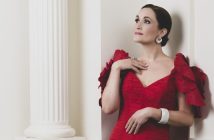
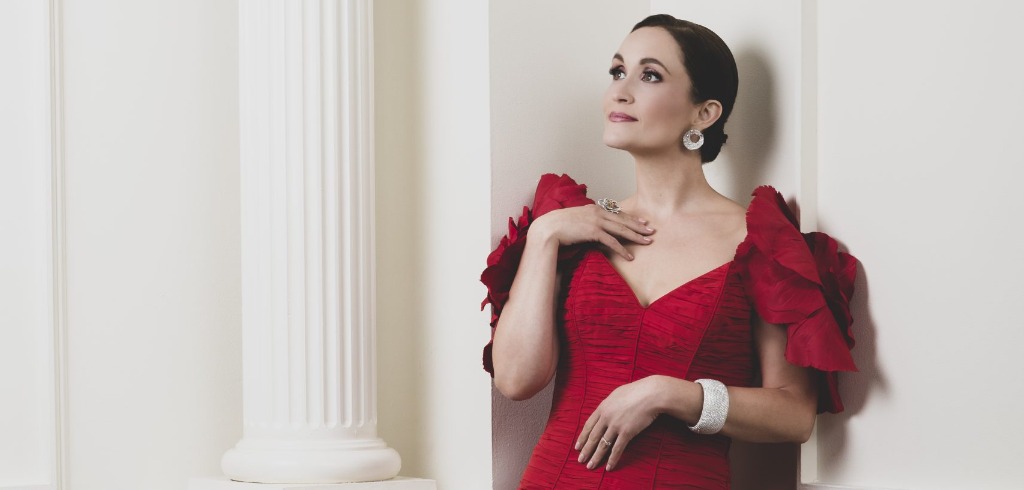
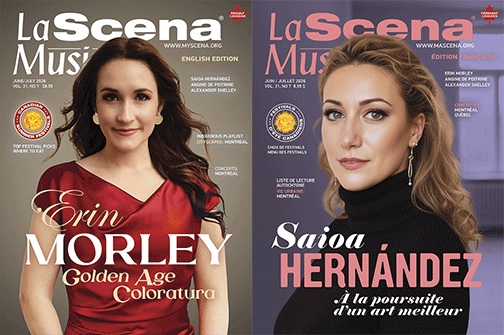
“Of course I said yes! It was a no-brainer!” recalls a smiling Erin Morley when the luminous American soprano is asked to outline the genesis of her Golden Age collaboration with tenor Lawrence Brownlee, a bewitching blend of bel canto and French arias and duets that emerged first as a recording, then as the extended tour that’s bringing her to Koerner Hall on July 16 as part of Toronto Summer Music. Amazingly, this will mark her Canadian debut.
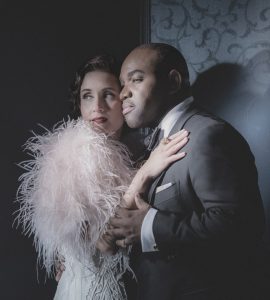
“Larry gave me a surprise phone call during the pandemic, back in 2020. I’d never sung with him, never even met him, just admired him from afar,” Morley says. “I wasn’t even sure he knew who I was! So I was a little shocked when he told me he admired my work and would love to do an album with me. We have voices that complement one another, and we sing a lot of the same repertory. It took five years for it to become a reality, but that’s how long these things take.”
In the meantime, “quite by chance,” the Met cast the two of them together in its new production of Die Zauberflöte and in last fall’s revival of La fille du régiment, “and things just kind of fell into place.” Having seen them in both, along with their Golden Age concert on its New York City stop, I can happily attest to their extraordinary rapport.
There was a third notable participant on the pair’s New York date: the illustrious Scottish pianist Malcolm Martineau. (He’ll be joining them in Toronto, too.) Morley delighted the audience when she sat down with him at the piano to play a rousing duet of Carmen’s “Chanson bohème.” Her pianistic skills weren’t a total surprise. Back in April 2020, during the early days of the COVID lockdown, the shuttered Metropolitan Opera presented an online “At-Home Gala,” featuring a galaxy of housebound company stars offering an aria or a song; Morley, many thought, stole the show with her self-accompanied “Chacun le sait” from Fille.
“It was one of the riskiest performances of my career,” she recalls, Zooming from her home in New Canaan, Conn., and looking as dewy-fresh and lovely as she invariably sounds. “But it opened up a bit more confidence in me to play the piano in public.” So when Myra Huang, the pianist for much of the Golden Age tour, invited her to play that Carmen duet, she proved not just ready and willing but impressively able.
In fact, though, her piano playing long predated her singing days. Born and raised in Salt Lake City, Utah, as a child she was taught both violin and piano by her violinist mother, but “I didn’t enjoy the violin nearly as much, and I really dived into the piano.” Her initial audition for the Eastman School of Music in Rochester, N.Y., where she earned her bachelor’s degree, was for the piano department.
So, when did the emphasis swing toward singing?
“When I was a child I sang in choirs and musical-theatre productions,” she says, “but I didn’t really have a full awareness of opera till later.” Her earliest operatic memory is of Victor Borge’s humorous sketches with a singer.
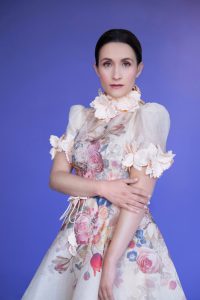
“And then, in my teenage years, my parents began bringing home opera albums, and I started listening to Renée Fleming, Cecilia Bartoli, Bryn Terfel—anyone they brought home. I began taking singing lessons when I was 16, but I didn’t really think I’d become a singer. I threw in an audition for the vocal department at Eastman at the very last minute and was surprised when I got accepted—surprised that they thought I had the potential. So I went to Eastman as a voice major and continued studying piano. But the time came when I had to make a choice, and I chose voice.” It was as a freshman at Eastman that Morley saw her very first opera: Britten’s Albert Herring.
After graduation, she headed to New York City and the Juilliard School, where she earned her master’s degree and then her performance-based artist diploma. During the last of her four years there, in October 2006, she made her debut at New York City Opera, as Giannetta in L’elisir d’amore: “It was my first big-girl singing job!”
Juilliard was followed by three years with the Met’s Lindemann Young Artist Development Program, in the course of which, in February 2008, she made her company debut, as one of the madrigal singers in Manon Lescaut. And in 2009, at Bard College’s SummerScape festival, Morley made a memorable splash in the showy role of Marguerite de Valois in Meyerbeer’s Les Huguenots. (As this writer said at the time: “Her singing, bright, fluent, and resplendently assured, couldn’t have been much improved, with some remarkable, pleasurably startling acuti.”) In 2012, she went west for her debut with Santa Fe Opera, as Roxana in King Roger, and crossed the Atlantic for her European bow, as Gilda in Rigoletto in Valencia, Spain.
But it wasn’t until 2013 that Morley sang her first leading roles at what is now her artistic home base, the Met: Constance in Dialogues des Carmélites and Sophie in Der Rosenkavalier. Other important debuts followed in quick succession. In the spring of 2014 she sang her first engagements in France in Lille and Dijon, playing the title role in Mozart’s La finta giardiniera, which she’d sung in her student days at Juilliard. And that fall she bowed at Opéra national de Paris as Mozart’s plucky Konstanze in Die Entführung aus dem Serail. In between these French dates, she made her German debut, as Gilda with Munich’s Bayerische Staatsoper.
But that year’s most significant debut came in December, at Vienna’s Staatsoper, again as Gilda. Der Standard hailed her as “flawless, lovable and memorable,” and the Viennese took her to their collective heart. Morley returned there in 2015 in one of her signature roles, Sophie, and in 2017 in another, Zerbinetta in Ariadne auf Naxos, which she’d sung for her Glyndebourne debut that summer.
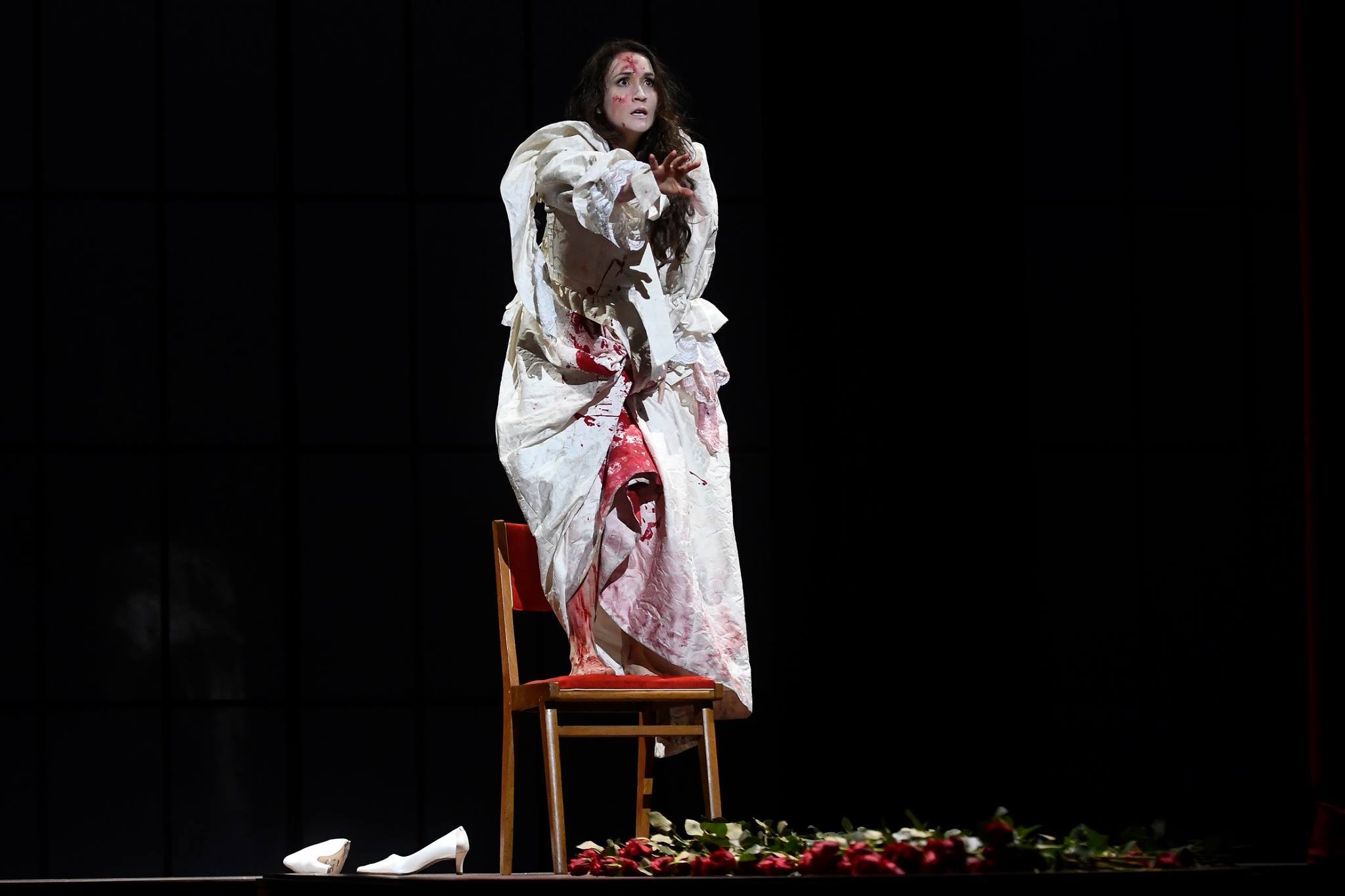
The Staatsoper has become “my European home,” as dear to her as she is to its public. She’ll be bringing her Fille Marie there in November, in the same classic Laurent Pelly staging she sang at the Met, but with Xabier Anduaga in lieu of Brownlee. “It’s so nice to be able to build on what I did at the Met,” she says. “It’s a bit of an athletic feat to sing Marie in this production,” which demands a large measure of knockabout physicality in addition to the requisite bel canto skills.
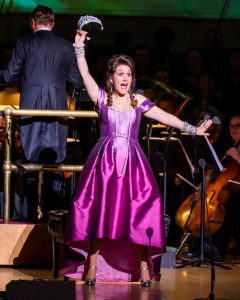
But there’s little chance she won’t be in shape for it. She’s posted videos, on Instagram and Facebook, illustrating her exercise regimen: “How to fire up the support muscles? Planks, my dears,” she counsels in one, which shows her planking while singing some intricately florid Rossini from Le comte Ory. (She and Brownlee perform the duet in Golden Age, without the planking.)
“Luckily, I’ve been surrounded by a team of people, through all my studies and my career, who’ve taught me how to take care of myself. I’ve had three children, and it’s important to stay fit.” Part of her strategy is singing Zerbinetta. “I’ve sung her all over Europe, and I’ll be bringing her to Chicago next March. She’s one of the most natural roles for me. It’s often the case that coloraturas grow out of Zerbinetta, but I kind of feel I’ve grown more and more into her. The music keeps my voice healthy. It’s the yardstick for me: if I can’t sing Zerbinetta easily, then I’m not taking care of my voice.”
Richard Strauss, however, is just one branch of her wide-ranging repertoire. There’s Mozart, and there’s Handel—she’s sung Angelica in Orlando with the English Concert in London and New York, and recorded Morgana in Alcina, which she’ll be singing in October for her debut at the Teatro San Carlo in Naples. Moving two centuries ahead, there’s Cunegonde in Bernstein’s Candide, in which she’s glittered gaily in Los Angeles, Philadelphia, and Dresden. And moving into the 21st century, she introduced Matthew Aucoin’s Eurydice to audiences worldwide via the Met’s Live in HD telecast of 2021—just one of the eight she’s done.
But it’s French opera to which she brings something extra-special. There was that splendid Huguenots of 17 years ago, and another Meyerbeer role—Isabelle in Robert le Diable—captured live for CD at a 2021 performance in Bordeaux. And there was her 2022 concert Lakmé in Washington D.C., of which I wrote that “I’m strongly tempted . . . to call [her]just plain perfect.”
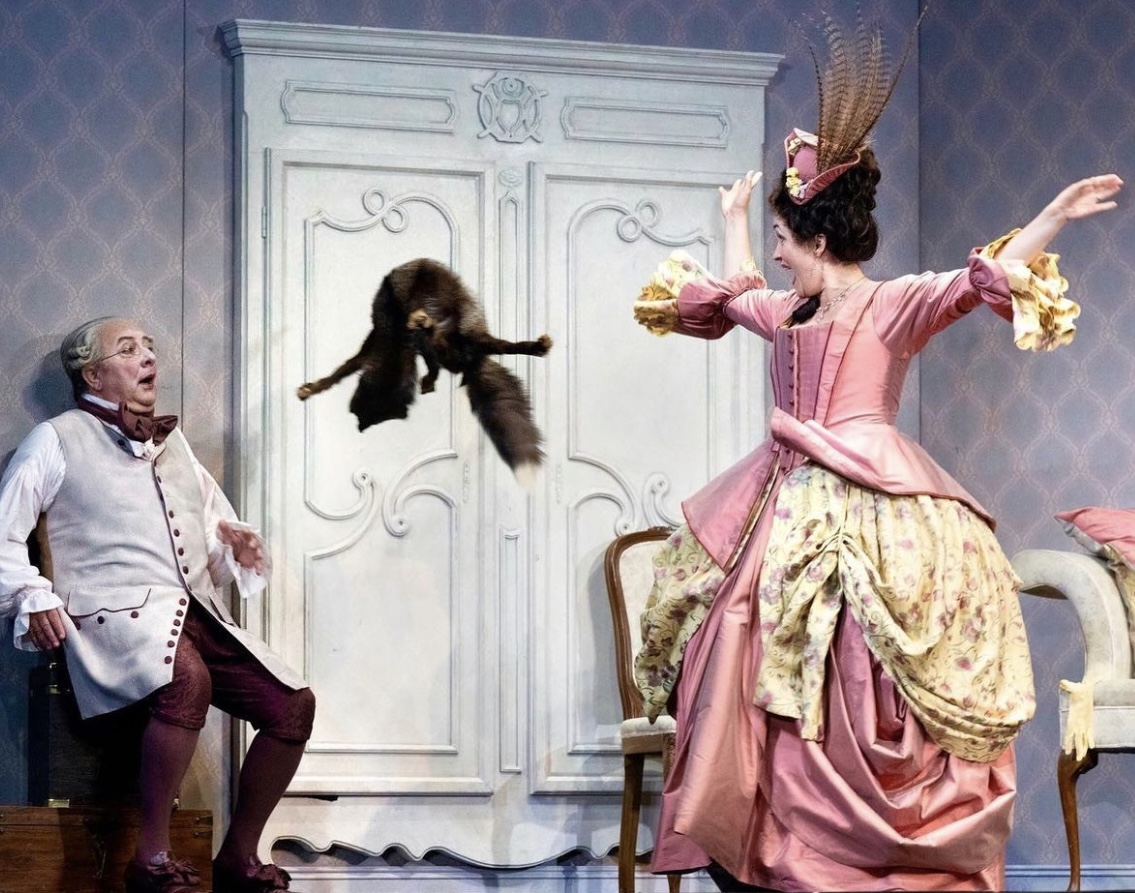
“I’ve always loved French culture—the French language, French food, French music,” she says. “I’ve always admired the French and the way they do things. I’d love to see more French operas getting productions. I’d love to see the Met put on some Meyerbeer—that house was made for grand operas like his. And I’d love to do a full production of Lakmé.”
I cite Ophélie in Thomas’s Hamlet as a role I’m eager to hear her sing—opposite baritone Huw Montague Rendall, maybe, another singer with whom she’s established a strong rapport. “I love singing with Huw,” says Morley, “and we’ve talked a lot about singing that very opera.” (Hint to Peter Gelb: the Met is ripe for a revival of its 2010 staging.) And the Golden Age program features a winning duet from Bizet’s rarely heard La jolie fille de Perth: “I’d love to dig my heels into that opera someday!” Morley’s affection for French culture was officially reciprocated when she was named a Chevalier of France’s Ordre des Arts et des Lettres in 2024—“one of the great honours of my life,” she says proudly.
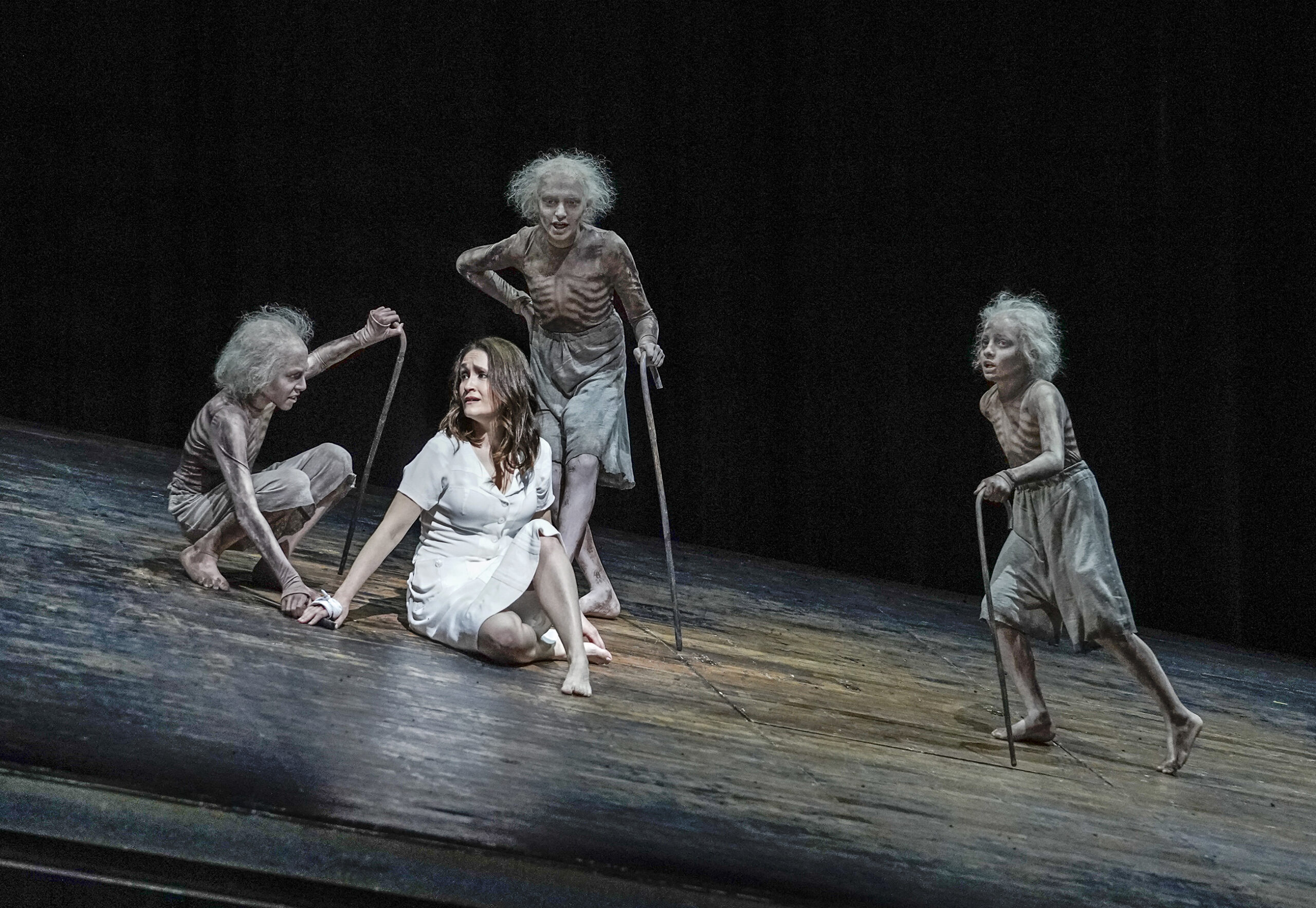
What’s coming up for her this summer, apart from that long-awaited Canadian debut? She’s got Poulenc’s Gloria in Chicago, the Mahler Fourth at Tanglewood, Haydn and Mozart at the BBC Proms in London, and Orff’s Carmina Burana at the Arena di Verona. (“I’ll be hopping all over the globe!”) And the new year brings a return to Canada, this time in Montreal, for a concert performance of Der Rosenkavalier, jointly presented by Opéra de Montréal and Orchestre Métropolitain and led by a maestro with whom she’s very familiar: Yannick Nézet-Séguin.
Meanwhile, the Golden Age tour continues through next April. Are other collaborations with Brownlee in the cards? At the moment there’s nothing definite, at least that she’s free to divulge. L’elisir d’amore would suit them admirably, though—Adina is “perfect for my voice.” So would Le comte Ory. But however packed her professional agenda, she’s careful to leave room for her family. “There are five of us”—her husband is a law professor at Yale—“and I try not to be away for too long at a time. If sometimes that means saying no to certain gigs, well, it’s a sacrifice well worth making.”
And in the very long run, what awaits? Even after two decades on the opera stage, retirement seems at least another two decades distant for the perpetually vernal Morley. And whenever she decides to give her voice a rest, there are always those 88 keys to keep her fingers nimble.
Erin Morley and Lawrence Brownlee bring their Golden Age tour to Toronto’s Koerner Hall on July 16 as part of Toronto Summer Music.
www.torontosummermusic.com
www.erinmorley.com
This page is also available in / Cette page est également disponible en:
Français (French)