
This page is also available in / Cette page est également disponible en:
 Français (French)
This summer, Festival de Lanaudière is set to deliver yet another of its signature musical moments. Alongside Yannick Nézet-Séguin and Orchestre Métropolitain, opera lovers can anticipate the Canadian debut of the exceptional soprano Saioa Hernández, who will portray the titular Lady in Verdi’s Macbeth at the Fernand-Lindsay Amphitheatre in Joliette, Que.
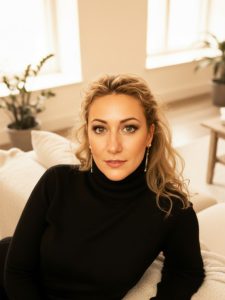
Originally from Madrid, Hernández has spent most of her career in Europe. Her appearance at Lanaudière may be a local debut, but it represents a reunion of sorts with her stage husband, Canadian baritone Etienne Dupuis who will sing Macbeth. Indeed, the soprano and the baritone had previously joined voices during a post-pandemic concert of arias and duets from Macbeth at Deutsche Oper Berlin. More recently, in September 2025, they crossed paths at Opéra national de Paris; she was singing in a production of Aida and he, in La bohème.
Hernández has had few opportunities to sing villainous roles. “As sopranos, we usually play a character that suffers—that is fighting for love or for an heroic act like freedom, but not for power. I’m very lucky because I get to play roles like Abigaille [in Verdi’s Nabucco]or Lady Macbeth, who are both fighting for power—fighting against an enemy but also against a family. I have fun playing the villain also because these kinds of roles are often more developed in the opera from beginning to end, in the music and in the drama.”
Vocally and expressively, the Queen of Scotland has all the qualities that a singer and actress like Hernández dreams of portraying. “The role is perfect for my voice. I feel really comfortable in the dramatic register [low notes and middle range]but also just as Lady Macbeth, more so than any other Verdian roles, because it’s very theatrical. You can play a lot with your voice—with colours and feelings, and the meaning of the words. It’s the most interesting part for me. I’m enjoying it more and more every time I perform it.”
Hernández is a decidedly unconventional soprano, not only because of the rarity of her vocal timbre, which allows her to tackle a wide variety of roles, but also because of her natural curiosity and her propensity to explore a subject to the very end. Her career path is striking proof of this.

Finding Her Calling
Nothing was set in stone. Unlike others who discover their calling at an early age and dive headfirst into the world of opera, the young Hernández took her time. “I wanted to find my calling. Not to have something that feels like work, but something I would be happy to do—where I can do my best,” she says. “The things that were attractive to me were spiritual life, military life, or law enforcement, and the arts. I liked to dance, draw, and sing as a child. Back then, nobody in my life had already done such things for a living. I told myself that, before the age of 25, I had to try them all. I first studied law and applied for military service to become an officer. After undergoing the mandatory psychological test, I felt that this life wasn’t for me. At the same time, I had converted to Catholicism, so I decided to go to a convent in order to live a religious life. One and a half years later, around 22 years old, I realized it wasn’t my calling either. When I got out of the convent, the first thing I did was to return to the university choir in which I had sung from the start of my studies. I was sure about one thing: continue singing.”
A summer tour in France, as part of the chorus in a production of La traviata, was a revelation. “It was really then that I started to sing opera. I was playing a role for the first time, with costumes and acting. I found out that this was the most significant thing for me, that I didn’t want to sing with a score anymore as I used to for oratorios. As I laid my foot on the stage, I discovered that this was my calling.”
After exploring and experiencing all of this between the ages of 19 and 25, Hernández found herself in a completely different rhythm. Only four years passed between the time she began her first singing lessons and her debut in 2009 in the title role in Norma. Her first prize at a competition held at the Teatre del Liceu in Barcelona led to one of her most significant encounters. “Carlos Caballé was a member of the jury,” she recalls. “Upon winning the competition, he said he wanted me to meet his sister, the great Montserrat, in order to prepare the role of Norma with her. My debut was in September, quickly followed by the title role of Bellini’s Il pirata, for which she also trained me. It was a big challenge also because these were my first roles in a big theatre.”

Young artists are rarely promised a role straight after a competition in such an unexpected way. Here again, Hernández is an exception. “It was only because he heard something special in my voice for that repertoire, a similar feeling to what he had heard before in his sister’s voice. He thought I was meant for these kinds of roles as a soprano dramatico d’agilità. Even when I studied with Montserrat, she told me I should do all of the [Donizetti Tudor] queens. ‘You have to sing Anna Bolena, Roberto Devereux… Obviously your voice is very different from mine, heavier than mine. It’s not good for you to sing Maria Stuarda, which requires a lighter voice.’ She thought I could sing many other roles. Despite our differences, we had something similar in the way we expressed emotion when we sang bel canto. Maybe it has to do with the pathos of the voice, the kind of thing you need when you sing Bellini, or even early Verdi roles.”
Hernández is thankful to have started with bel canto. “For me, it’s the base to sing the other roles to come because it teaches you to sing on the breath, sul fiato, as the Italians say [meaning: a sensation that one’s voice flows on a steady, uninterrupted stream of air, rather than pushing the sound]. If you have a good foundation like this one, you can keep singing better. My recommendation to young artists would be to never leave bel canto, so that you may always be in control of your voice.”
Among her inspirations, the singer mentions sopranos of the past such as Caballé, Maria Callas, Virginia Zeani, Rosa Ponselle and the mezzo-soprano Elena Obraztsova, as well as contemporary singers like Anna Netrebko and Lisette Oropesa. “My colleagues inspire me. This is art we’re talking about and we can, therefore, never know the whole truth on how it’s done. I choose to keep learning from experience and from others.”
Hernández recalls her very first vocal experiments, during her teenage years. “I obviously didn’t know anything about opera. For me, it was all about listening. I was very curious. I liked to impersonate people, not only singers, but the way they talked and their accents. In my family, no one knew opera. My mother started to collect CDs and librettos of operas through a newspaper subscription. The idea was to slowly introduce it in our household. When I was around 16 years old, and nobody was home, I used to sing over the CDs on high volume. I started with Céline Dion, Mariah Carey, Laura Pausini… I recorded myself using a karaoke system and tried to imitate them. I did a lot of trials, always wanting to sound better at it. I wasn’t studying proper technique, of course. I still have recordings of that period.”
“Una voce poco fa,” from Rossini’s Barber of Seville, was the first aria she heard at a concert, while at a performance with her parents. As soon as she got home, Hernández rummaged through her mother’s collection to find that melody, which was already familiar to her, and tried to sing it. “This kind of singing opened a new door of learning for me. I was singing soul, or pop. I realized I could sing higher and with just more voice. Years later, I learned that if I wanted to sing as a soloist, I had to find and respect my own instrument. One can try to imitate the system of the technique, the mechanism, but not the colour of the voice, or the qualities of others.”

Lessons for life
From a young, self-taught singer, Hernández progressed to the rank of apprentice and, eventually, to that of teacher. “It’s not a matter of notes, really, but of building life experience. The more you have that, the more you can be someone on stage and express what is beyond the words and the music. I said once to one of my students who was practising the sleep-walking scene of Lady Macbeth: ‘You have to sing less. Here, the character is unconscious, so it should be felt in the way you sing. You need to create this atmosphere, and be able to shift from one musical idea to the next.’ Only experience can teach this.”
Despite her success, Hernández remains humble. She even admits to feeling shy during the dress rehearsal of a production, or in the presence of her colleagues, or her accompanist. “When I’m playing a role, it’s not about me. I can be another person, like Lady Macbeth. For that reason, I’m more comfortable on stage than in concert.”
True to her character, the Spanish soprano will never stop learning about herself and her art. In particular, Hernández will now have the chance to delve into German repertoire. “I need to be very cautious about it,” she says. “In fact, two roles are waiting for me in the near future. In 2030, at Madrid’s Teatro Real, I’ll sing in an opera by Richard Strauss. I’m very happy about it, and I think it suits my voice very well, but I cannot say more. In the meantime, I’ll have to study German! I like the idea. By experiencing it more and more physically, and by listening to multiple versions and performers, I can tell it’s a completely different way of expressing emotion. Not only the language, but the musical language is different, especially from the Italian repertoire.”
Saioa Hernández sings Lady Macbeth alongside Etienne Dupuis in the title role of Verdi’s Macbeth, conducted by Yannick Nézet-Séguin at Festival de Lanaudière, on Aug. 2.
www.saioahernandez.com
www.lanaudiere.org
Translation: Wah Keung Chan
This page is also available in / Cette page est également disponible en:
Français (French)