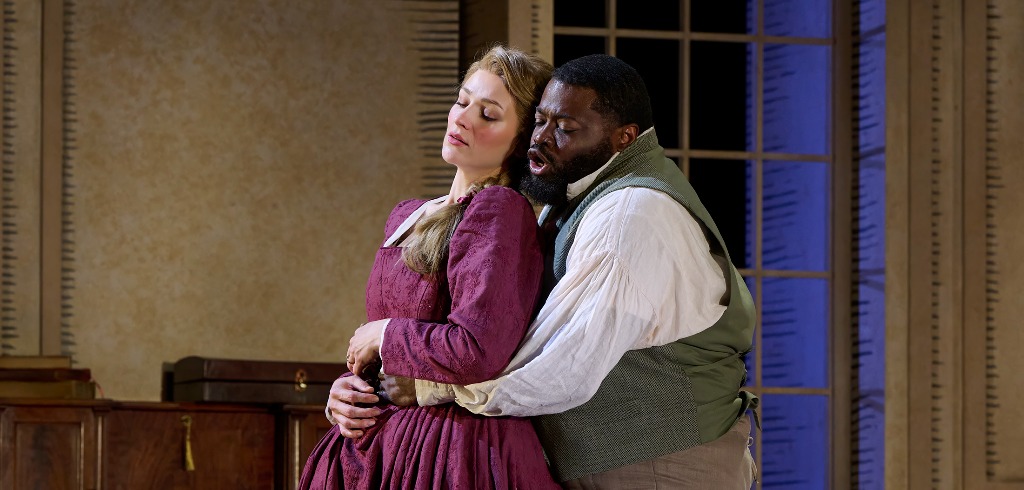

It’s been 34 years since the Canadian Opera Company last presented Massenet’s Werther. While perhaps not in the top 10 of most–produced operas, it isn’t so much on the fringes to merit being out of the company’s repertoire for so long. A new production directed by Alain Gauthier opened on May 7, and immediately distinguished itself from the company’s other recent confused, ‘radical’ rethinkings of French 19th-century masterpieces, Faust and Roméo et Juliette. As the director states in his program notes, one can take a different path that is contrary to today’s penchant to modernize settings to make works more relevant. That is, to choose “a deliberate fidelity to the work’s historical period.”
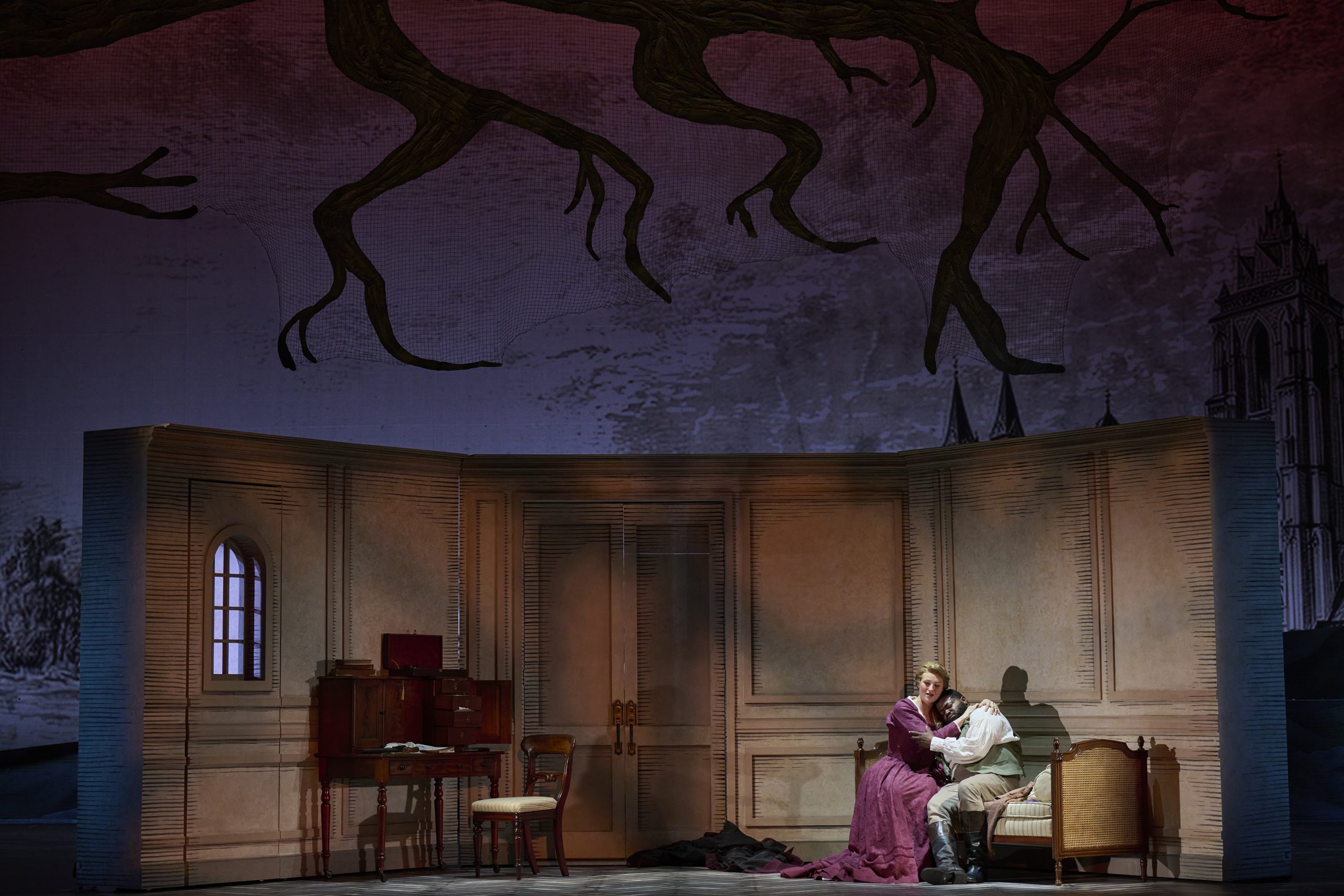
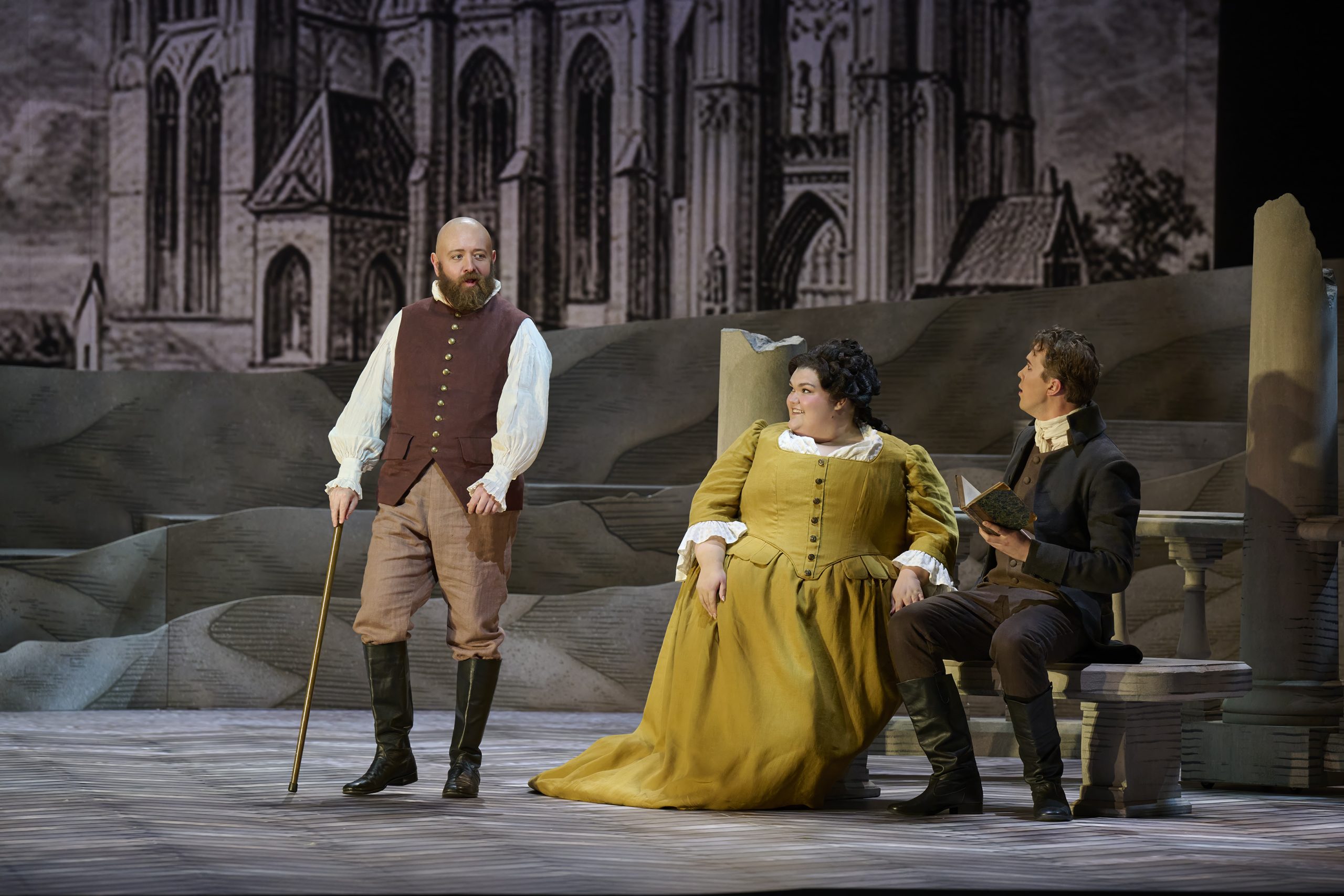
If we’re honest, taking this route is anathema to many in the more progressive wing of the opera establishment. Here, this took the form of Olivier Landreville’s beautifully-constructed modular set pieces that were easily reconfigured to suggest each scene’s disparate location. Pale, gray/white Neoclassical walls encased the terrace of Charlotte’s family home, then the square in front of the town cathedral, her own bedroom and later, Werther’s humble interior for the final tragic scene. A huge blow-up of a period illustration of a church dominates upstage. Lëilah Dufour Forget’s costumes were simple, bourgeois late 18th-century. Mikael Kangas’s lighting is beautifully atmospheric, especially as it fades to moonlight for Werther and Charlotte’s romantic walk home at the end of Act 1.
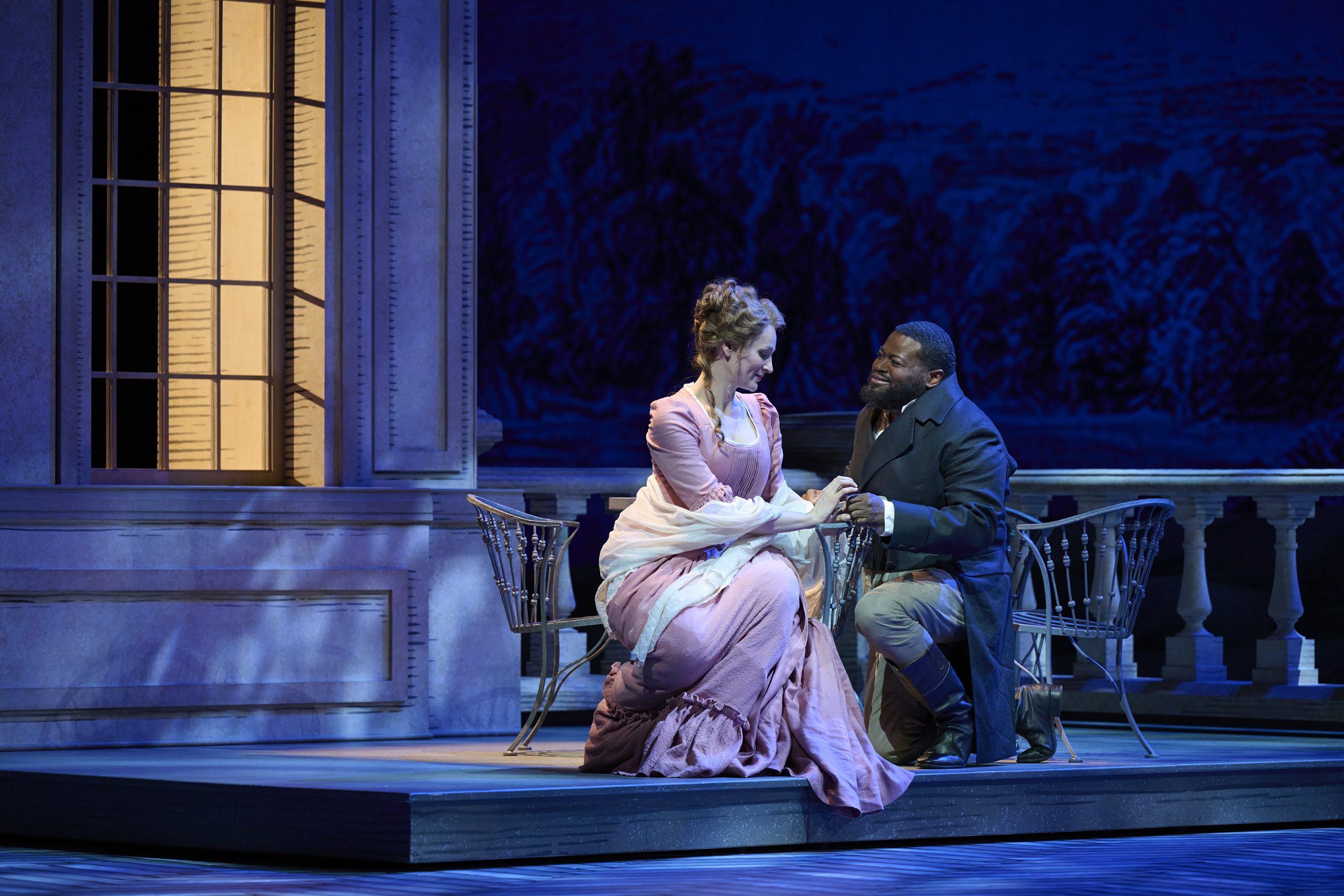
But in order to succeed, choosing a period aesthetic could just be pleasant window dressing if what it contains isn’t dramatically compelling. For the most part, Gauthier succeeds in this regard, drawing convincing portrayals from all of the principals. I was perhaps expecting a greater degree of unhingedness from Russell Thomas’s Werther, but in the end, the slightly more contained portrayal seems more in keeping with Gauthier’s desire to “explore the origins of our modern sensibility.” The aim here is not to satisfy cliched notions we might have from television or film about how a person with mental health challenges behaves. What we get instead are more restrained, believable interactions of characters bound by societal conventions and religious propriety.
This restraint really paid off in the long final scene, after Werther has fatally wounded himself and is joined by Charlotte when she finally admits her love for him. They are mostly seated on his bed, intertwined as he slips away. No overt histrionics, but just the depressing heartbreak of a relationship that was doomed from the start.
The title role is one of the great tenor challenges. An endless stream of arias and duets, all demanding excellent technique and sensitivity when it comes to the poetic text. This marks Thomas’s role debut and it feels like a very good fit. His sound is perhaps darker than what is usually associated with the French tradition, but he convinces with the instrument he possesses, and then some. Thrilling top notes and many beautiful mezza voce passages abound, all tied to reasonably consistent French declamation. Thomas took many vocal risks in terms of extra-long phrasing that upped the dramatic ante.
At his side, mezzo-soprano Victoria Karkacheva did not suffer in comparison. Her rich, homogenous sound projected consistently from top to bottom. Charlotte’s great scene that opens Act 3 was a tour-de-force. Her “Letter Aria” was highly dramatic but perhaps even more affecting was the shorter air “Va! Laisse couler mes larmes” that follows. Karkacheva achieved an elevated level of emotional delivery here as she tells her sister Sophie that it is sometimes a good thing to grieve, and not be consoled.
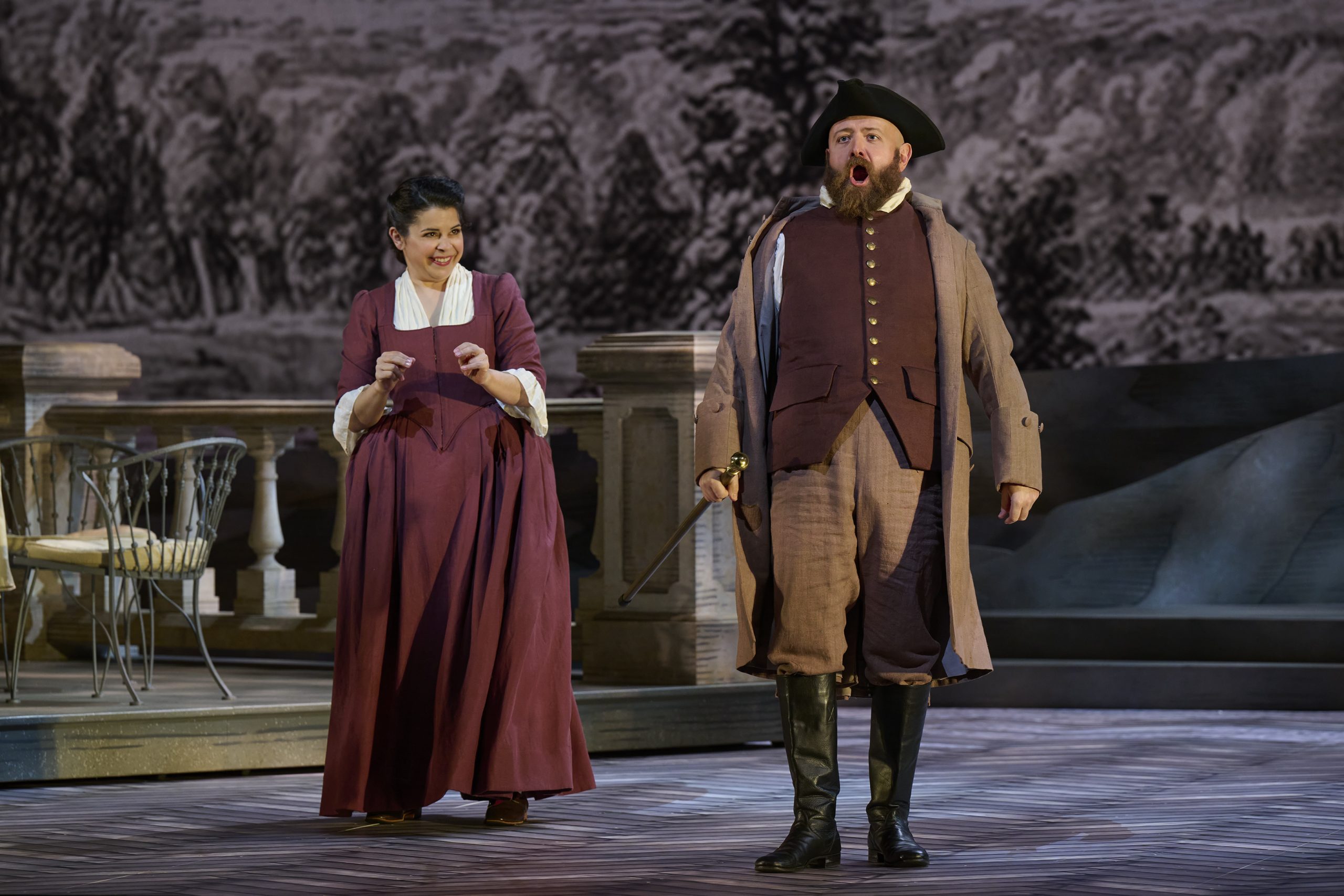
Soprano Simone Osborne possesses the perfect sound for Sophie, Charlotte’s ever-optimistic younger sister. She is the ray of sunshine who pops in and out, trying to dredge everyone out of their depressive funk. Osborne’s bright, highly-place timbre worked wonderfully well in the two challenging airs she gets to sing. But she also knows how to capitalize on a dramatic turn when she admits to Charlotte that despite an appearance of naivete, she knows exactly what is going on between her older sister and Werther. This scene was one of the more telling character moments.
As Albert, the man Charlotte promised her dying mother she will marry, bass-baritone Gordon Bintner conveyed all of his uptight, middle class mores. That he knows Werther is likely asking to borrow his pistols in order to kill himself lends the character a more sinister air. Vocally, Bintner struggled to find his pitch in his opening aria, going off-voice when attempting some risky dynamic shifts. He was on firmer ground in his later scenes.
Bass Robert Pomakov as Le Bailli offered just the right amount of fatherly concern for his children, balanced by some humour when he finally capitulates to go to the local pub. Bass Alain Coulombe and tenor Michael Colvin as local bon vivants Johann and Schmidt delivered their comic scenes with an appropriate lightness of touch.
Werther has no adult chorus, but instead, children who play Charlotte and Sophie’s younger siblings. Members of the Canadian Children’s Opera Company sang with beautiful clarity and projection in their opening scene, and key, echoing that music from offstage in the final moments.
Werther includes some of the most famous arias from the French repertoire, but its orchestral score is just as memorable. It is rich, descriptive and dramatic. There are multiple interludes that carry the drama forward, none more so than the stormy journey that Charlotte takes before the final scene to try and stop Werther’s suicide. The COC Orchestra under music director Johannes Debus seized on all of the score’s richness, including some beautiful instrumental solos.
This co-production will appear at Opéra de Montréal in November and Vancouver Opera in a future season. The decision to present Werther in a less interventionist production leaves space for trenchant vocalism and subtle acting to let the story unfold, and for the audience to make up its own mind.
Canadian Opera Company’s Werther continues its run at Toronto’s Four Seasons Centre for the Performing Arts through May 23.