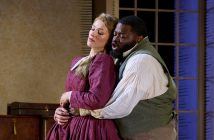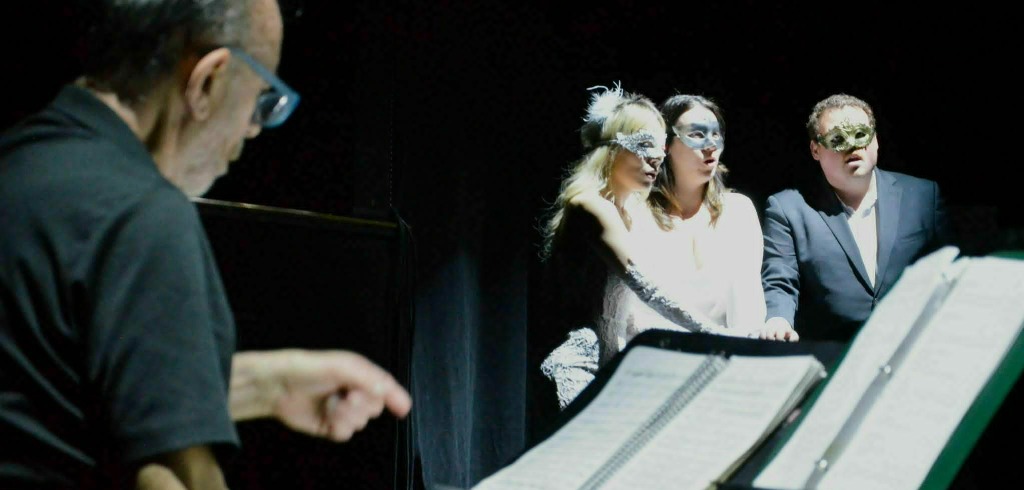

A new Toronto indie collective unveiled its first production on May 22. Benevolence Opera Project presented an adapted version of Mozart’s Don Giovanni at the east end Redwood Theatre as a benefit for The Redwood, a shelter for women and children fleeing abuse. Chatty recitativo was replaced by a spoken narrative that recast the dramma giocoso as a chess game. The truncation affected character relationships, ironically making them more difficult to decipher. It was left to the singers and their formidable vocal gifts to ignite the drama, which they did with considerable success and in some cases, much more than that.
The cabaret seating worked well from a sightline point of view. The singers were blessedly not amplified—a trend that has very strangely been creeping into several smaller scale productions I’ve attended lately. A chess table was set up on a raised platform to which characters returned on a regular basis to remind us of the “we’re all pawns in a game” concept. Singers made entrances and exits through the audience from the back of the theatre, as well as via a curtained area upstage. Given the relatively small space, all of this worked well acoustically, and provided some nice visual variation.
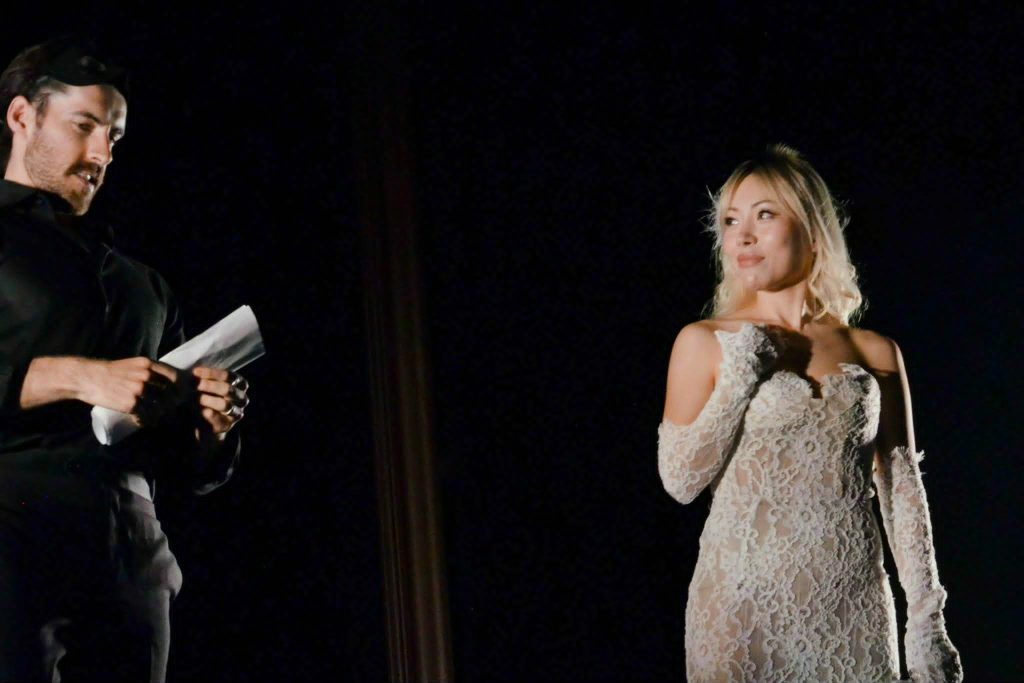
Ryan Hofman, the driving force behind this project, acted as host, reading out the chess narrative. In his opening remarks, he mentioned the singers were largely self-directed in terms of staging. The vocal feats in Don Giovanni are considerable, so it’s asking a lot for singers to also take on their blocking. Subtract the all-important sung dialogues where so much character-building takes place, and it’s not a surprise that at times, the show felt more like a parade of greatest hits rather than an integrated drama. This is not to take away from the cast’s valiant efforts in this direction, but exemplified just how difficult it can be to put on an opera like Don Giovanni on a shoestring with limited rehearsal time.
The relationship that suffered the most was the one between Don Giovanni and his enabler sidekick, Leporello. Especially in the first few scenes where their master/servant dynamic is so brilliantly outlined in the ‘original’ version, we missed out on key connections between these characters. I did wonder how audience members less familiar with the fuller version related to all of this. The excision of so much recit in the opening sections turned the title character into even more of a cipher than is usual.
The lack of connecting tissue mattered less as the opera progressed, as is the case in even more complete versions of Don Giovanni. Set piece arias like Elvira’s “Mi tradi”, Anna’s “Non mi dir” and the graveyard scene where the Don and Leporello meet the murdered Commendatore’s statue are all mini dramas within themselves and therefore make it easier for the audience to grasp narrative and character development. And it was in these scenes that the cast bumped this show to a new level.
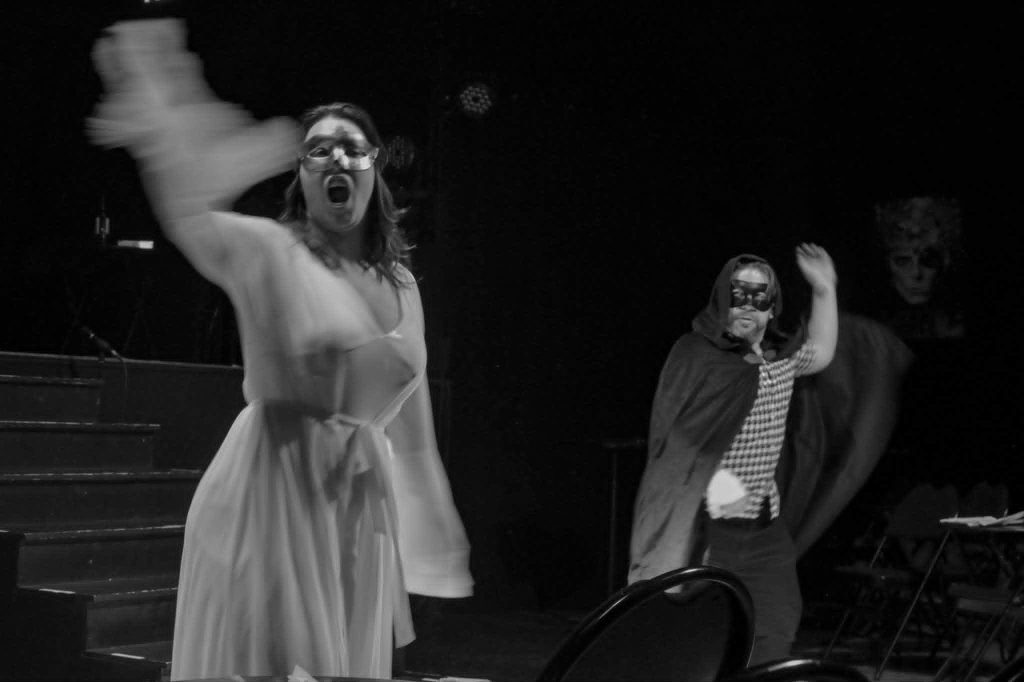
Hofman assembled a very fine cast of Canadian professionals who for the most part, more than met Mozart’s considerable vocal demands. In the title role, Alexander Hajek used smooth, honeyed legato to convey the character’s shiny attraction. His gorgeous tone and long phrasing was at its most enticing in the “Deh, vieni alla finestra” serenade. At his side was Luke Noftall’s animated Leporello. His bass-baritone was perhaps a little lighter in weight than is usual for the role, but he sang with great assurance. He was especially good in the graveyard scene where he was able to find a new level of physical engagement that did a lot to convey the macabre nature of the supernatural encounter.
Holly Chaplin was apparently a last-minute jump-in as Donna Anna. This was belied by her complete control over the vocal acrobatics and her intense delivery of the text. The soprano brought lots of light and shade to her singing and the perfectly-placed fireworks to the coloratura in “Non mi dir.” This was the evening’s best all-round portrayal.
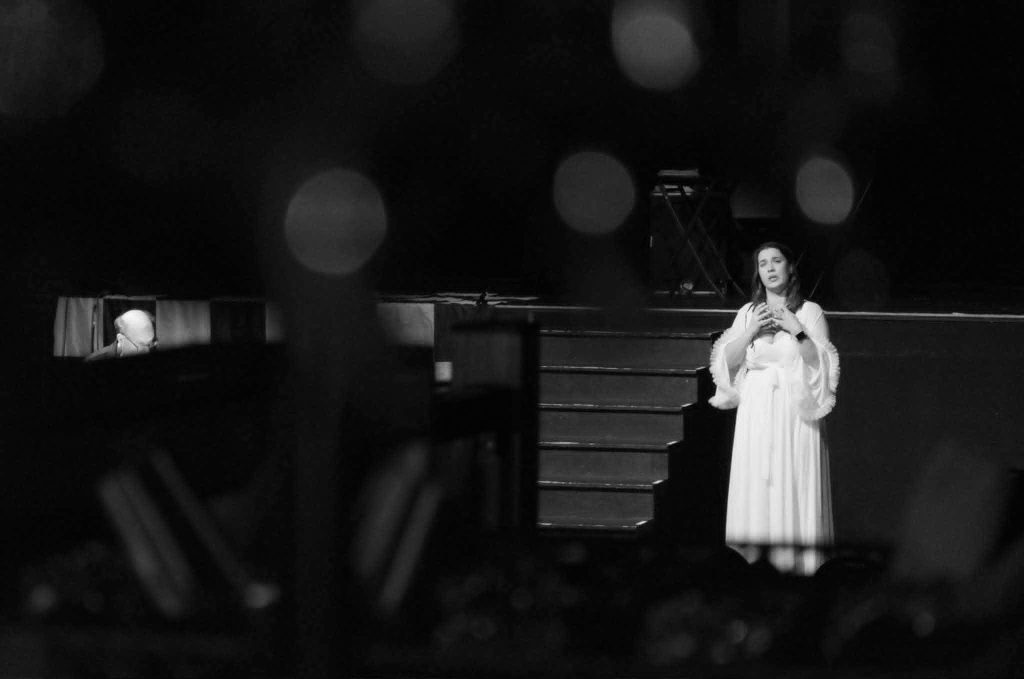
While Chaplin is a well-known and valued fixture on the Toronto circuit, Mary Ferrari as Elvira was new to me. She possesses a luxe sound and delivered the Italian text most idiomatically. If she can develop a greater freedom of gesture, she possesses all the ingredients to become a compelling stage presence.
Kathryn Rose Johnston offered a lovely soprano to Zerlina with a tone that contains more richness than one usually hears in the role. As her jealous fiancé Masetto, James Coole-Stevenson blustered convincingly and commanded the stage.
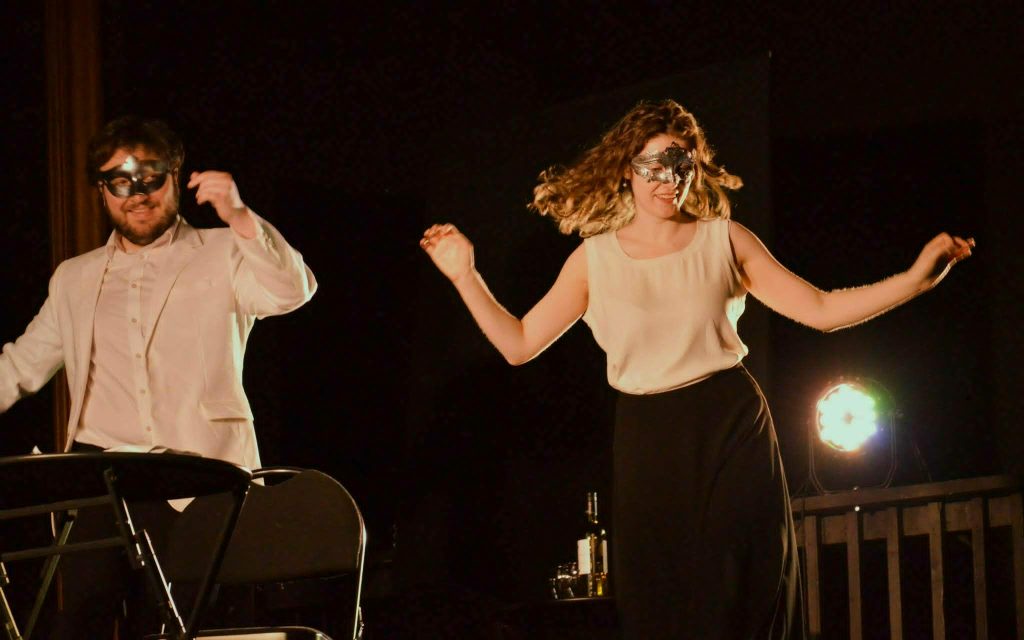
Cameron Mazzei’s opportunities were especially truncated in this version with the excision of his first act aria, but he brought pleasant, light tone to the bravura tenor aria, “Il mio tesoro.” Veteran baritone Andrew Tees made a great cameo appearance as the Commendatore. His menacing, resonant sound filled the nightclub as he invited Don Giovanni to join him in hell.
At the piano, Brahm Goldhamer was constantly on his toes, paying a lot of attention to what was happening on stage. In productions like these, with such limited rehearsal, it’s great to have such an experienced coach pulling the strings from a musical point of view.
Benevolence Opera Project plans to present more events like this one in November.