

This page is also available in / Cette page est également disponible en:
 Français (French)
In animated film, where every image and sound is deliberately constructed, music plays a central narrative and aesthetic role, shaping atmosphere, rhythm and emotional perception while reinforcing immersion in the film’s fictional world.
Music can operate in different ways within animated film, from recurring musical themes linked to characters and emotions in How to Train Your Dragon to the song-driven storytelling of Disney’s Frozen. Films like The Red Turtle rely on music to shape atmosphere and perception despite minimal dialogue, while Pixar’s Soul places music itself at the centre of the narrative.
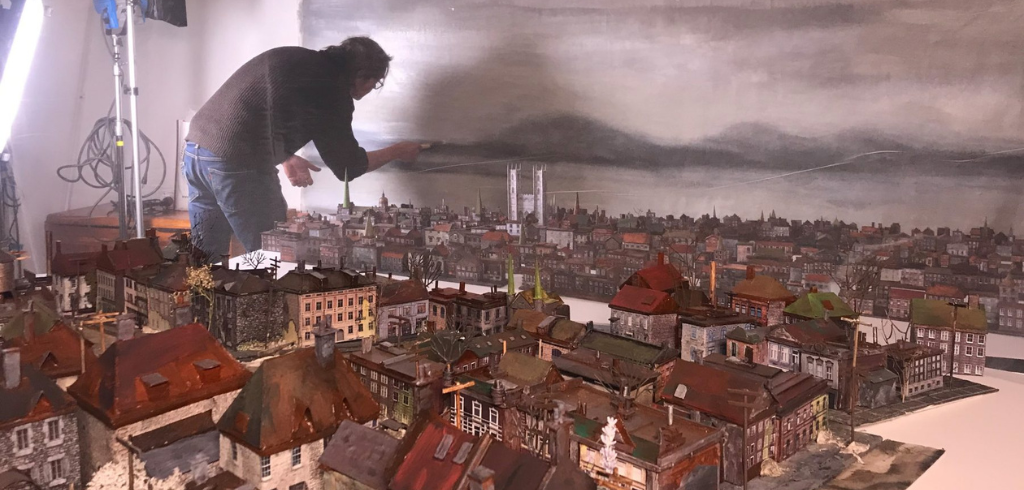
Particularly fascinating in its use of music is The Girl Who Cried Pearls, a recent Oscar-winning animated short set in early 20th-century Montreal, in which music, sound, and image merge almost seamlessly. Created in collaboration with composer Patrick Watson, the score shapes the film’s atmosphere and emotional flow, moving beyond accompaniment to guide the viewer’s experience of the narrative and image.

Within a narrative shaped by memory and loss, music is present from the film’s opening moments, creating a continuous sonic flow that connects scenes and layers of the story. Frequently overlapping with sound effects and voice-over, the transitions between music, sound design, and speech are remarkably smooth. With little use of silence, the film creates an almost uninterrupted auditory space that deepens the atmosphere and emotional impact of the images.
Beyond the film’s continuous soundscape, shifts in intensity and instrumentation shape mood and dramatic progression. Softer passages, often carried by piano and strings, accompany reflective scenes and moments involving the girl’s crying pearls. This creates a strong audiovisual connection between music, character, and motif, while the increasing intensity of the score becomes especially apparent in scenes involving the girl’s crying pearls and the father’s death.
The close interaction between music, sound, and image was also deeply rooted in the film’s production process. Rather than being added only after the animation was completed, the soundtrack evolved alongside the film itself through improvisation and experimentation. Years before production began, Patrick Watson and the filmmakers were already exchanging musical sketches and improvised recordings, allowing sound and image to develop together from an early stage.
Watson’s sensitivity to rhythm and emotional pacing even influenced the film’s editing, with parts of the animation reworked after certain transitions between flashbacks and flash-forwards disrupted the emotional flow created by the music. This same fluid and improvisational sensibility also continues to shape Watson’s broader musical practice, including his upcoming appearance at the Montreal Jazz Festival July 3 on the TD Stage at Place des Festivals.
This page is also available in / Cette page est également disponible en:
Français (French)